Want to attend the course but can’t make it on this date?
Fill in your details below and we’ll notify you when we next present a course in this area:
As the weather warms up and snakes become more active, the subject of keeping snakes away from our homes and gardens often comes up. One of the most common questions is whether there is a product, plant or substance that can be used to repel snakes.
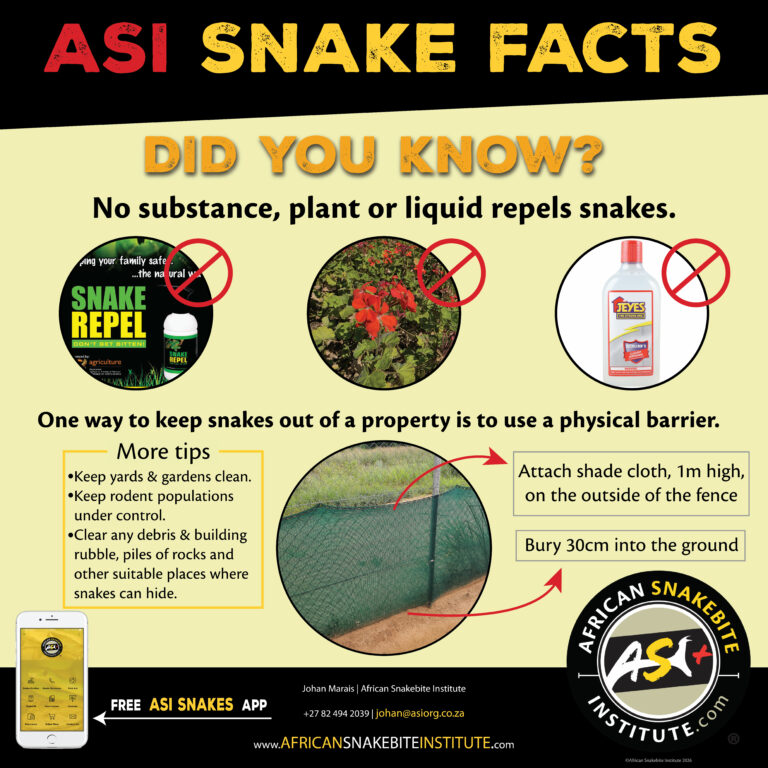
The simple answer is: there is currently no scientifically proven snake repellent that can be relied upon to keep snakes away from a property.
Over the years, a wide variety of remedies have been suggested, including Jeyes Fluid, chlorine, diesel, old oil, mothballs, commercially available snake repellents and certain plants such as geraniums, wild garlic and tobacco. Many of these recommendations have been passed down through generations and are widely believed to work.
The problem is that personal experience can be misleading. A resident may spray a substance around their property and not see a snake for some time afterwards, and naturally assume that the product was responsible. However, snake activity can vary considerably from year to year and from season to season. At other properties, exactly the same substances may be used while snakes continue to be seen regularly.
Many of the products commonly promoted as snake repellents have a strong smell and can be unpleasant or irritating to people. However, snakes do not experience these substances in the same way that humans do. Snakes use their highly specialised sensory systems, including their forked tongues and Jacobsen’s organ, to gather chemical information about their environment. Various substances and commercially available products have been tested over the years, and no reliable, consistently effective snake repellent has been identified. This includes substances such as Jeyes Fluid, mothballs, certain plants and commercially marketed snake-repellent products.
In recent controlled experiments members of the Alexander Herp lab at the University of the Witwatersrand, tested various substances including Jeyes Fluid, moth balls, various plants and the commercially-available snake repellent and none of them repelled snakes . These results will soon appear in a scientific journal.
The same applies to vibrating or ultrasonic devices marketed as a way of keeping snakes away. Although snakes are sensitive to vibrations, they can become accustomed to regular disturbances and do not necessarily avoid areas with constant vibration or activity. Snakes can, for example, be found close to busy roads, construction sites and other noisy environments.
So, what can people do to reduce the chances of snakes around their homes?
The most effective approach is to make your garden and property less attractive to snakes and the animals they feed on.
You can help by:
In areas where snake encounters are particularly common, a properly designed physical barrier can also be an effective option. Fine shade cloth or a similar suitable material can be fitted to the lower section of a perimeter fence, extending approximately one metre above ground level and buried into the ground to prevent snakes from passing underneath. Gates and other potential entry points must also be properly sealed. When correctly installed and maintained, such barriers can significantly reduce the number of snakes entering a property.
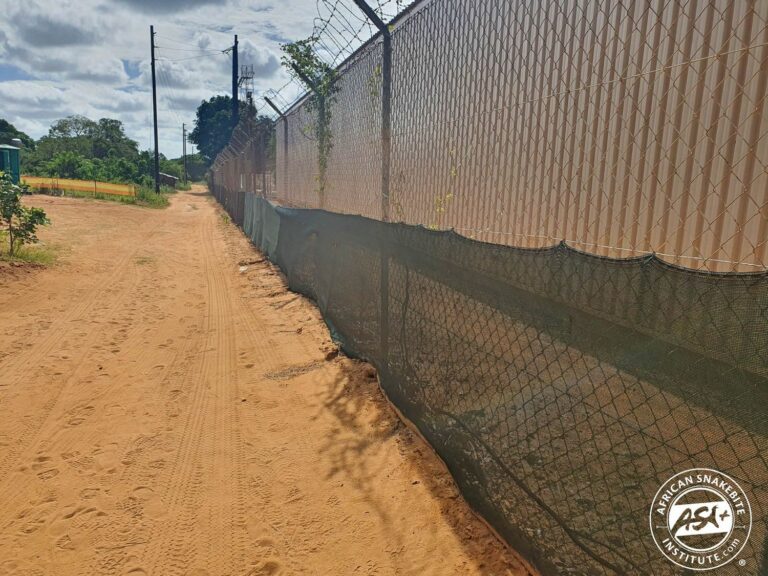 It is important to remember that no method can guarantee that a snake will never enter a property. However, good property maintenance, reducing available food sources and hiding places, and using appropriate physical barriers where necessary can greatly reduce the likelihood of snake encounters.
Rather than relying on unproven repellents, the best approach is prevention, awareness and knowing what to do if a snake is encountered.
If you see a snake, remain calm, keep people and pets away from it, and contact a qualified snake catcher or removal service. Do not attempt to catch, kill or handle the snake yourself unless you have the appropriate training and equipment.
Knowledge and sensible precautions remain the most effective tools for safely living alongside these fascinating and important animals.
 ASI Book Combo 2
Original price was: R2,210.00.R1,880.00Current price is: R1,880.00.
ASI Book Combo 2
Original price was: R2,210.00.R1,880.00Current price is: R1,880.00.
 Rangers Book Combo 1
Original price was: R1,450.00.R1,305.00Current price is: R1,305.00.
Rangers Book Combo 1
Original price was: R1,450.00.R1,305.00Current price is: R1,305.00.
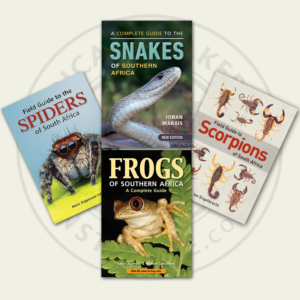 Rangers Book Combo 2
Original price was: R2,080.00.R1,870.00Current price is: R1,870.00.
Rangers Book Combo 2
Original price was: R2,080.00.R1,870.00Current price is: R1,870.00.