Want to attend the course but can’t make it on this date?
Fill in your details below and we’ll notify you when we next present a course in this area:
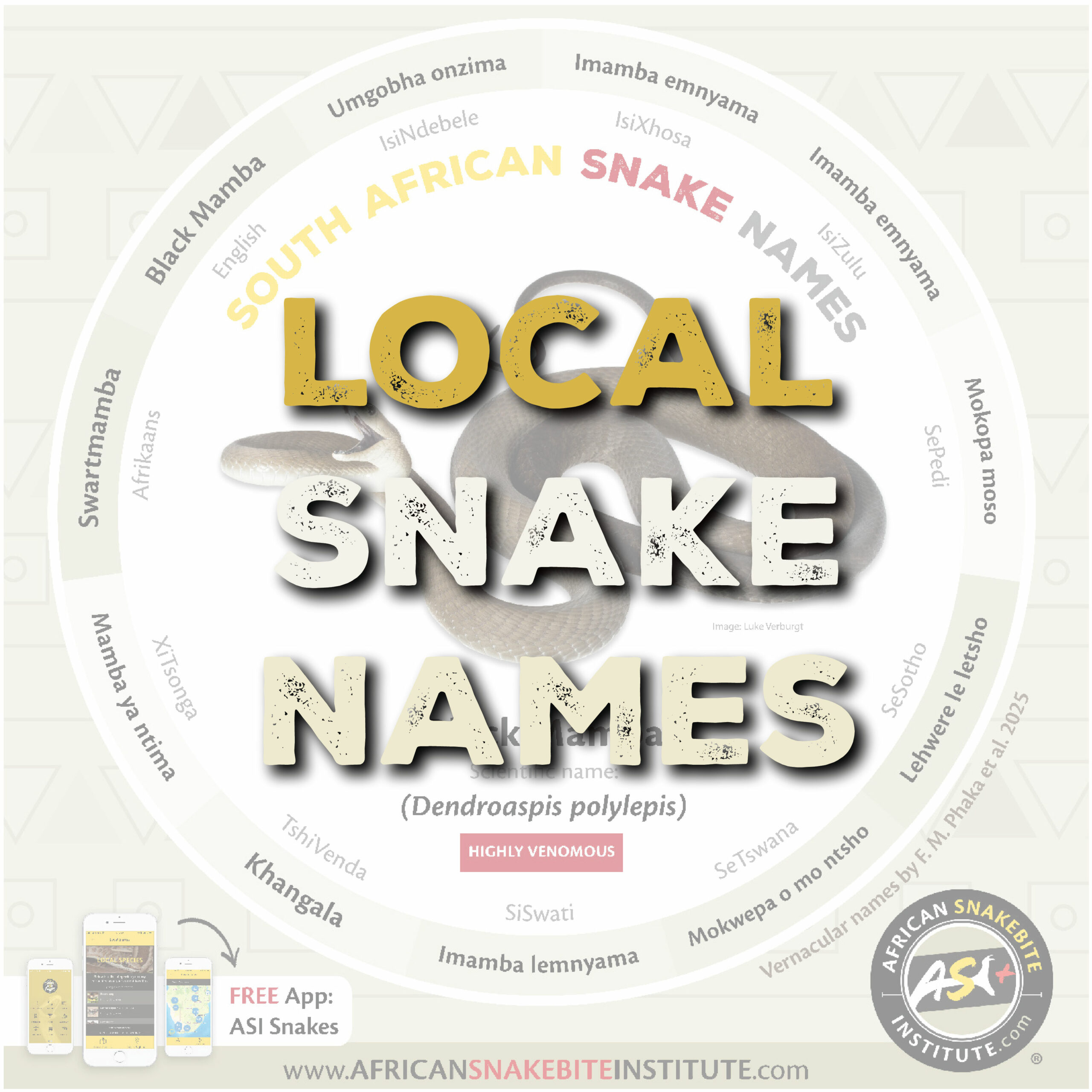
Common names for animals have long sparked debate. Depending on where you are in the country, the same species may be known by several different names.
Snakes are no exception, and arguments around their names can become surprisingly heated. Take the Cape Cobra, for example. In Afrikaans, the most widely accepted name is Geelslang, yet many people also call it Kaapse Kobra, Koperkapel or Bruinkapel.
In Limpopo, farmers may also incorrectly call the Snouted Cobra a Geelslang.
These variations can cause confusion — confusion that could have serious, even life-threatening consequences, especially in the event of a snakebite.
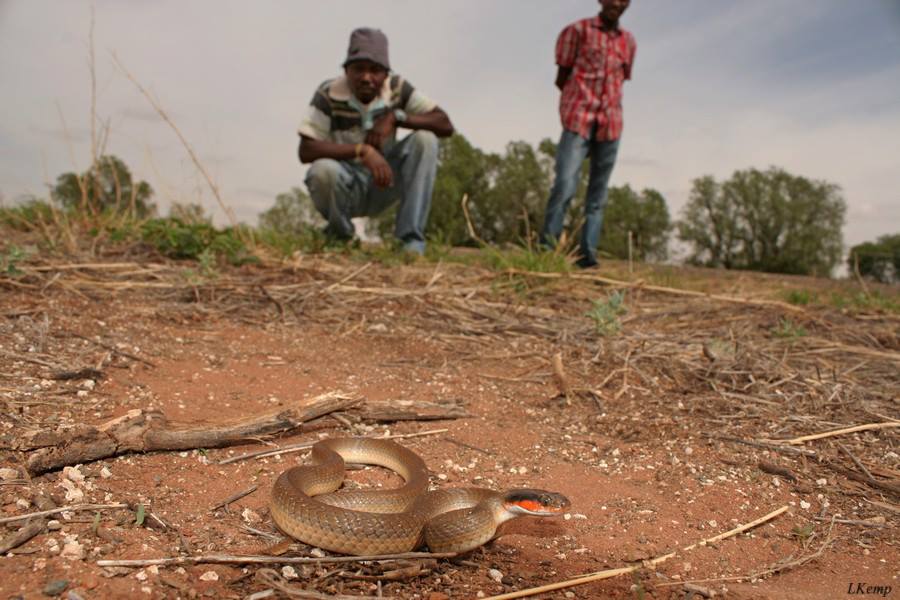
South Africa has 11 official languages, but until recently, snake names were poorly documented in nine of them. Only English and Afrikaans had comprehensive lists. Thanks to a remarkable study by Dr Fortunate M. Phaka et. Al. (2025), this is no longer the case. Through years of dedicated work, he skilfully blended traditional knowledge with scientific principles to create standardised names for all reptile species across all 11 languages. This achievement is groundbreaking — no one in South Africa had ever attempted anything of this scale before.
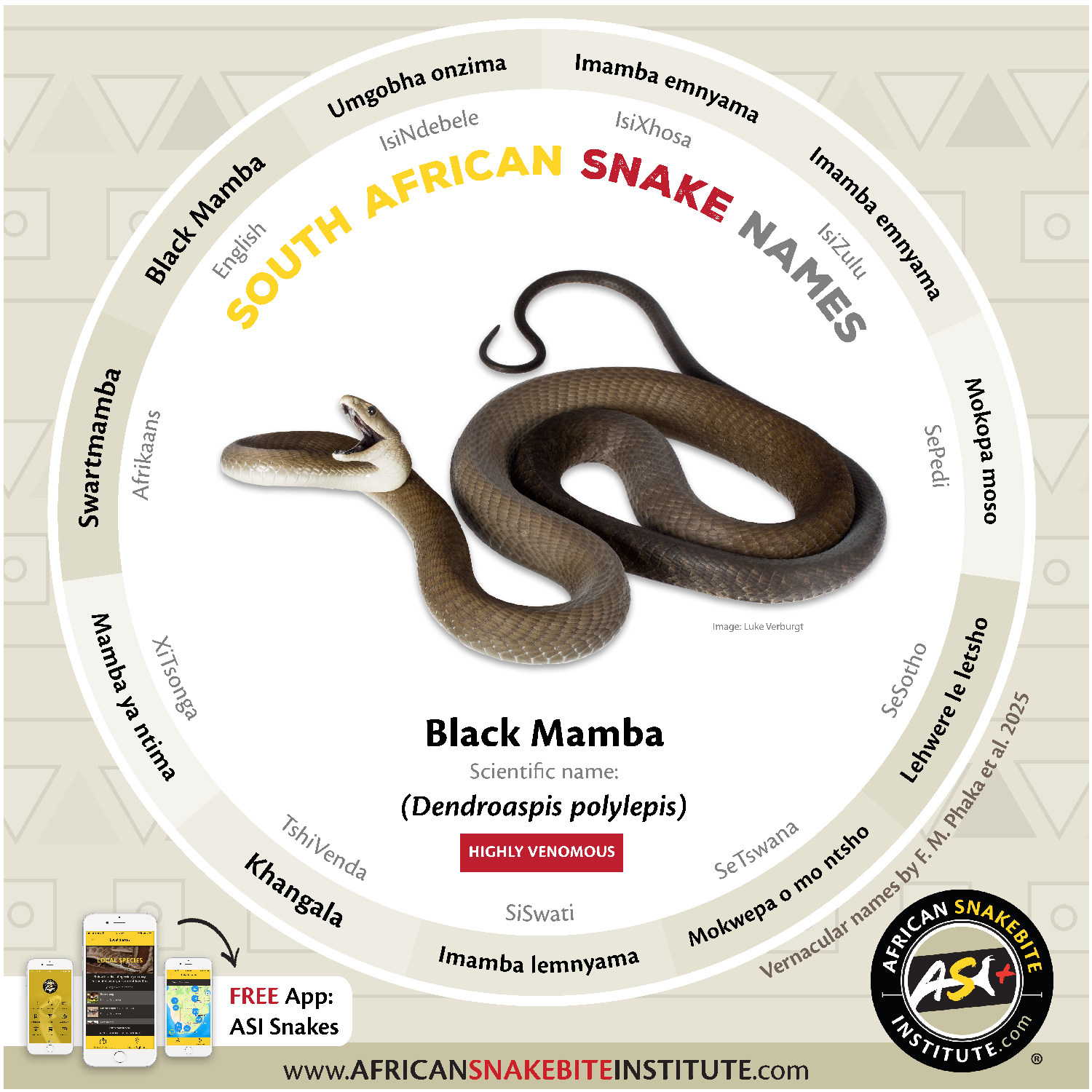
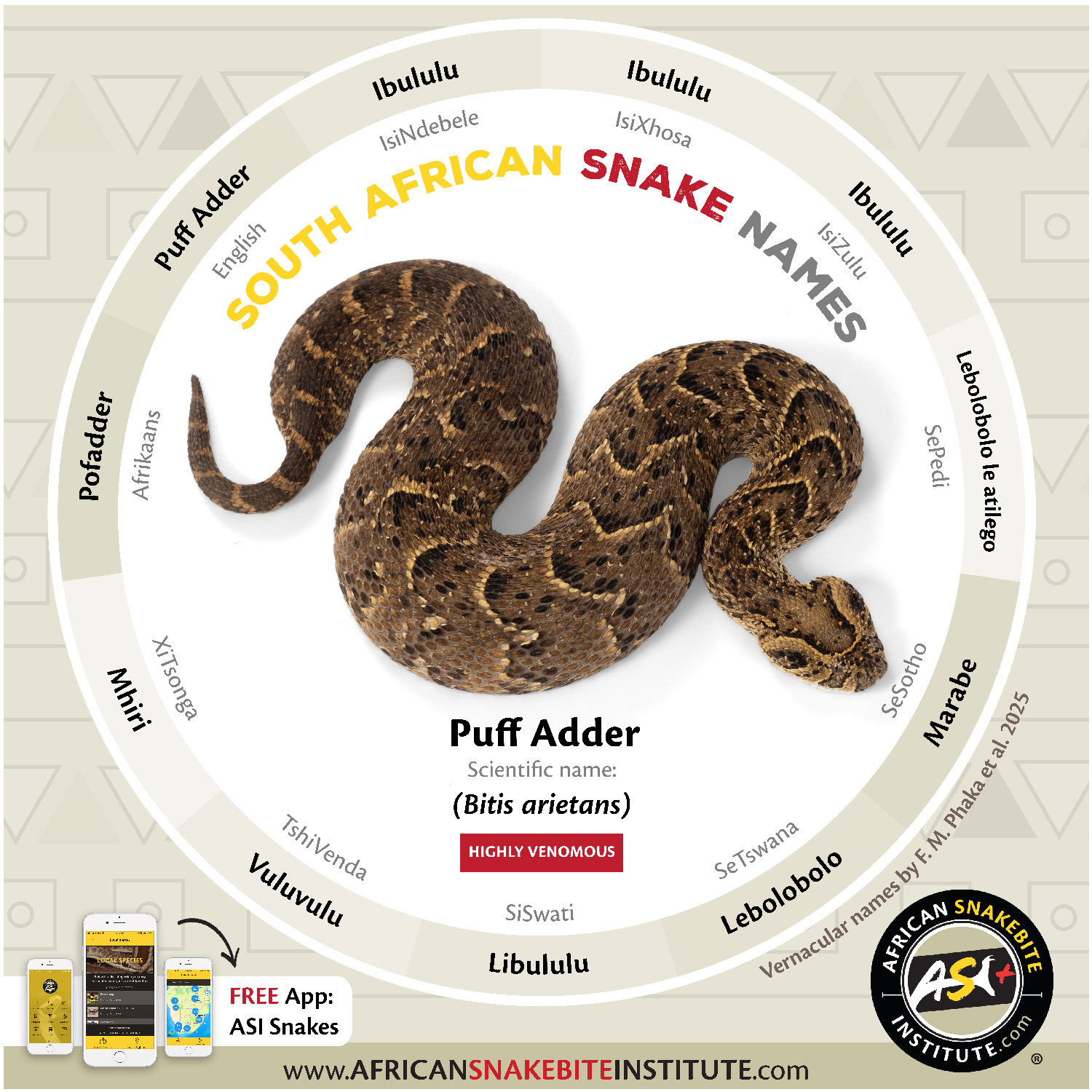
This work matters for two important reasons. First, it makes the concept of species diversity more accessible to more South Africans. Traditionally, snakes were grouped loosely based on looks or behaviour. Adders, for instance, are often referred to by a single name in many languages, despite the fact that South Africa has 12 distinct species. By giving each species its own unique name, people are better able to appreciate that each one is different — and that each is worth protecting.
Second, these names help bridge the long-standing gap between traditional and scientific knowledge. These two worlds often mistrust or dismiss each other, yet both hold immense value. Traditional knowledge carries deep cultural respect and can make conservation messages more relatable and meaningful. Scientific knowledge, grounded in observation and evidence, offers an accurate understanding of the natural world. Integrating the two through thoughtfully crafted names creates a powerful tool that helps scientists and conservationists communicate more clearly and respectfully with everyday people.
Making these names publicly available on www.wildvernac.org opens the door to countless possibilities. They create the foundation for books, guides, and educational materials written in languages other than English and Afrikaans. More importantly, they serve as an invitation — a call for all South Africans to participate in protecting the country’s rich and remarkable reptile heritage.
 Rangers Book Combo 2
Original price was: R2,080.00.R1,870.00Current price is: R1,870.00.
Rangers Book Combo 2
Original price was: R2,080.00.R1,870.00Current price is: R1,870.00.
 Rangers Book Combo 1
Original price was: R1,450.00.R1,305.00Current price is: R1,305.00.
Rangers Book Combo 1
Original price was: R1,450.00.R1,305.00Current price is: R1,305.00.
 ASI Combo C
R1,680.00
ASI Combo C
R1,680.00