
Want to attend the course but can’t make it on this date?
Fill in your details below and we’ll notify you when we next present a course in this area:
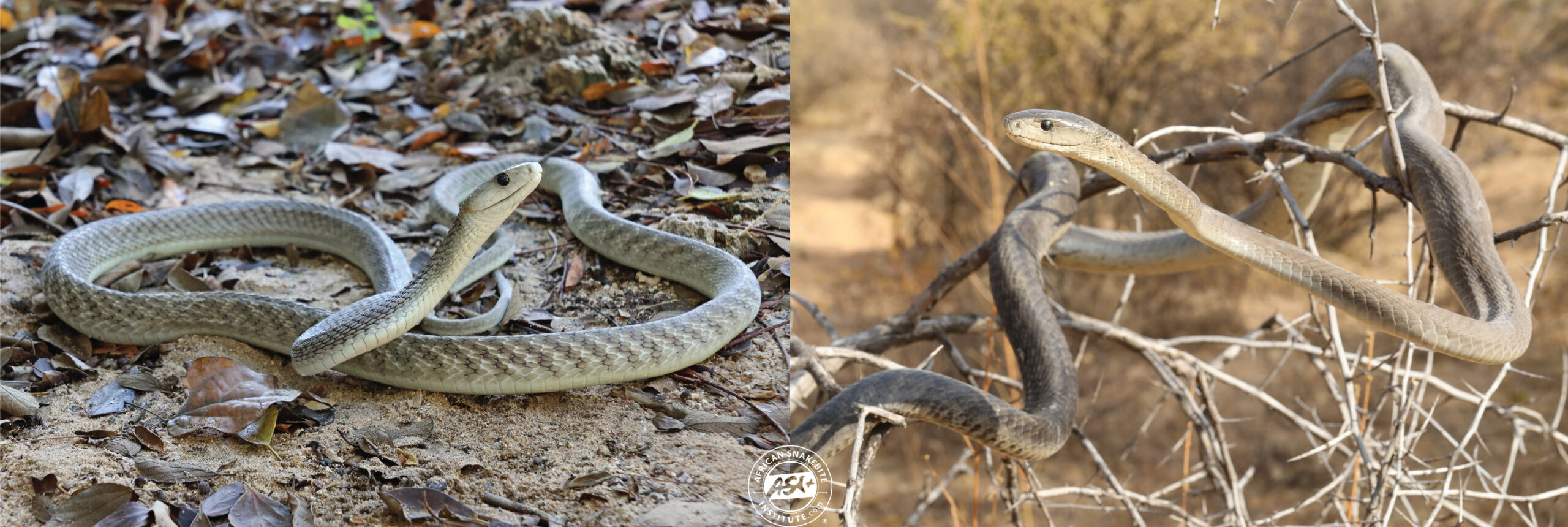
Description – A long, slender snake with an elongated head. Recorded up to 3.5 meters in length, with some reports of this snake reaching up to 4.3 m. They average around 2,2-2,8 m in length. Colour is light grey to brown or olive, usually with a slightly darker tail and a pale belly. There may be pale, diagonal bars along the tail and body.
Habits, habitat and food – This snake occurs in dry savanna areas, usually in the vicinity of trees, rocks and large termite mounds. It is active during the day and enjoys basking in the morning. It feeds on a variety of mammals, especially rats and mice.
Characteristics – This is a nervous snake that is quick to escape if given the chance. If cornered or attempts are made to catch or kill it, it is quick to defend itself and bites readily. Multiple bites may be delivered in quick succession.
Venom – The venom is neurotoxic and causes paralysis of the muscles. Symptoms include drooping eyelids, tingling sensations in the lips or fingers, slurred speech, excessive saliva, muscle twitching and finally respiratory distress and failure. This is a fast-acting venom, and symptoms usually occur within 10-20 minutes. Under normal circumstances respiratory failure can occur within 2 – 8 hours, but in bad bites or cases where multiple bites were suffered, patients can stop breathing within as little as 30 – 45 minutes. Antivenom is available and ventilation is often required in hospital.
You can find more information and additional images here.
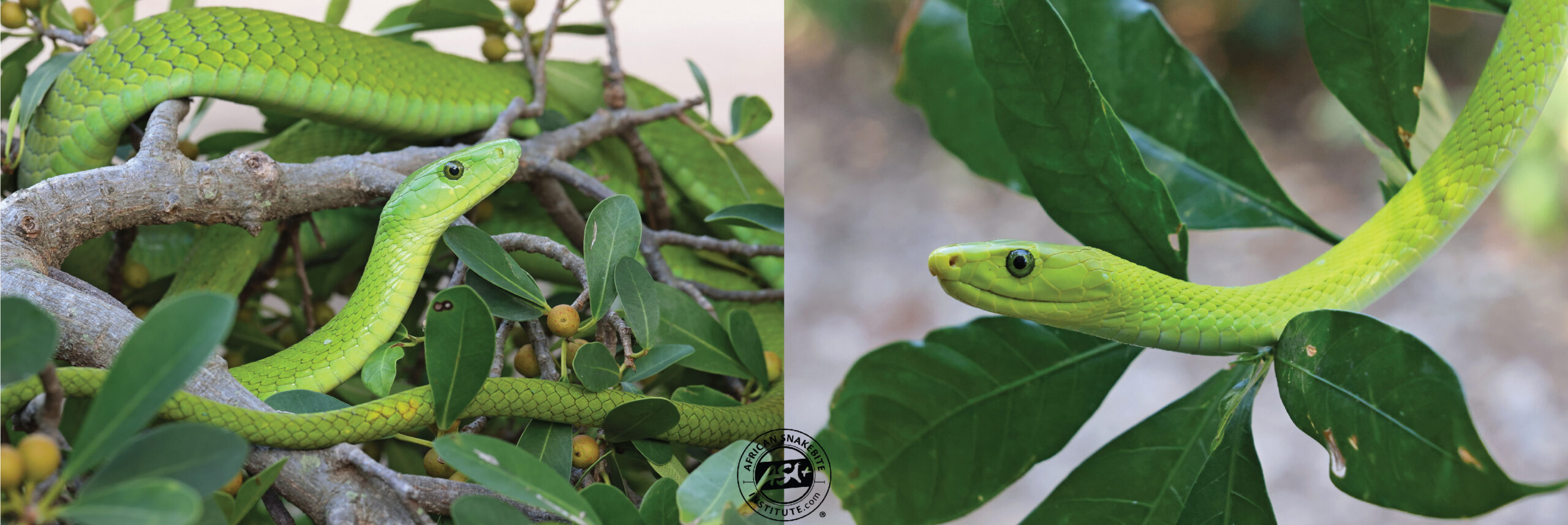
Description – A long, slender snake with an elongated head. Recorded to reach up to 2.3 meters in length but averages around 1,5m. Bright green in colour, often with some scattered yellow scales. Juveniles are blueish green in colour, with a light green head and neck, and have large, olive eyes.
Habits, habitat and food – This snake occurs in thick coastal forest and moist savanna. Also often seen along large rivers near the coast in Kenya and Tanzania. In parts of coastal Kenya, these snakes can be relatively common. Green Mambas are active during the day and live largely in tall trees. These snakes feeds on a variety of tree-living rodents, bats and lizards but are also fond of birds, especially nestlings.
Characteristics – This is the most docile of the three Mamba species that occur in East Africa, and it usually moves off into thick vegetation when disturbed rather than standing its ground. However, if captured or harassed it will defend itself and may bite.
Venom – The venom is neurotoxic, but often presents as swelling which suggests there are some cytotoxins. The bites are not as bad as that of the other mamba species. Antivenom is effective, but bites have also been successfully treated symptomatically.
You can find more information and additional images here.
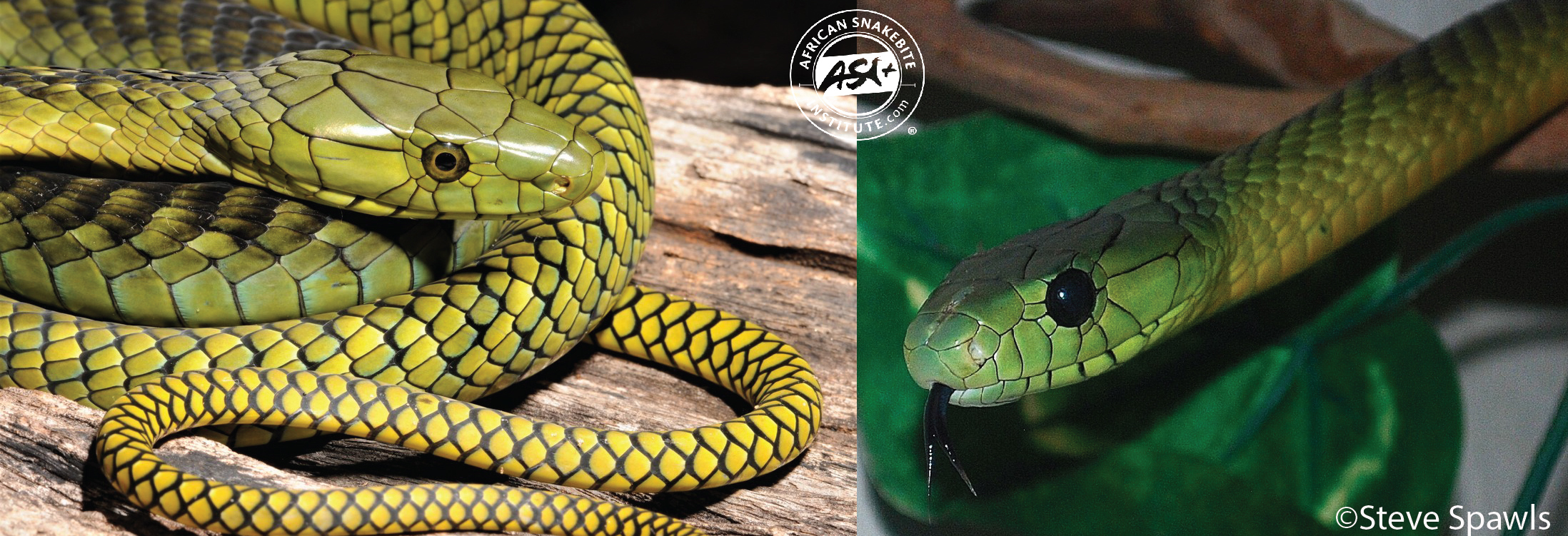
Description – A long, slender snake with an elongated head. Recorded to reach up to 2.6 meters in length. Colour is green to olive or yellow, often with black between the scales. The head is often light blue or paler than the body with black-edged scales. The tail is usually darker than the body in East Africa. Some individuals have a blackish strip down the center of the back. The subspecies Dendroaspis jamesoni kaimosae described from East Africa featuring the black tail is no longer accepted and has shown to just be a colour form.
Habits, habitat and food – This snake occurs in thick forest. It may be found in mango trees around villages and even in roofs or rafters of buildings. It is active during the day and spends most of its time high up in trees. It feeds on a variety of rodents, lizards and birds. Found in parts of western Tanzania and Kenya (Kakamega Forest), Uganda, Rwanda, Burundi with some scattered records from South Sudan.
Characteristics – This is a nervous snake that is quick to escape if given the chance. Because it is nervous, if cornered or attempts are made to catch or kill it, it is quick to defend itself and bites are rapid. It may also flatten the neck and form a crude hood.
Venom – The venom is neurotoxic and causes paralysis of some muscles. Swelling is often observed following bites. Pain in the facial muscles, fever, vomiting and slurred speech are followed by restricted breathing. Deaths have been recorded within 4 hours of the bite. Antivenom is available.
You can find more information and additional images here.