Want to attend the course but can’t make it on this date?
Fill in your details below and we’ll notify you when we next present a course in this area:
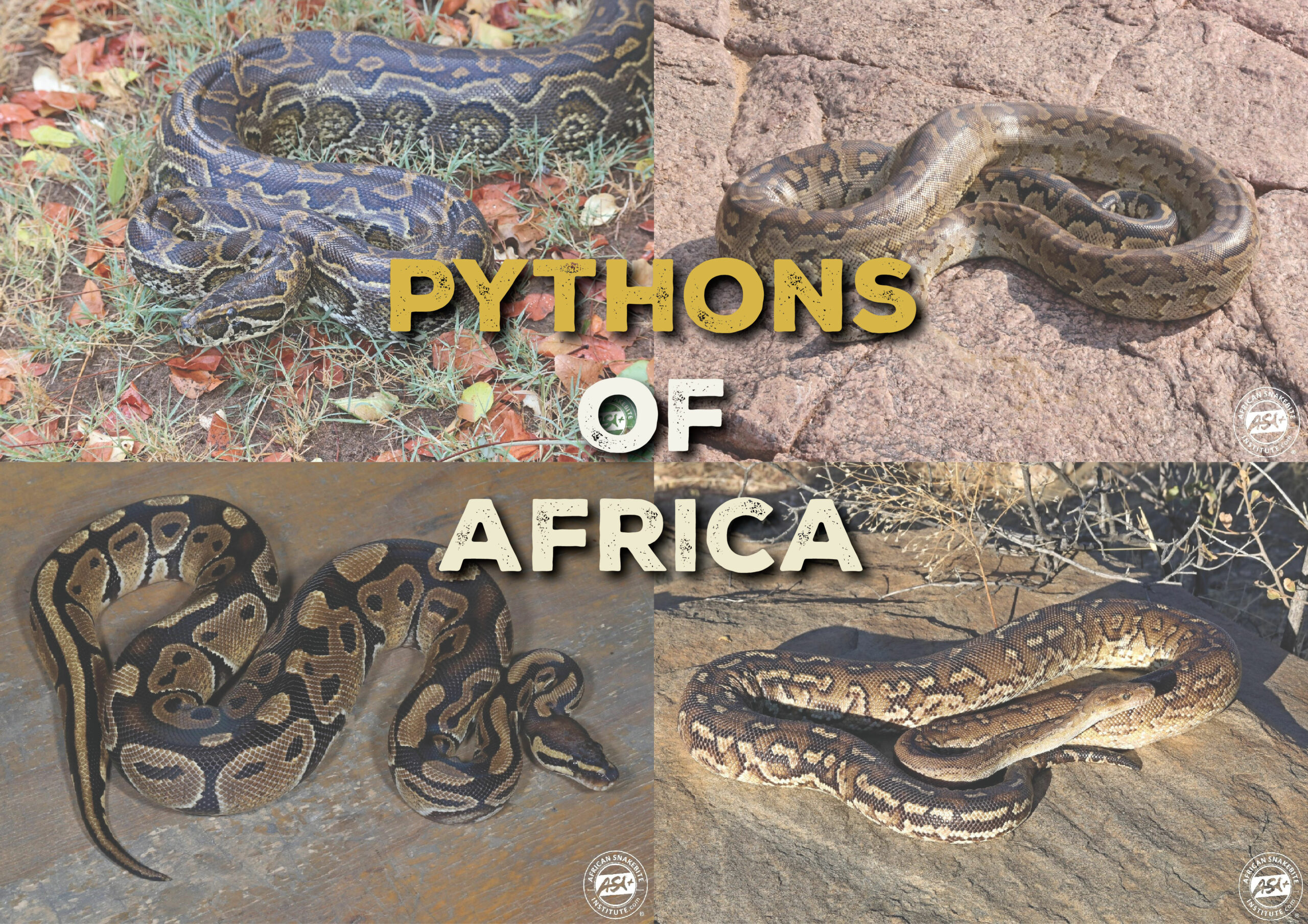 Pythons of Africa
Pythons are large, charismatic snakes, well-known for their constricting ability. All of the large constrictors, such as Pythons, Boas and Anacondas are found in either the family Pythonidae or Boidae. There are ten species found in the genus Python – these snakes are distributed across Asia and Africa. One of the most well-known species is the Burmese Pythons (Python bivittatus), which are common in the pet trade, especially the yellow and white albino forms. Within the family Pythonidae, Reticulated Pythons (Malayopython reticulatus) are the largest snakes with a length of around 7.5 meters. In Africa, the largest python is the African Rock Python (Python sebae), with females reportedly reaching 6.5 meters in length.
There has been some confusion across Africa about the python species. There are currently four species of pythons found across Africa. You’ll find more information on these four species below.
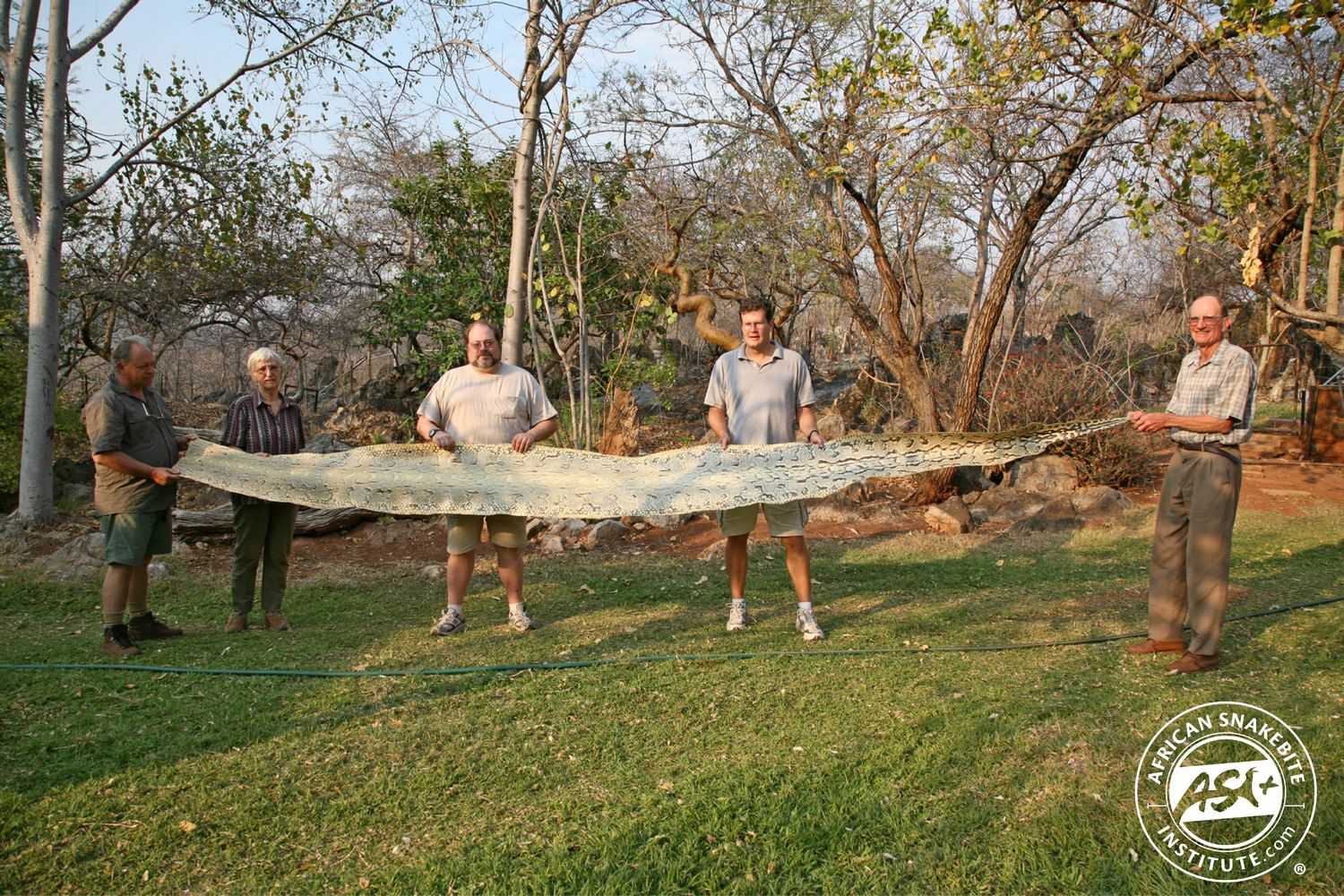
Description – a large, robust snake with a distinct head. Females can reach 6.5m in length, and there are unconfirmed, anecdotal records of specimens measuring 9 m! Colour is camouflaged shades of brown, black and tan. A distinct, pale, tan line extends from the snout, down the length of the head above each eye. There is also a pale upside-down V-pattern below each eye. The scales on the top of the head, especially on the top of the snout, are large and a good feature to tell this species apart from the Southern African Python.
Distribution – found in Central, West and East Africa from northern Angola to Kenya and across to Senegal. Generally found in thick forests or moist savannas.
History – described in 1789 by Johann Friedrich Gmelin, a German naturalist, chemist, botanist, entomologist, herpetologist, and malacologist. He saw plates painted in work by Albertus Seba, a naturalist who visited West Africa. Gmelin named the species after Albertus – Python sebae
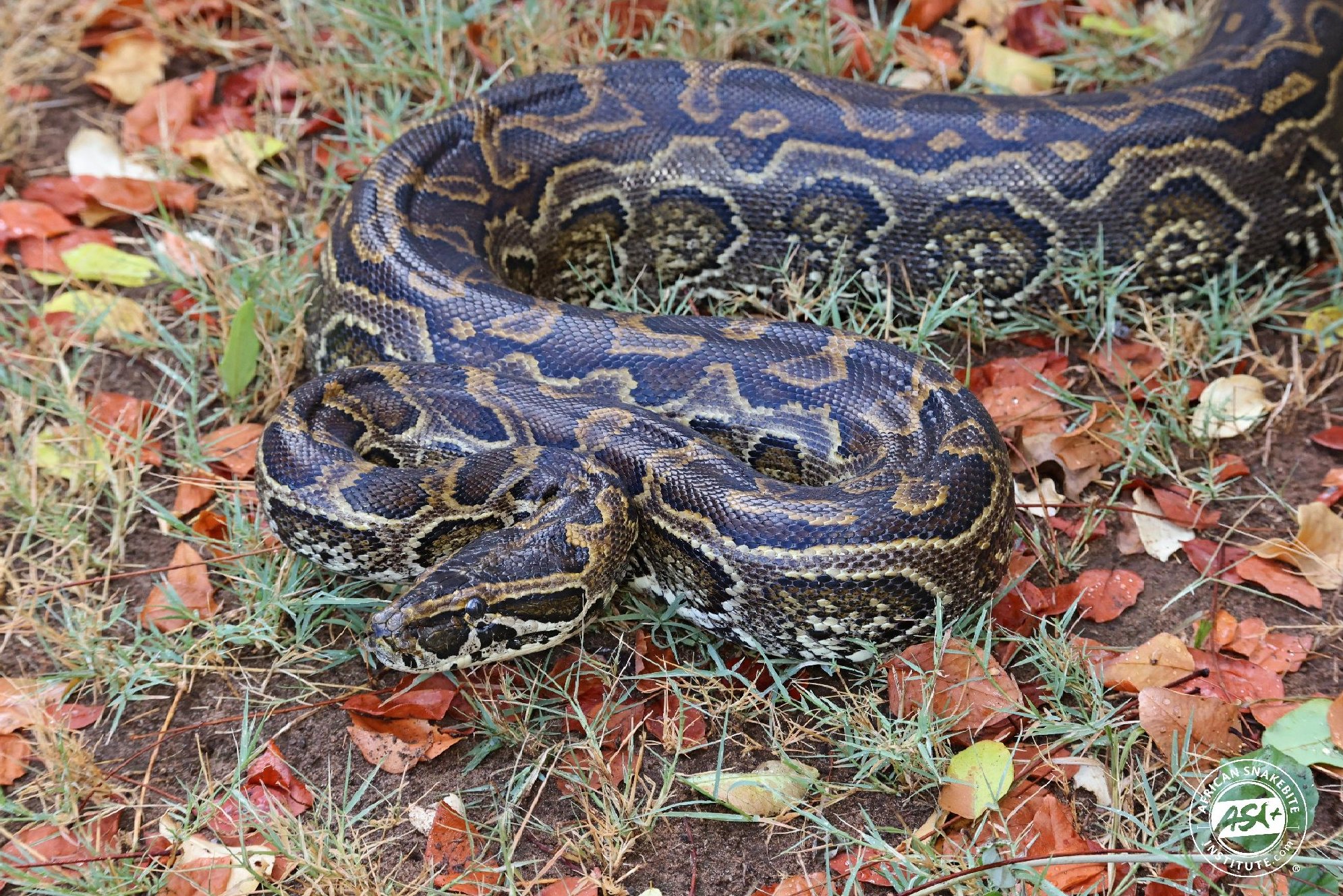
Description – a large, robust snake with a large head. Females can reach 5.5m in length, but males are generally under 4.5m. Colour consists of shades of brown, black and tan, often with a pale stripe down the centre of the tail. There is a pale V pattern on the top of the head, extending above each eye. A dark stripe extends across the eye down the sides of the head. Scales on the top of the head are uniform in size and smaller than those of the African Rock Python.
Distribution – found in the savanna regions of southern Africa, extending to northern Angola, southern DRC and southern Kenya.
History – originally described by Sir Andrew Smith from Port Natal (Durban) in 1840. Smith only makes mention of the name Python natalensis and doesn’t give any description of the species or reference to a specimen or museum material. The species was therefore not accepted in 1840 and was considered a synonym of Python sebae. By the 20th century, it was considered a subspecies, Python sebae natalensis, but was elevated to a full species by the late Donald Broadley in 1999, where he gave a formal description of the species and range.
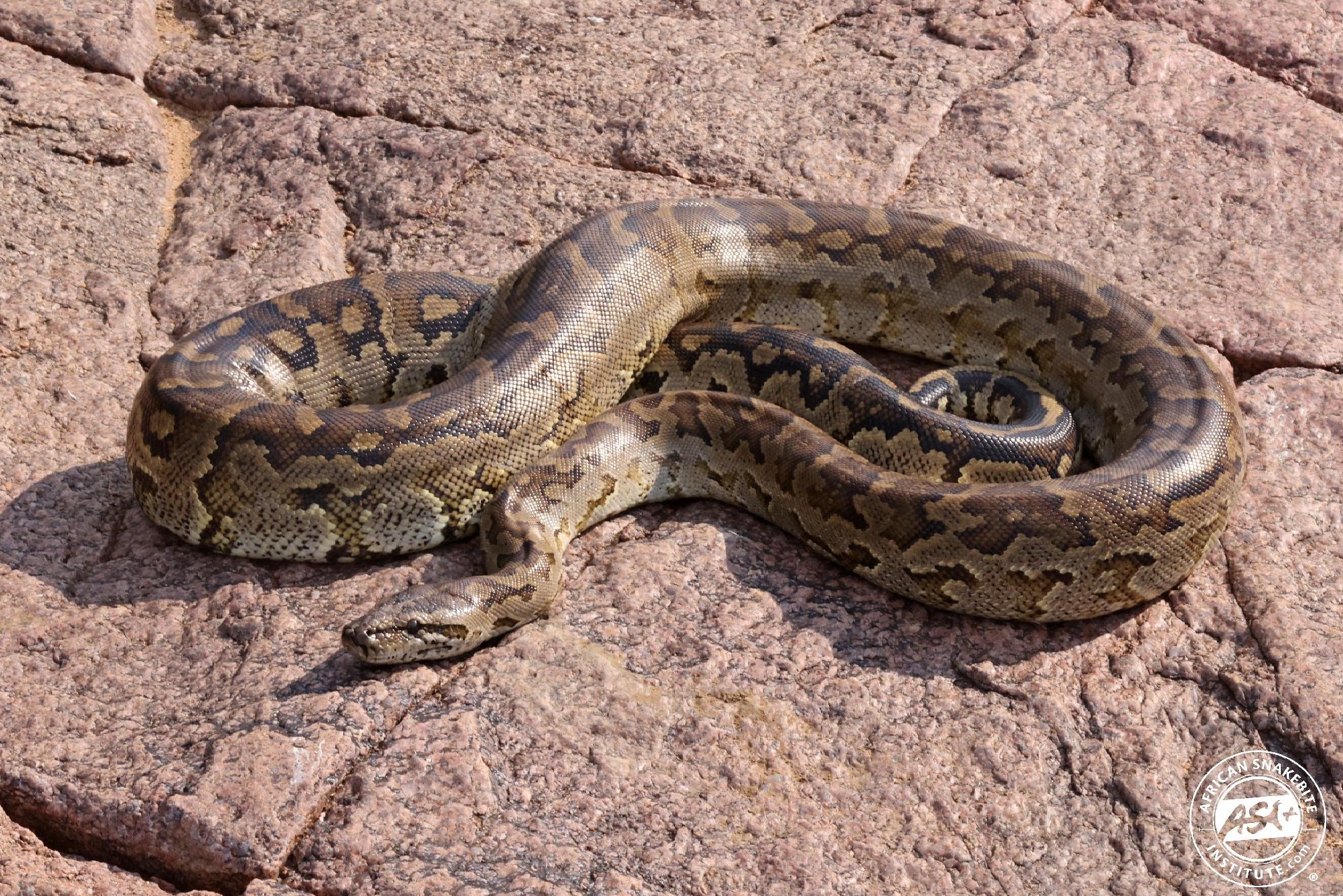
Description –an attractive, smaller python reaching lengths of 1.8m in females. Colour consists of light brown with dark-edged pale patterns across the body. A pale stripe extends above each eye, meeting at the back of the head. The scales are small and form a bead-like texture on the body.
Distribution – found in south-western Angola and north-western and central Namibia.
History – described in 1887 by José Vicente Barbosa du Bocage, a Portuguese zoologist, politician, and professor. The first collected animal was found in Catumbela, near Lobito, Angola. The type specimen was destroyed in the fires of 1978 that engulfed the National Museum of Natural History and Science in Lisbon, Portugal. Bocage named the species in honour of José Alberto de Oliveira Anchieta, a 19th-century Portuguese explorer and naturalist, who travelled extensively in Portuguese Angola, collecting animals and plants, which he sent to the museum in Lisbon.
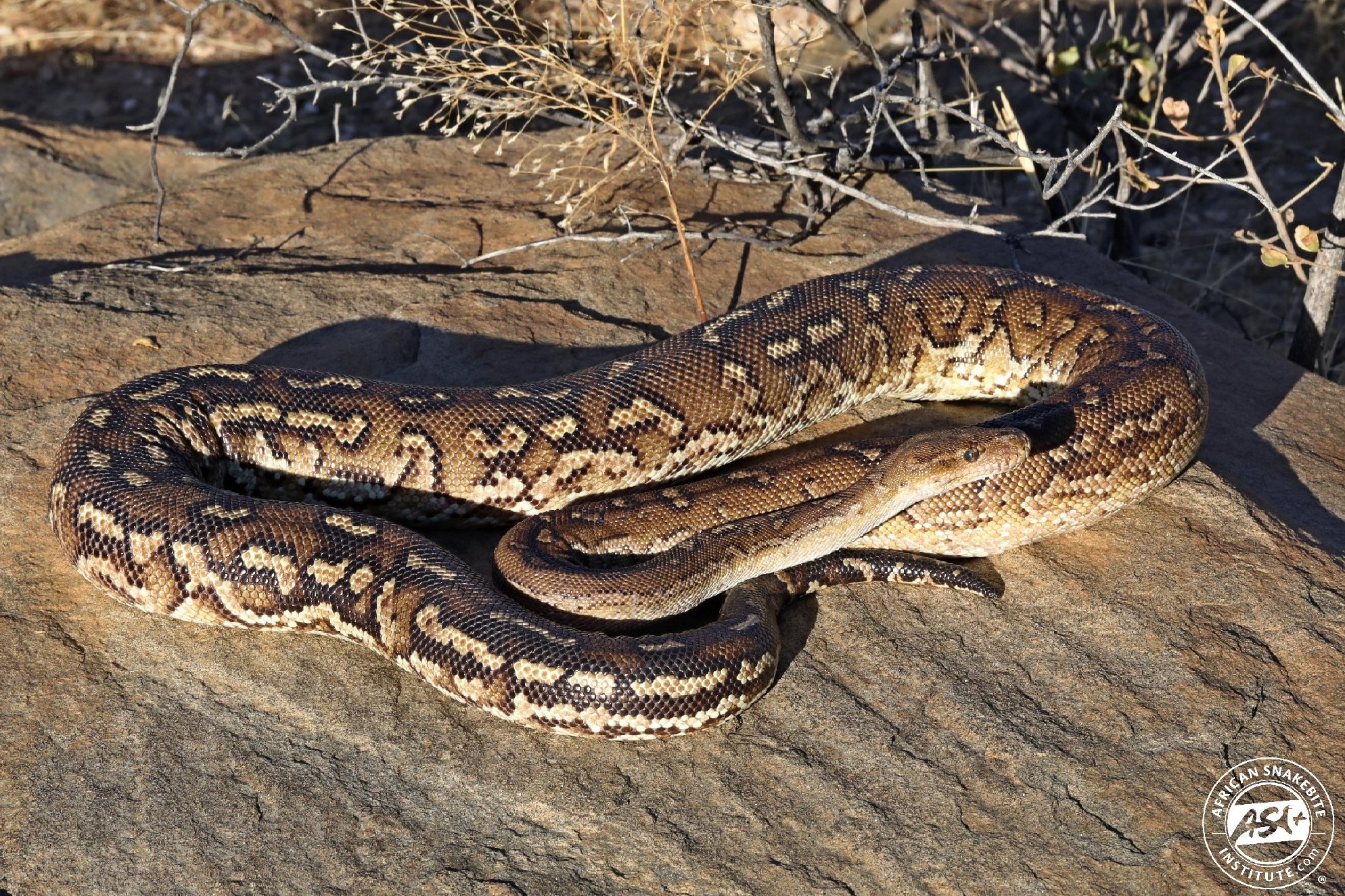
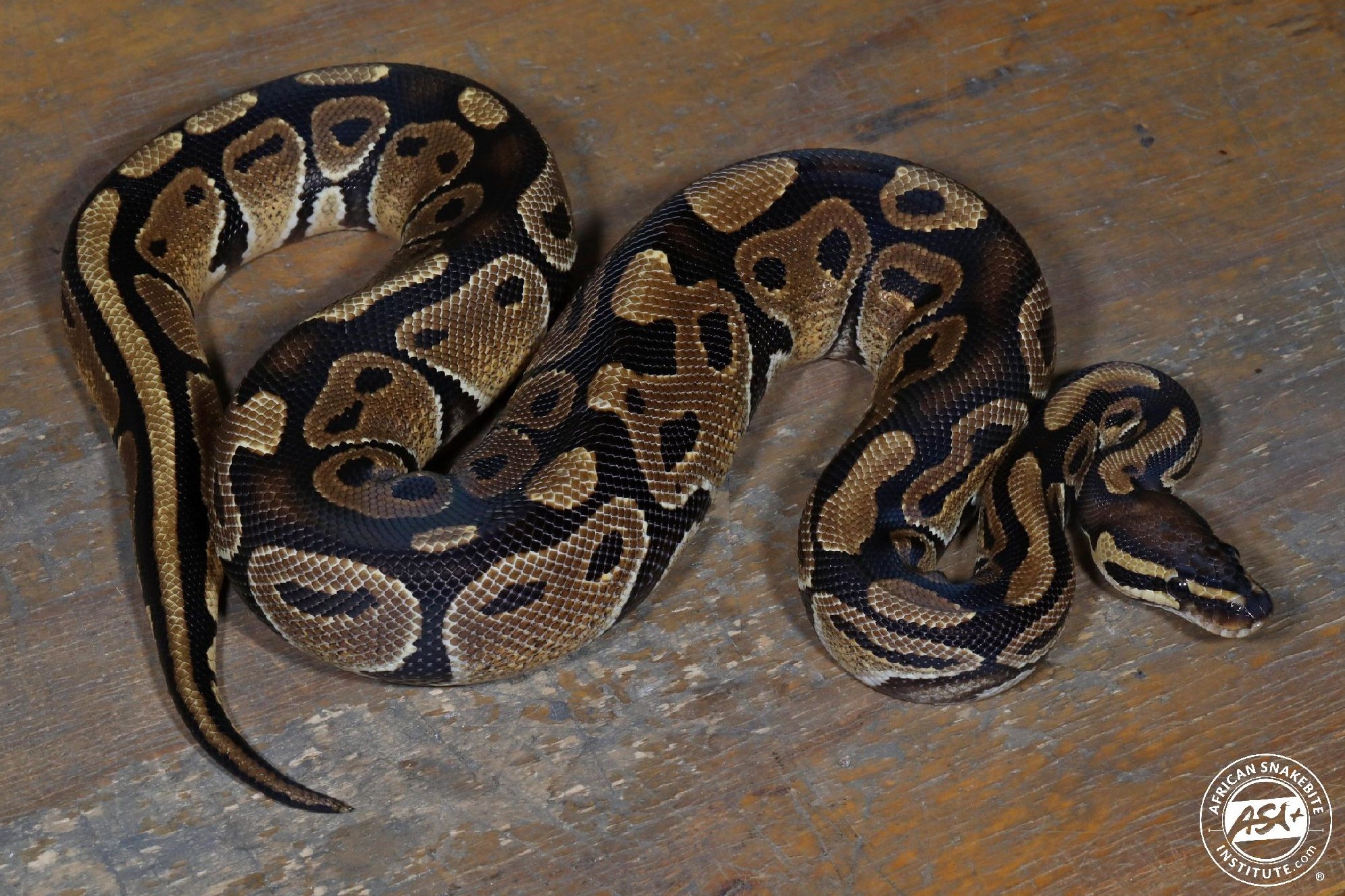
Description – a small python reaching 1.5 meters in length. Colour is tan to brown, with dark, camouflaged blotches and patterns. A pale stripe extends along the head, above each eye, with another dark stripe extending across the eye.
Distribution – a West African species found from Senegal through to Nigeria, but extending all the way to the western edge of Uganda.
History – the species was described by George Shaw, an English botanist and zoologist, in 1802. The first specimens were collected in the Gambia. The species is named after the Latin rex, regis = king. This species was apparently often kept as a pet by African kings and other rulers due to its calm and shy nature. They are frequently exploited for their skin, meat and for the pet trade, making this species one of the most exported reptiles out of West Africa.
Many of the older generation, including game rangers and most old field guides, still refer to all pythons as African Rock Pythons but technically, that name refers to the snakes in Central, East and West Africa and the pythons in the south are Southern African Pythons. Identification is not easy between the pythons, especially the two larger species, but distribution is generally a good way of telling the two apart.
 ASI Combo C
R1,680.00
ASI Combo C
R1,680.00
 ASI First Aid for Snakebite Booklet
R40.00
ASI First Aid for Snakebite Booklet
R40.00
 ASI Collapsible Snake Hook - 1.2 m
R650.00
ASI Collapsible Snake Hook - 1.2 m
R650.00