Want to attend the course but can’t make it on this date?
Fill in your details below and we’ll notify you when we next present a course in this area:
 Snake Distribution
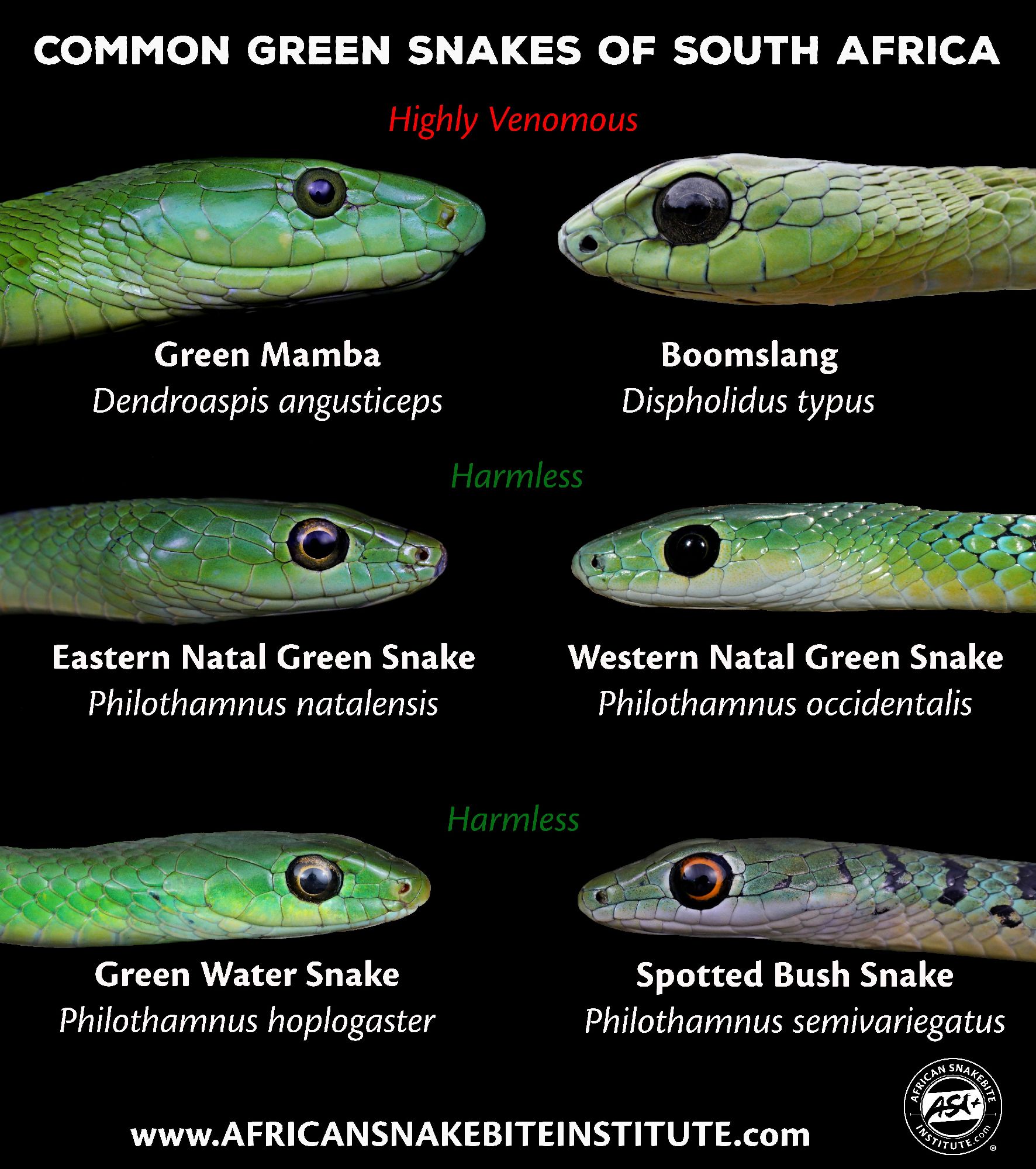
My late Oom Willie of the farm Blinkklip in North West Province of South Africa was quite sure that he had Green Mambas on his farm, but what he was seeing were actually green Boomslang. Generally, male Boomslang are green in colour, whereas females are mostly brown. Except for in the Western Cape, where males are very dark dorsally with orange, green or yellow sides and females are brown to grey. But not always. Around Durban, we occasionally get a green Boomslang dropping eggs.
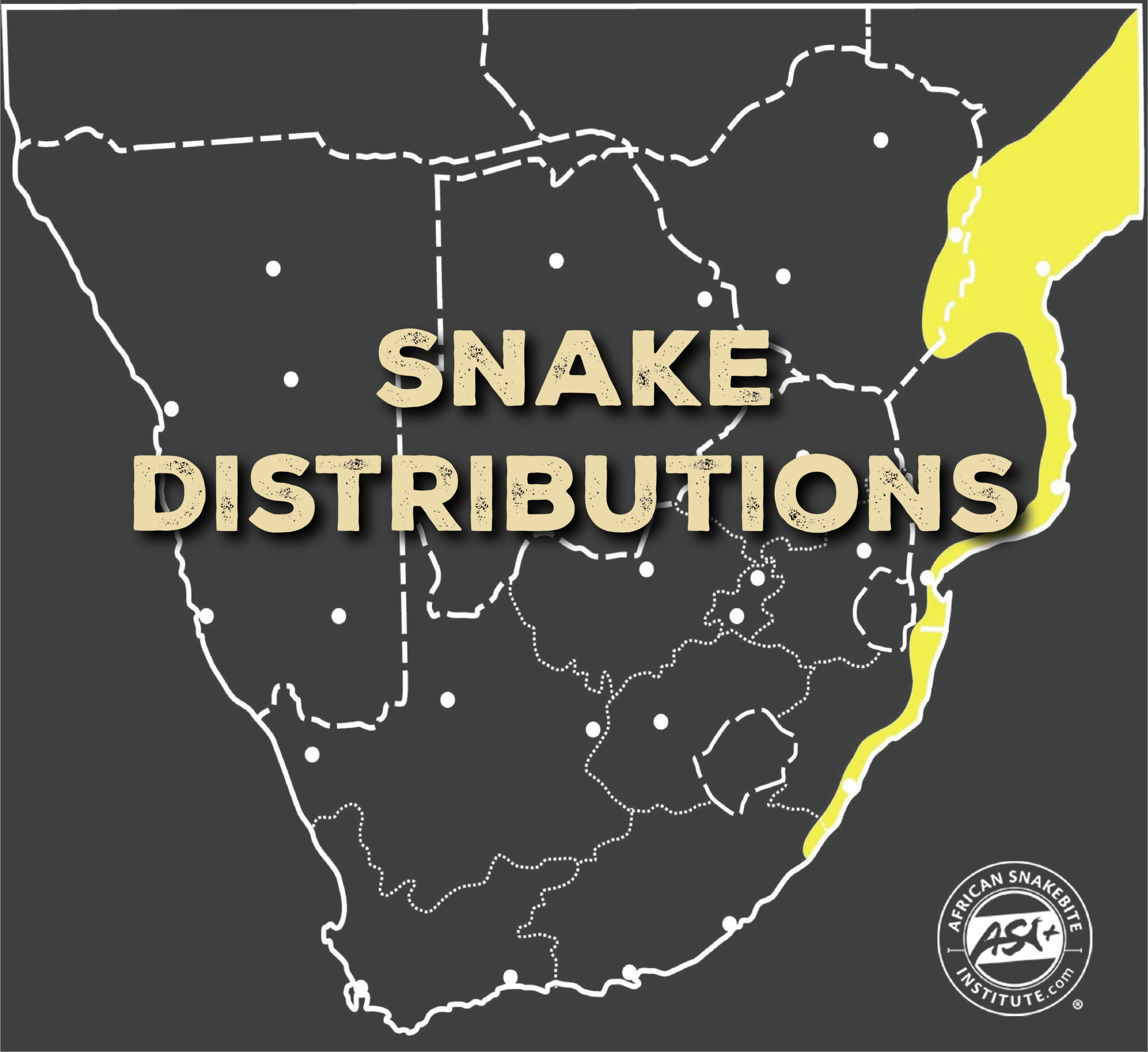
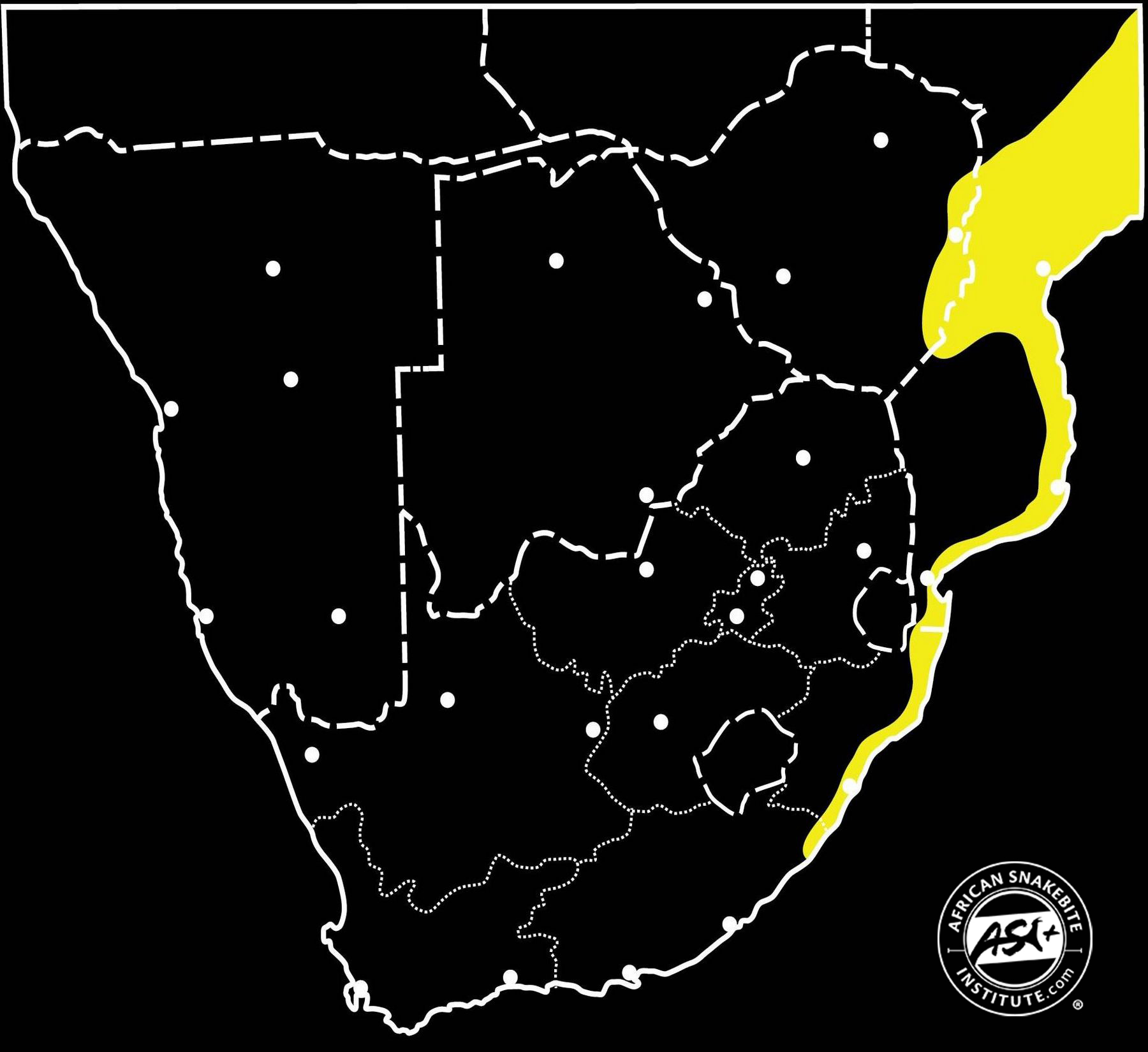
The Green Mamba is found in thick coastal bush from the extreme northern parts of the Eastern Cape (the old Transkei) northwards along the KwaZulu-Natal coast into Mozambique, eastern Zimbabwe and elsewhere further north into East Africa.
It is mostly found within a few kilometres of the sea in coastal bush with Strelitzias, but in northern KZN, around Hluhluwe and Ndumo, it can be found up to 45 km inland of the sea, provided that the habitat is suitable.
Every snake species has a specific distribution, and we have been collecting data on their distributions for over 200 years. Historically, snakes were collected during reptile surveys and preserved in various museums, where reptile scientists could inspect and examine specimens preserved in alcohol. This eliminates (or limits) wrong identifications. This data is then used to form scientific papers and ultimately field guides. People will often say, “Well, snakes don’t read the field guides; they can occur where they want”. Although this is true, the field guide maps are based on an understanding of the species’ habitat preference, hundreds of years of data from surveys and observations, as well as climatic models and geology. So, when you look at the distribution map of the Green Mamba in A Complete Guide to Snakes of Southern Africa, Snakes and Snakebite in Southern Africa or the ASI profiles, a great deal of work has gone into compiling accurate maps.
We are often told of Green Mabas living in the Kruger National Park or in parts of Mpumalanga or Limpopo. Except for the odd hitchhiker, they are not found there, and should a Green Mamba end up in an area well out of its natural range, it will, in all likelihood, not survive for very long. In central Zimbabwe, any large green snake is referred to as a Green Mamba, but it is actually a Boomslang that people are encountering. Green Mambas only just enter Zimbabwe around the warm and tropical lowland forests of Honda and Pungwe Valleys.
There are many factors that determine what areas are suitable for every snake species. Boomslang are largely tree-living and are absent from most of the Free State and Northern Cape. These are areas of grassland or karoo scrub and desert, and are not suitable for Boomslang. The Black Mamba is a bushveld snake and is found in areas with trees, often with rocks and where the winters are not too cold. Snakes like the Spotted Rock Snake have an extended distribution, but within their range, they live in narrow rock crevices where they feed largely on lizards, specifically geckos. Horned Adders prefer sandy areas or gravel plains but are also found on some mountain ranges such as the Brandberg in Namibia, the Waterberg in Limpopo and the Magaliesberg just north of Pretoria. They rely on camouflage to avoid detection, and their colours match the environment – in Namibia, they are often very light in colour to match the local sand, in the Kalahari, they are reddish and in Limpopo, they are pastel dark and light brown.
The Rinkhals inhabits grasslands and fynbos (in the Western Cape), and where the habitat changes from grasslands to bushveld, they disappear and in many areas are replaced by the Mozambique Spitting Cobra. The latter is not found in grasslands. Farmers often speak of seeing Rinkhals in Limpopo Province, but they do not occur there and are probably being confused with the Mozambique Spitting Cobra – a common snake throughout the entire province. And don’t get confused with common names. Just because it is called a Mozambique Spitting Cobra does not mean it only occurs in Mozambique. The first specimen – when the snake was described in 1854 – was from Mozambique and its scientific name is Naja mossambica. However, it occurs as far west as northern Namibia.
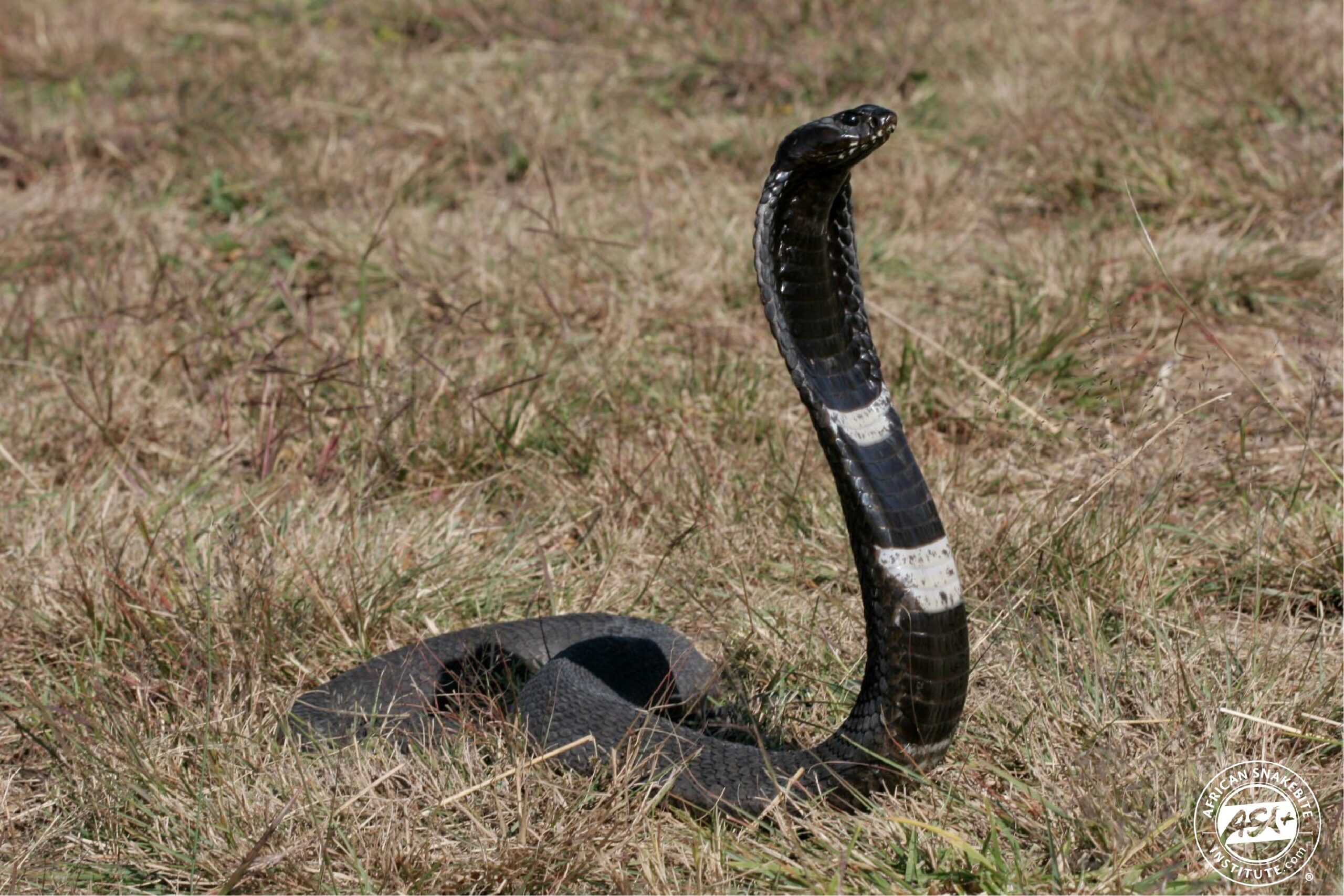
Temperature and elevation also play a role in distribution, and Berg Adders are restricted to the Cape Fold mountains, the KwaZulu-Natal Drakensberg, the Mpumalanga Drakensberg and the eastern highlands in Zimbabwe. They favour high altitudes but are found at sea level at Betties Bay and in parts of the Garden Route.
Some snakes, like the Spotted Skaapsteker, can handle extreme cold temperatures in the Free State and Lesotho, while others, like the Eastern Natal Green Snake, prefer areas where the winter temperatures do not drop below zero.
Diet also plays an important role, and snakes like the Herald Snake feed largely on toads and favour the wetter eastern half of the country. Green Water Snakes prey on small frogs (not toads) and fish, and frequent wet areas, whereas the Namaqua Dwarf Adder lives in coastal dunes on the west coast, where it feeds largely on lizards, especially sand lizards and geckos.
Occasionally, we will find new range extensions, usually in areas that are poorly sampled or for rarely seen species. The discovery of Speckled Shield-nose Snakes (Aspidelaps scutatus scutatus) outside of Kimberley in the Northern Cape in 2016 resulted in a 250km southward range extension. This area is poorly sampled, and these snakes live underground and are easily missed in surveys.
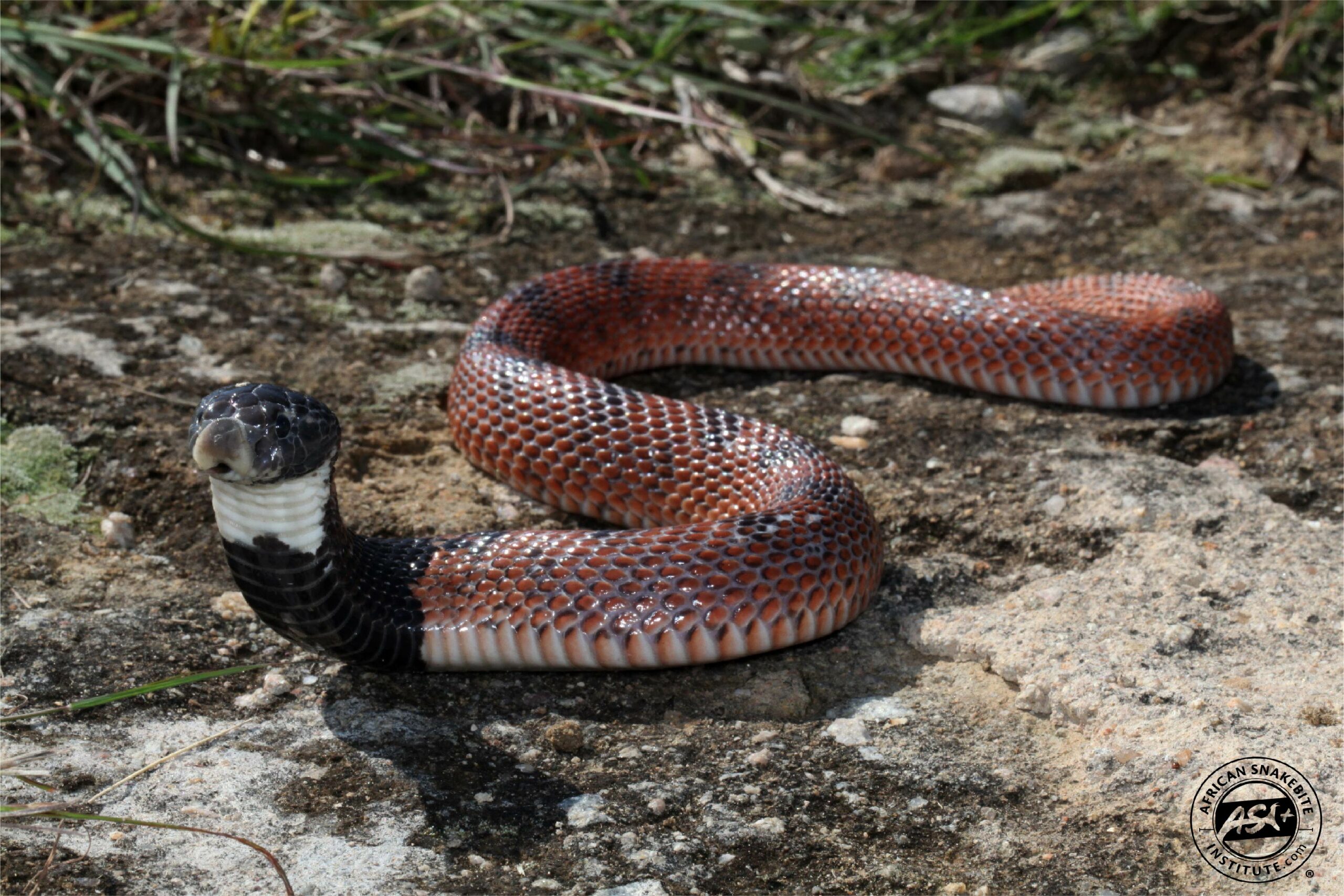
Then we have generalists like the Puff Adder and Brown House Snake that are widely distributed throughout most of the country. They also vary regionally, and Puff Adders from northern Gauteng look quite different from West Coast and Eastern Cape Puff Adders. They may also have different feeding habits and reproduce at different times of the year.
Brown House Snakes are highly adaptable and often frequent suburban gardens in search of rodents, hence their common name. The coastal varieties in KZN grow up to 1,5 m in length, whereas those from Gauteng rarely exceed 75 cm in length.
Urban development, farming practices and other developments like open-cast mining that impact on habitat have a massive influence on snake distribution and for some species, large tracts of suitable habitat have been destroyed over the past hundred years.
 ASI Combo C
R1,680.00
ASI Combo C
R1,680.00
 ASI Lite Combo 3
R1,575.00
ASI Lite Combo 3
R1,575.00
 ASI Book Combo 1
Original price was: R1,315.00.R1,120.00Current price is: R1,120.00.
ASI Book Combo 1
Original price was: R1,315.00.R1,120.00Current price is: R1,120.00.