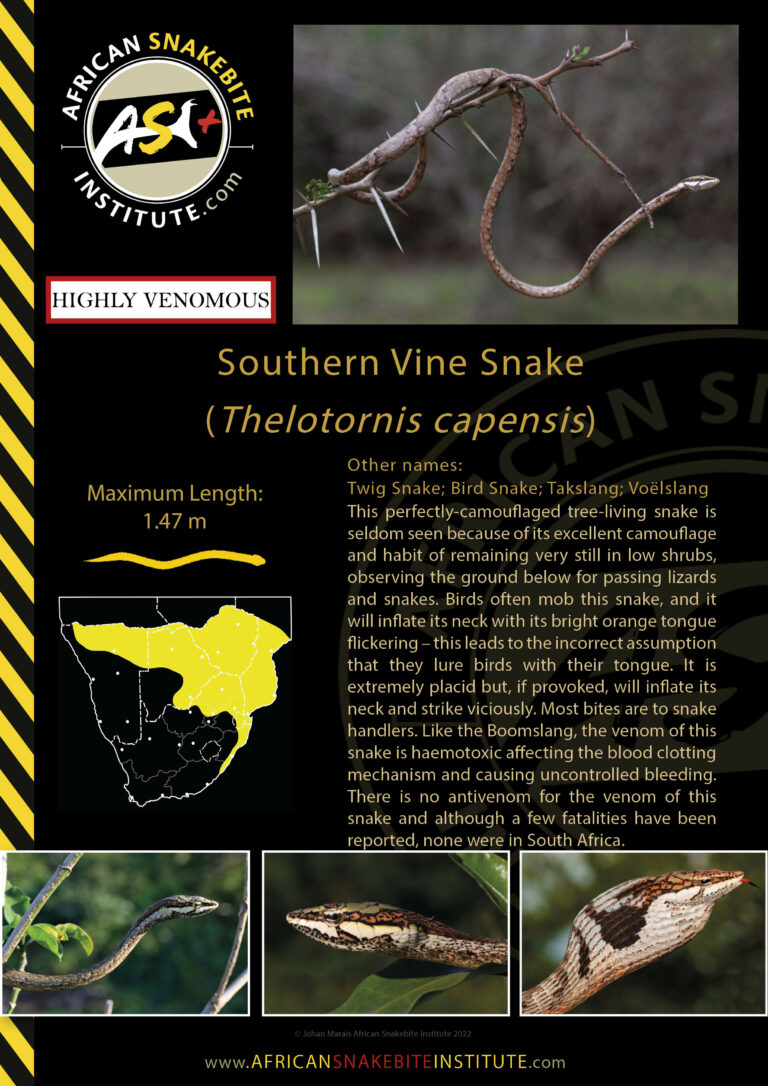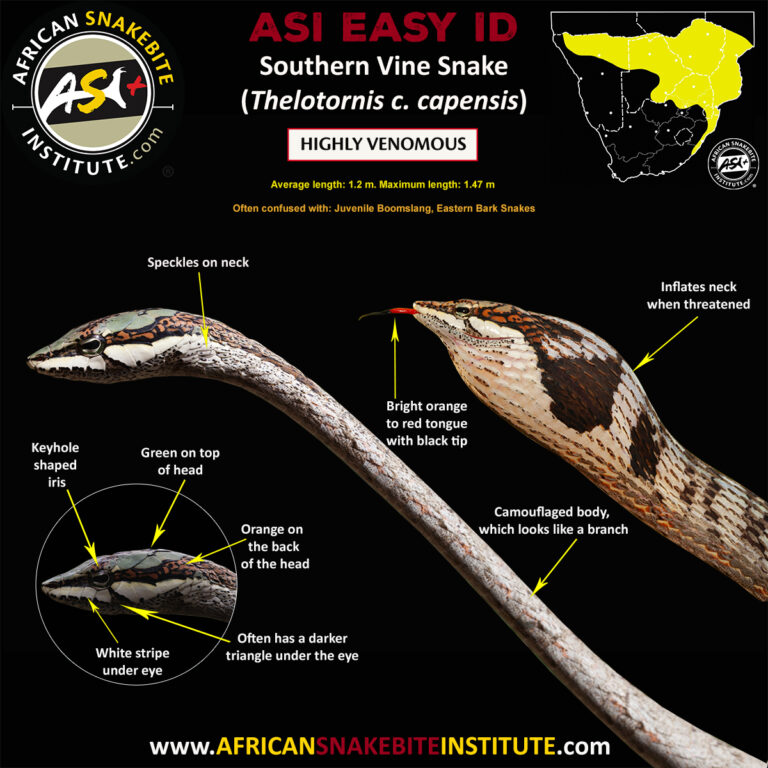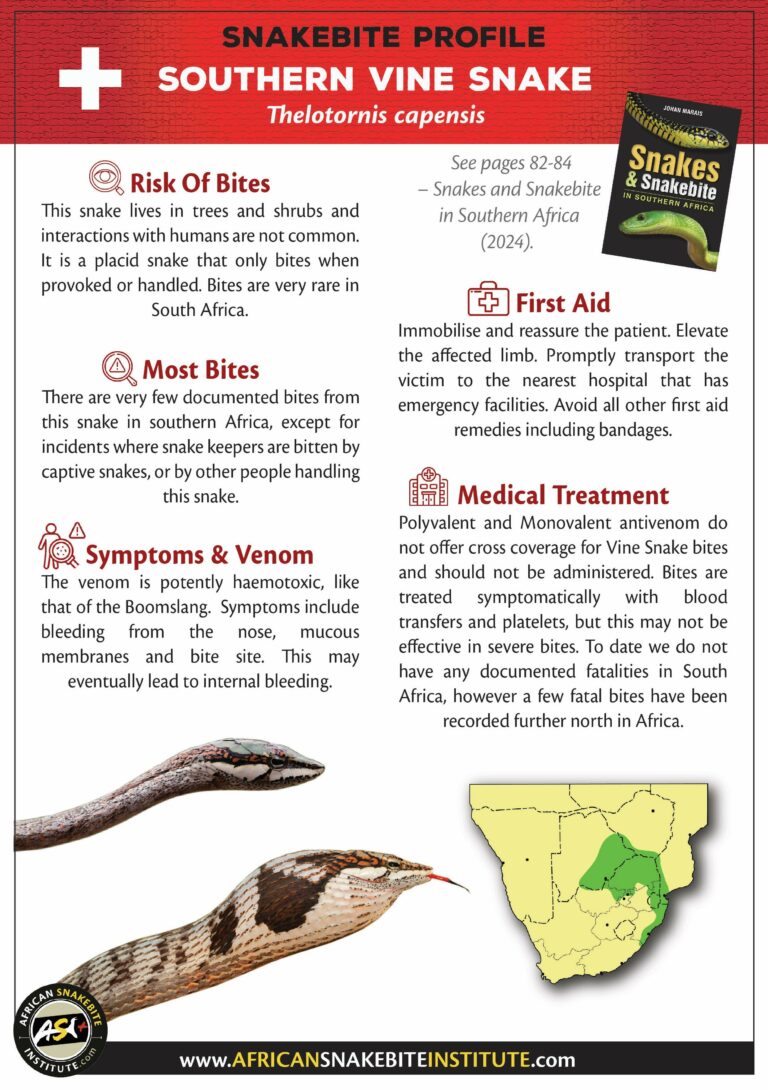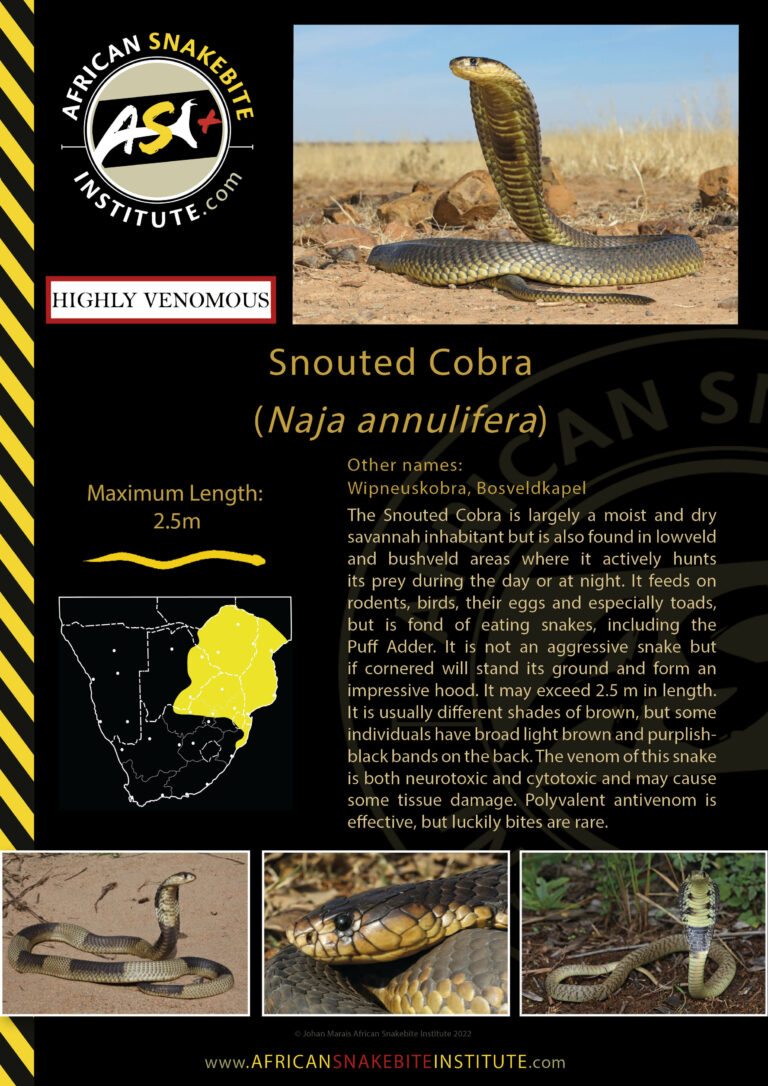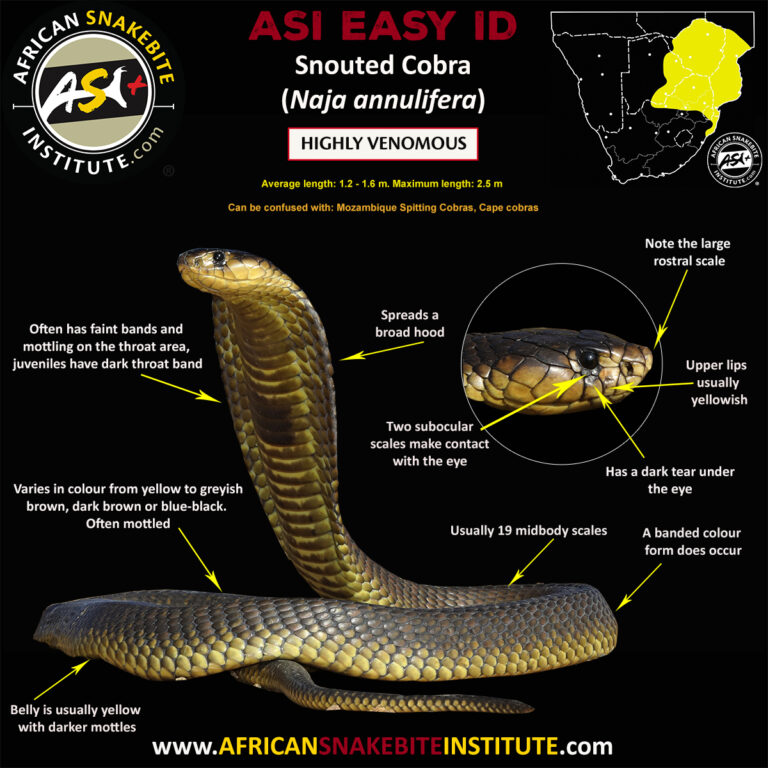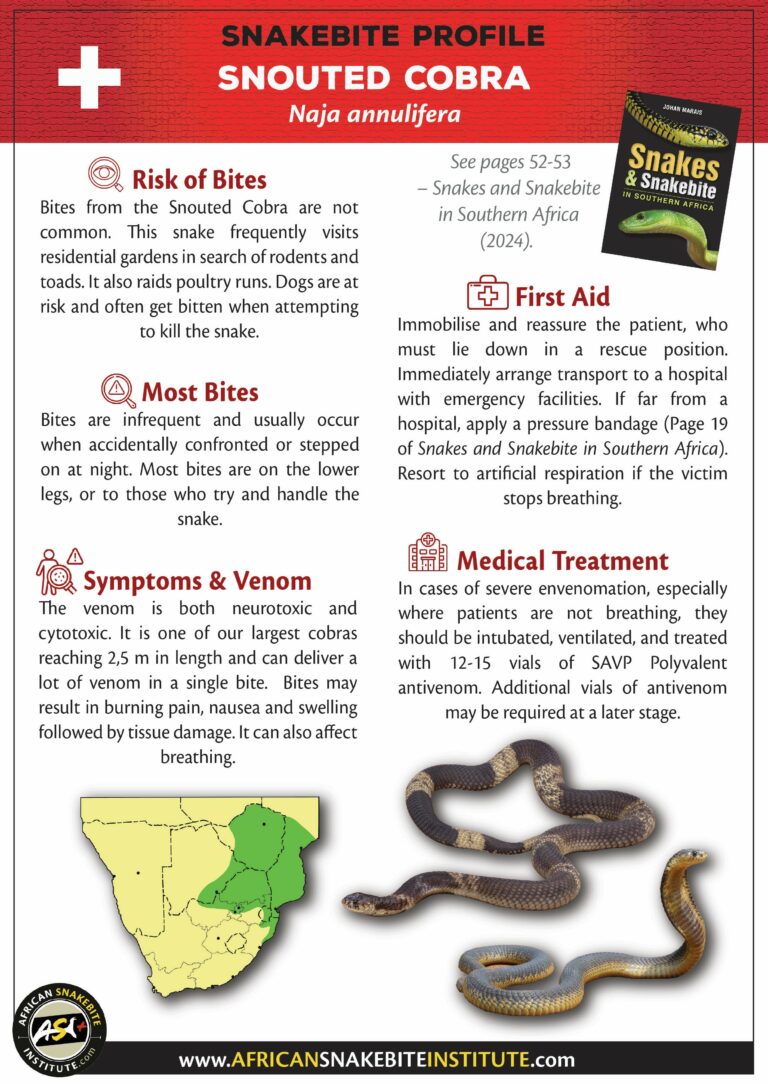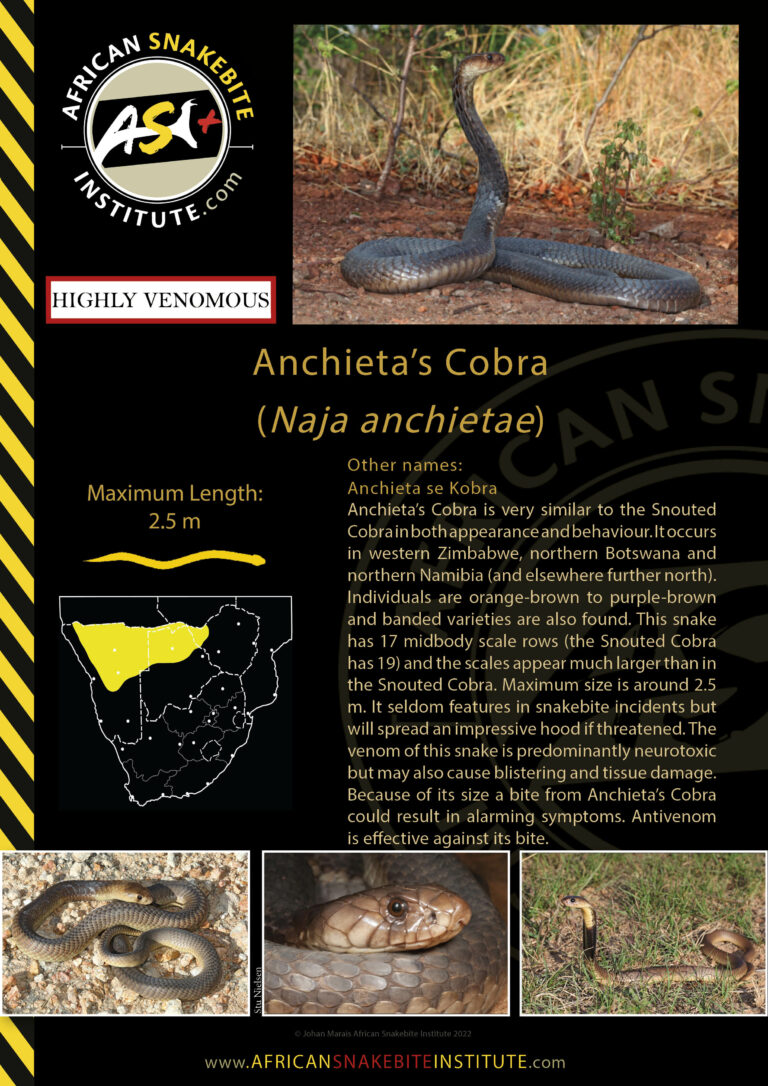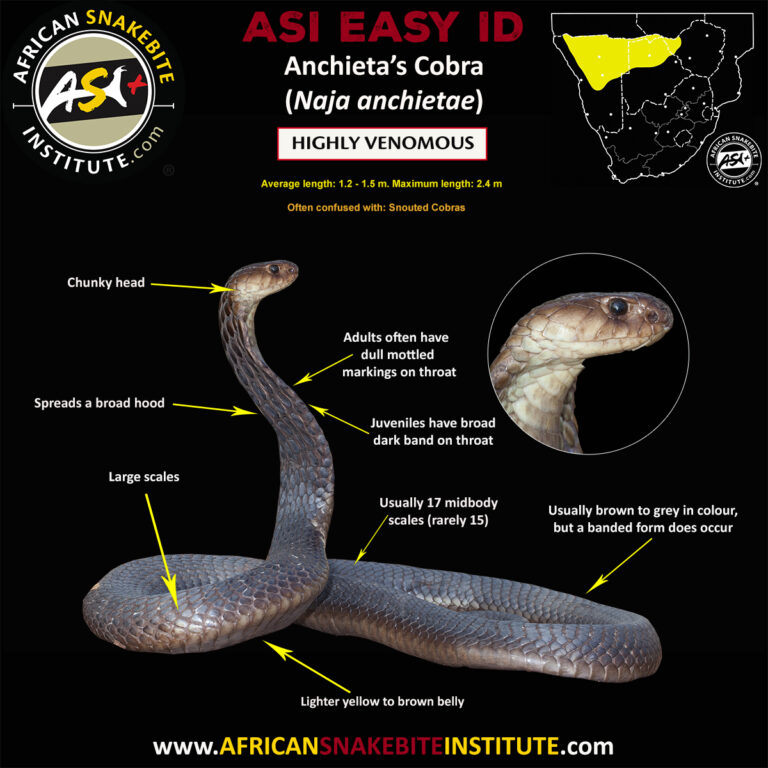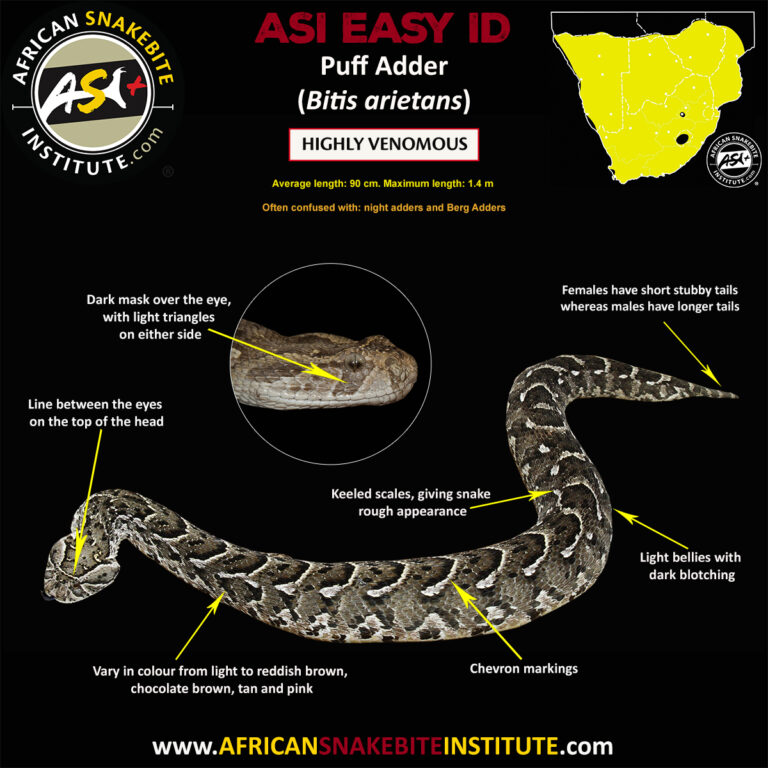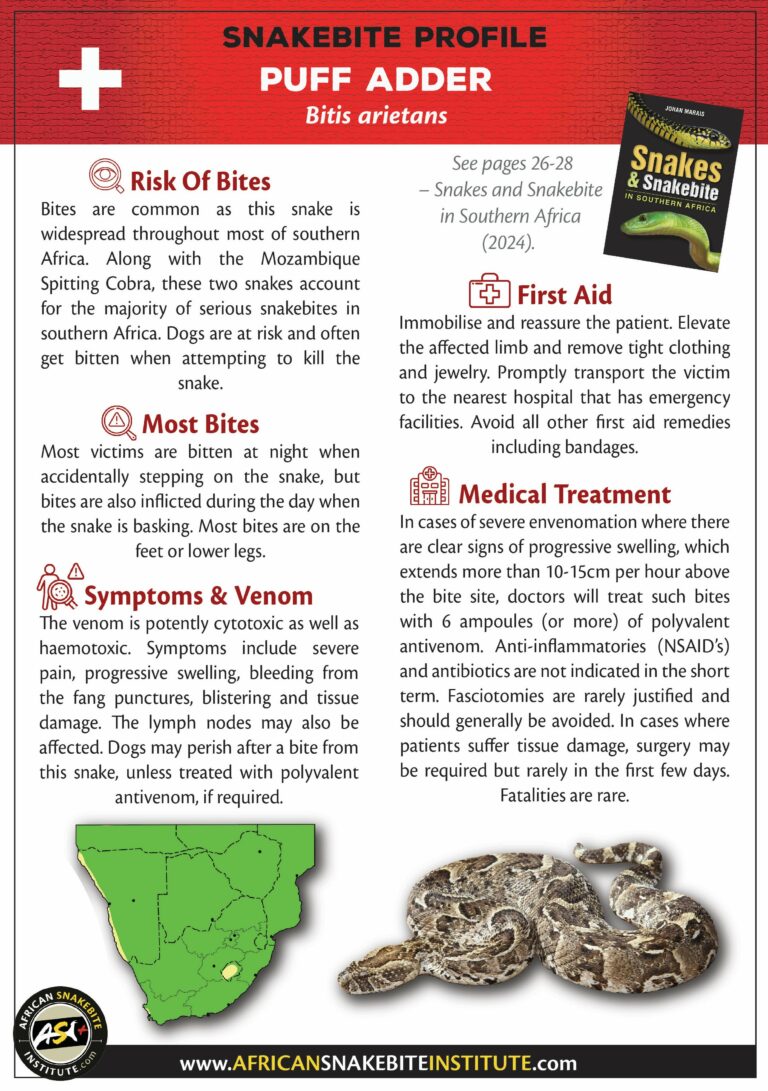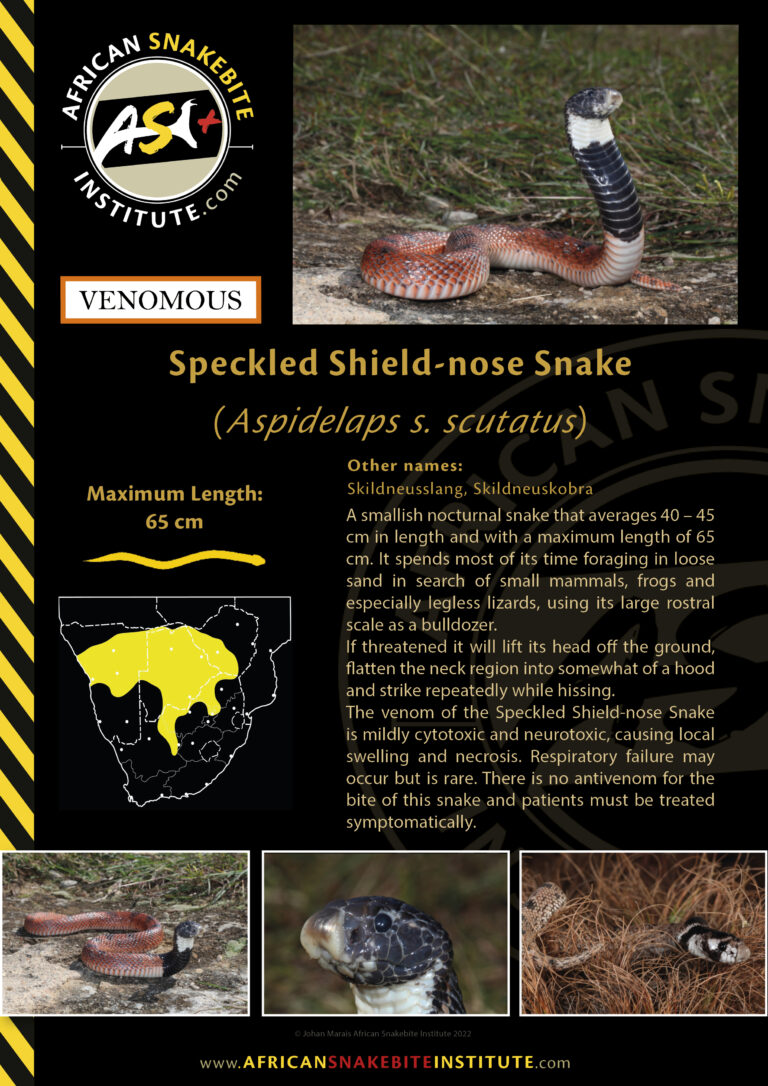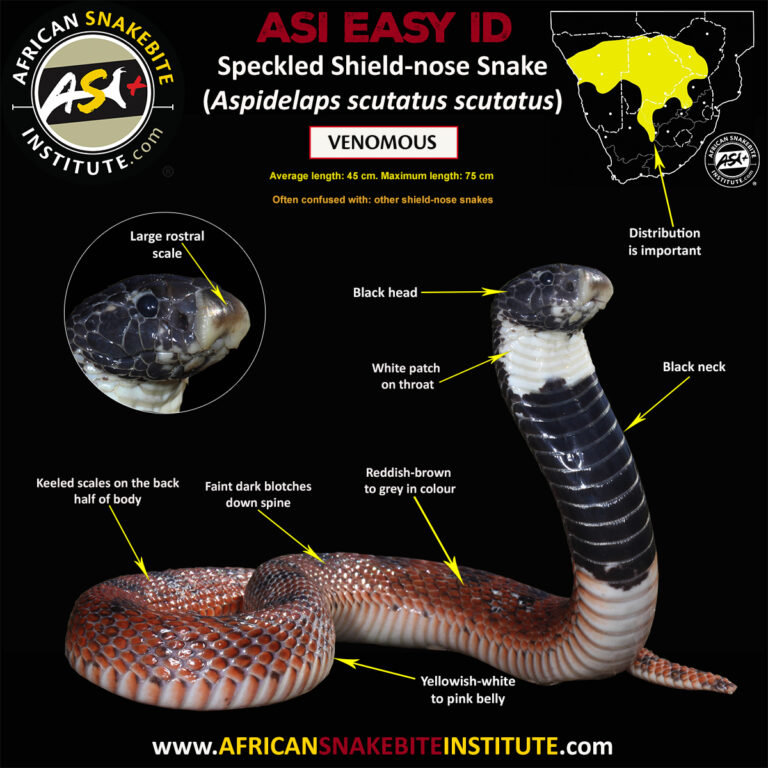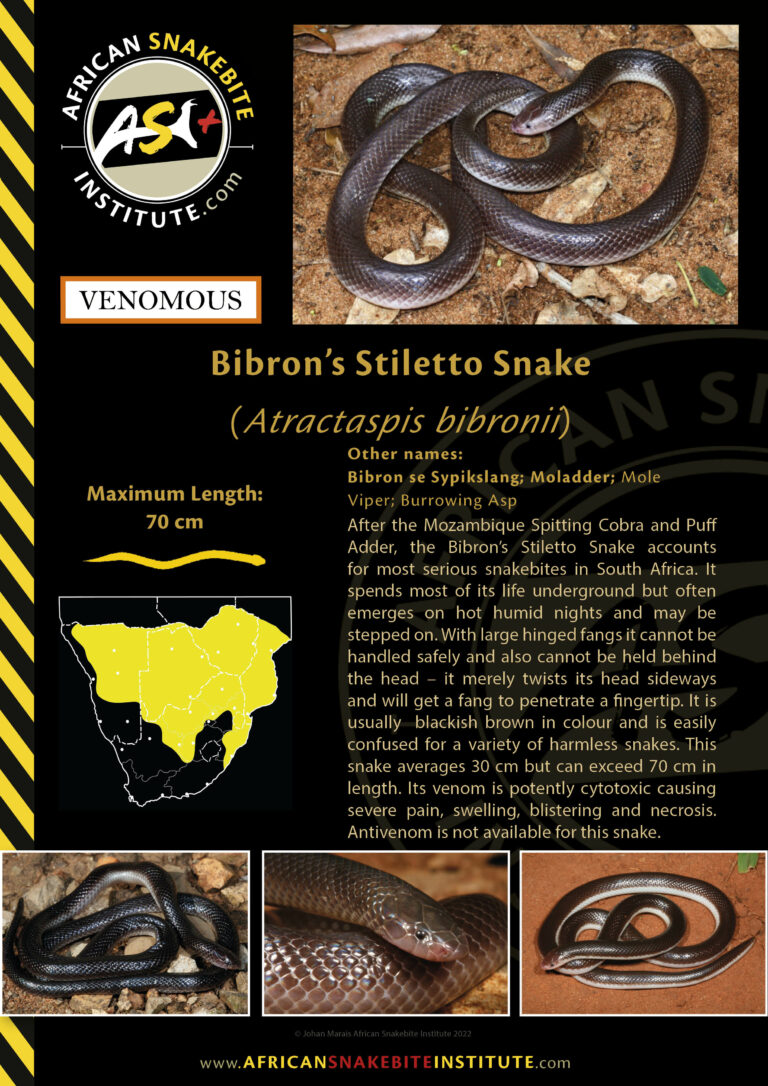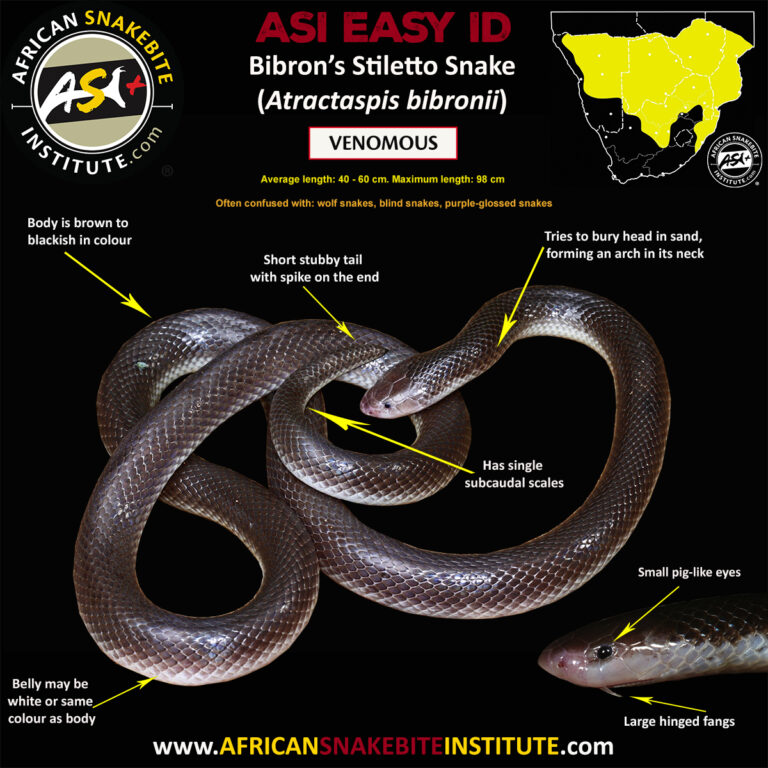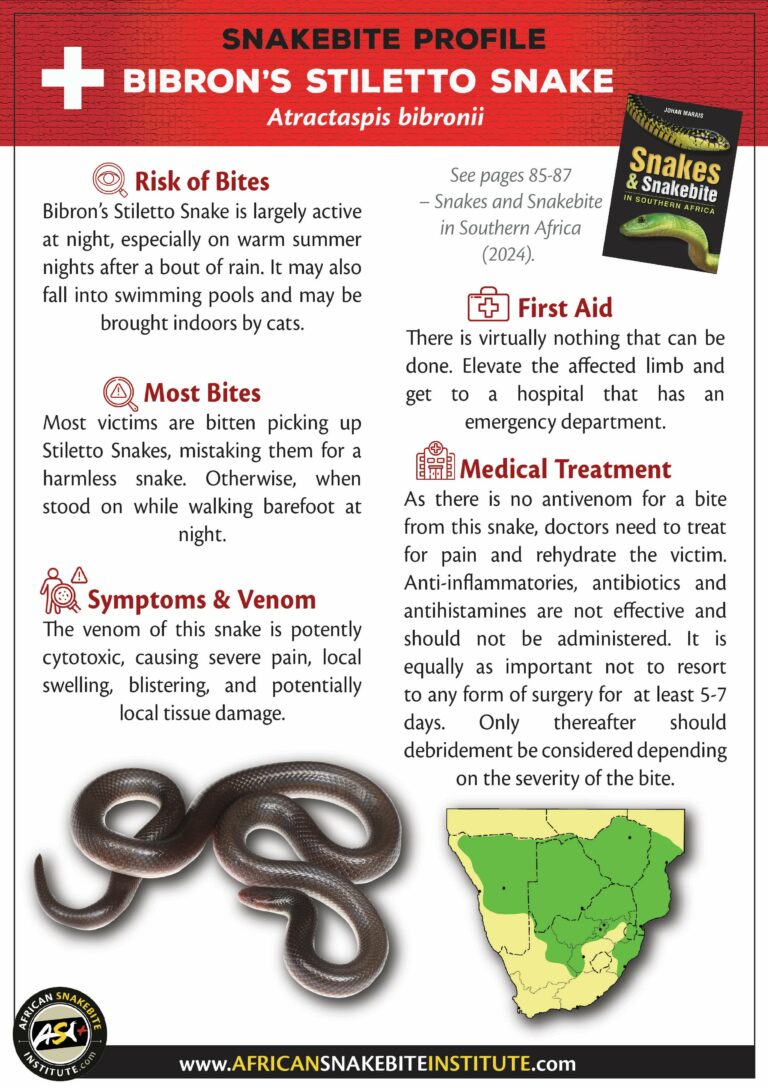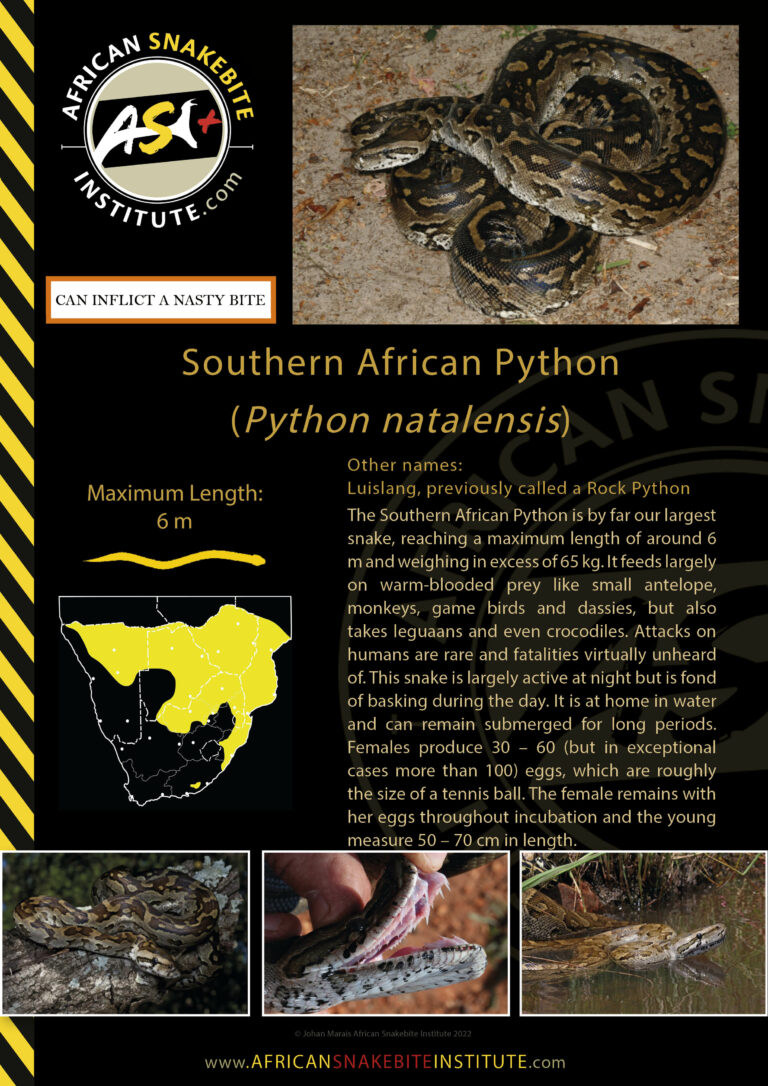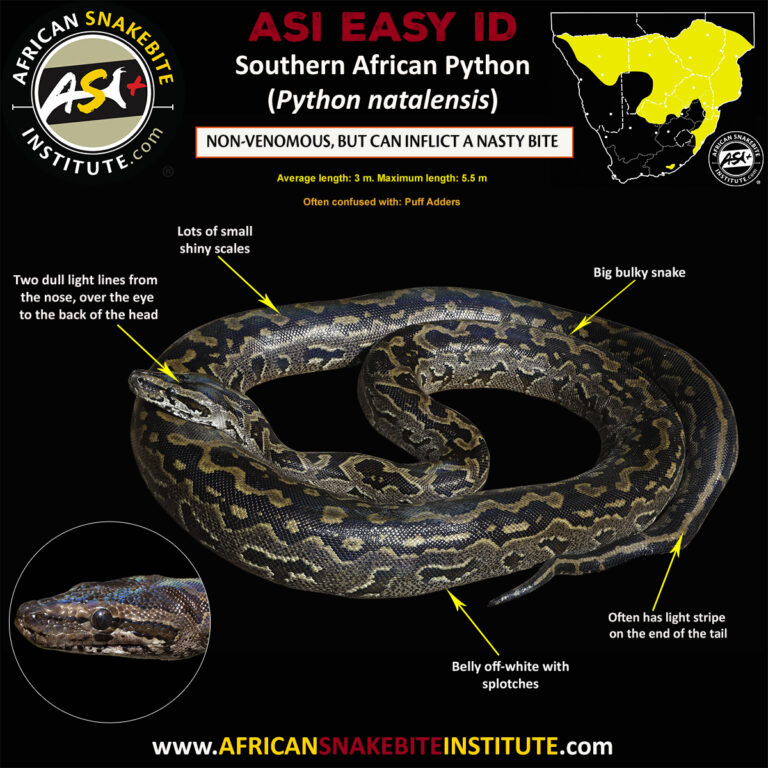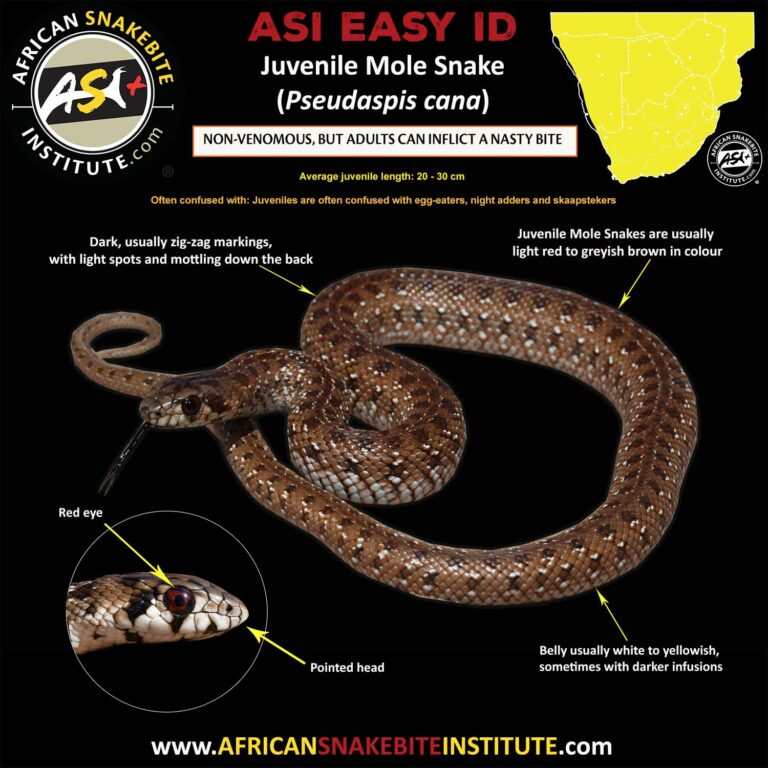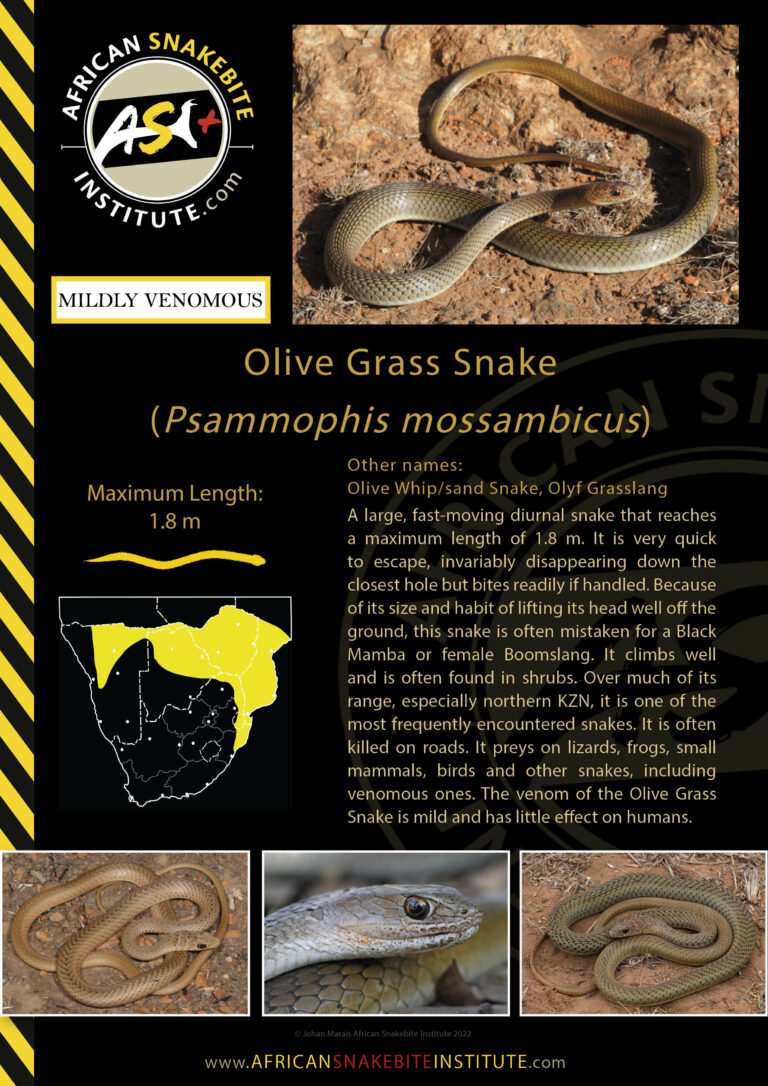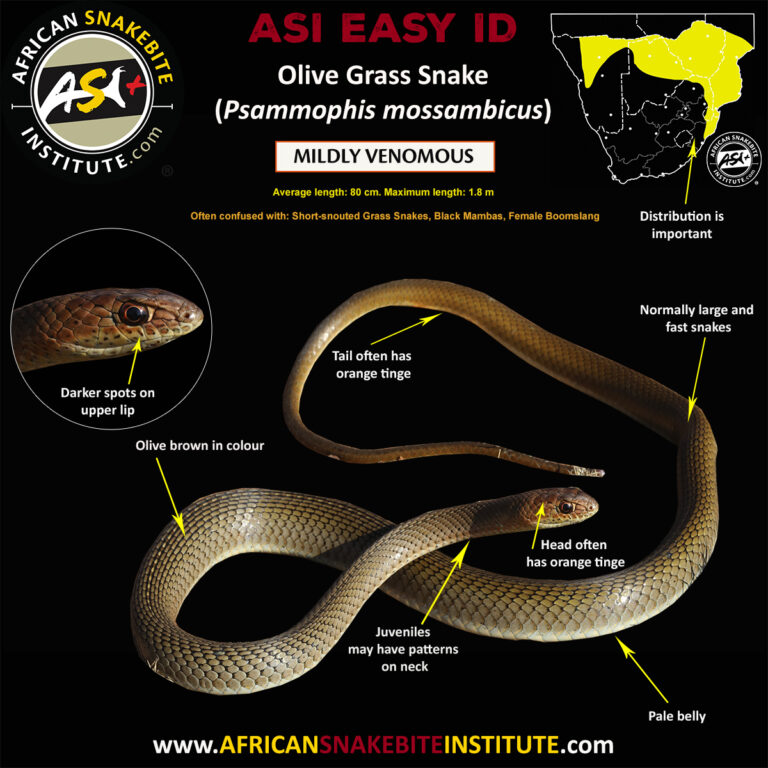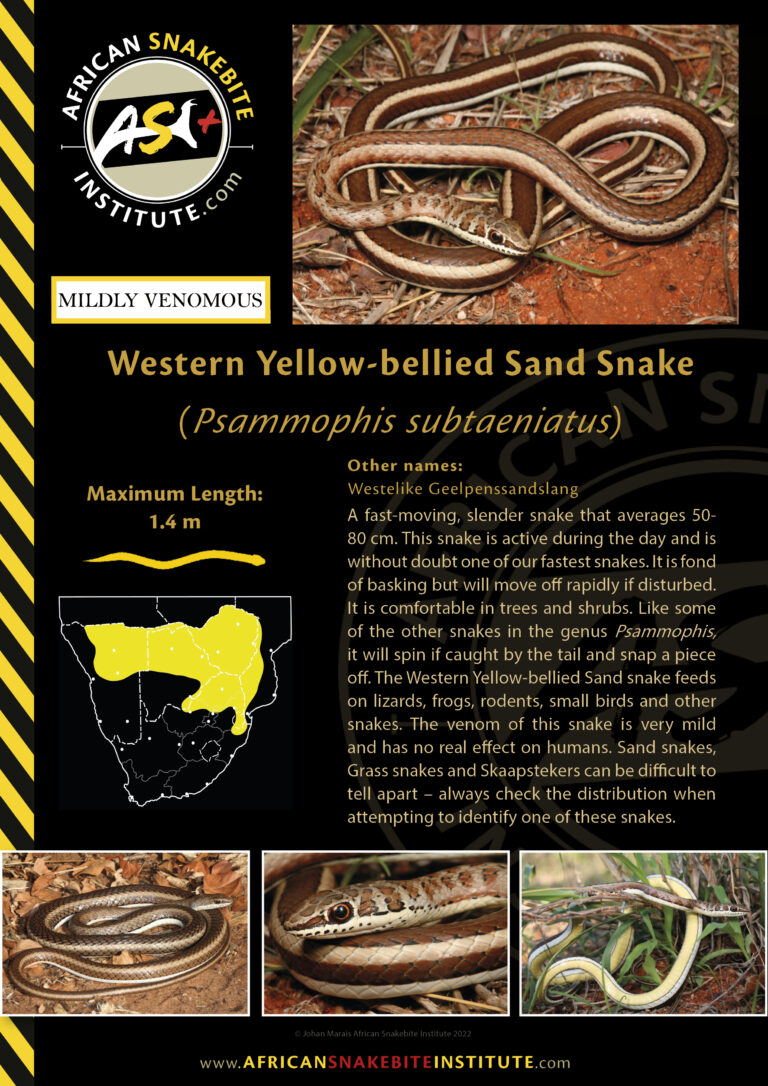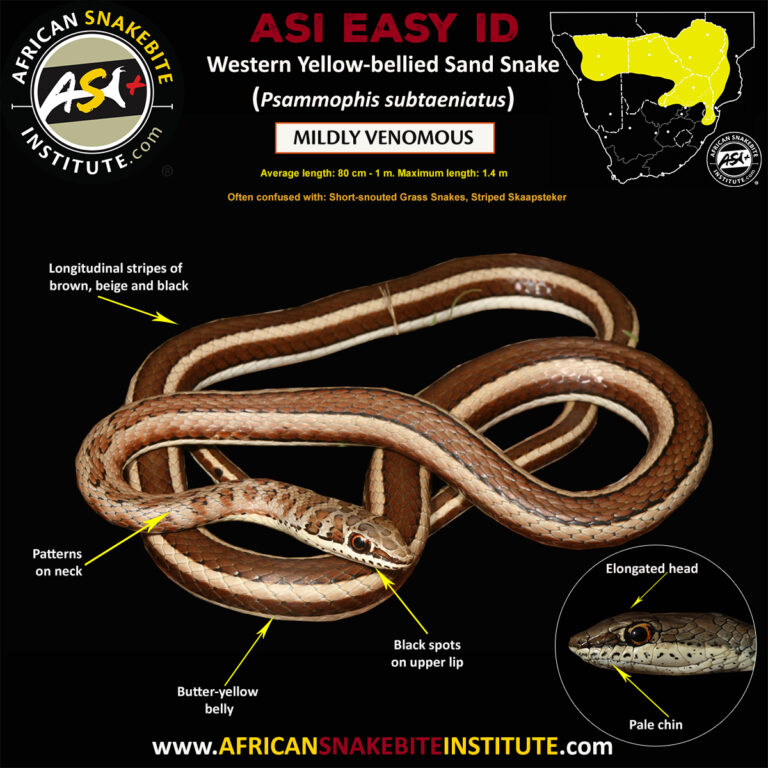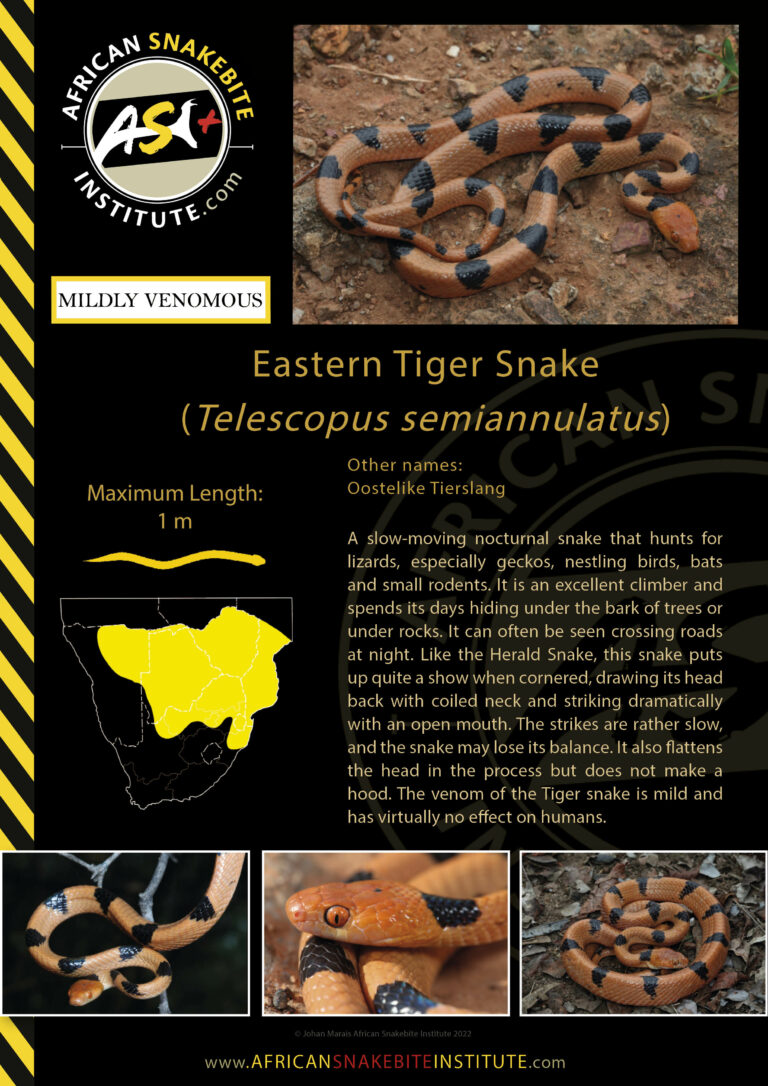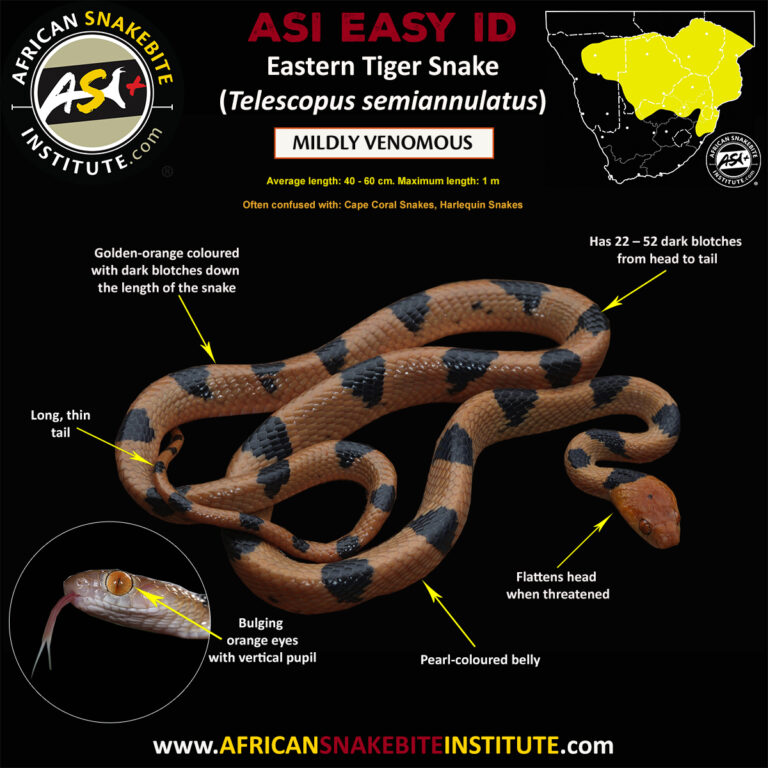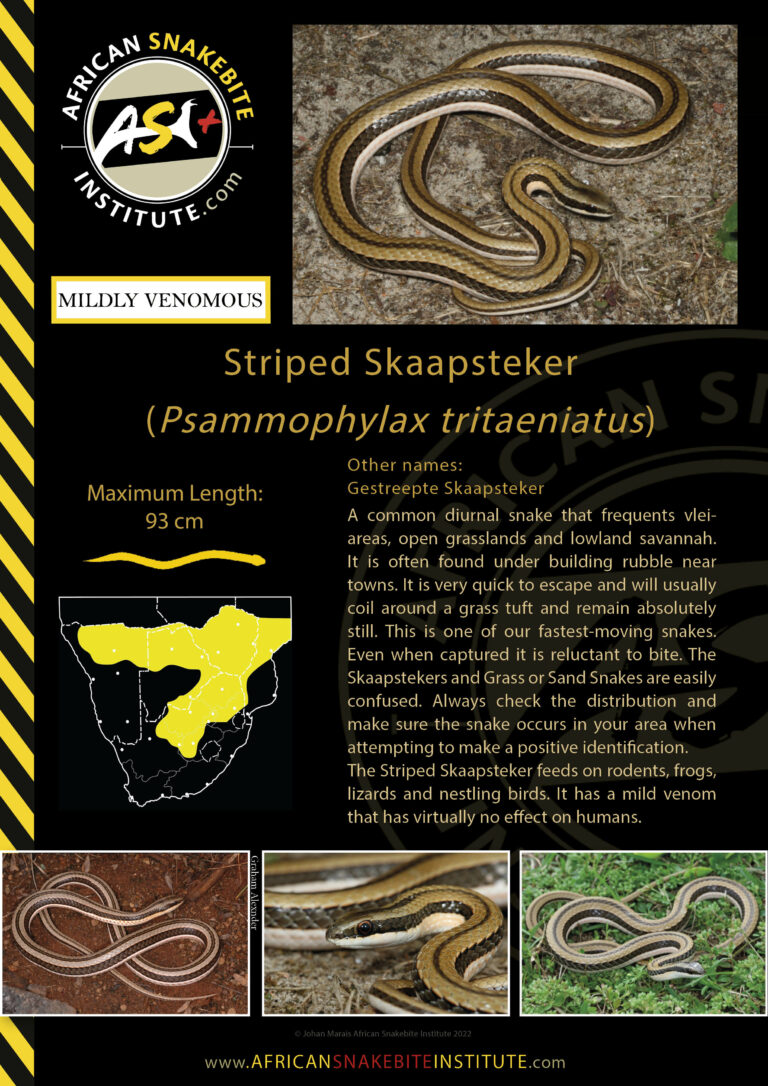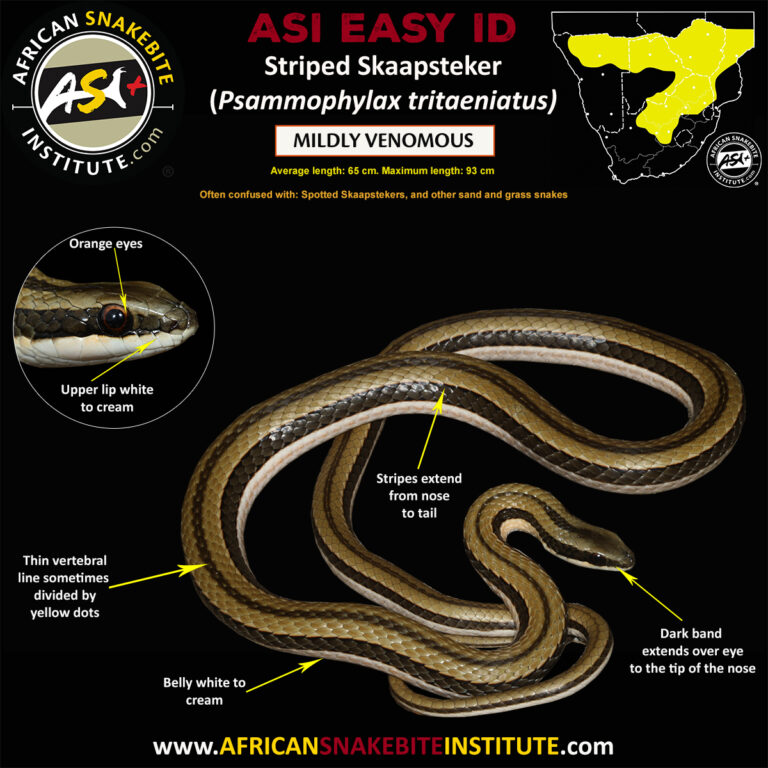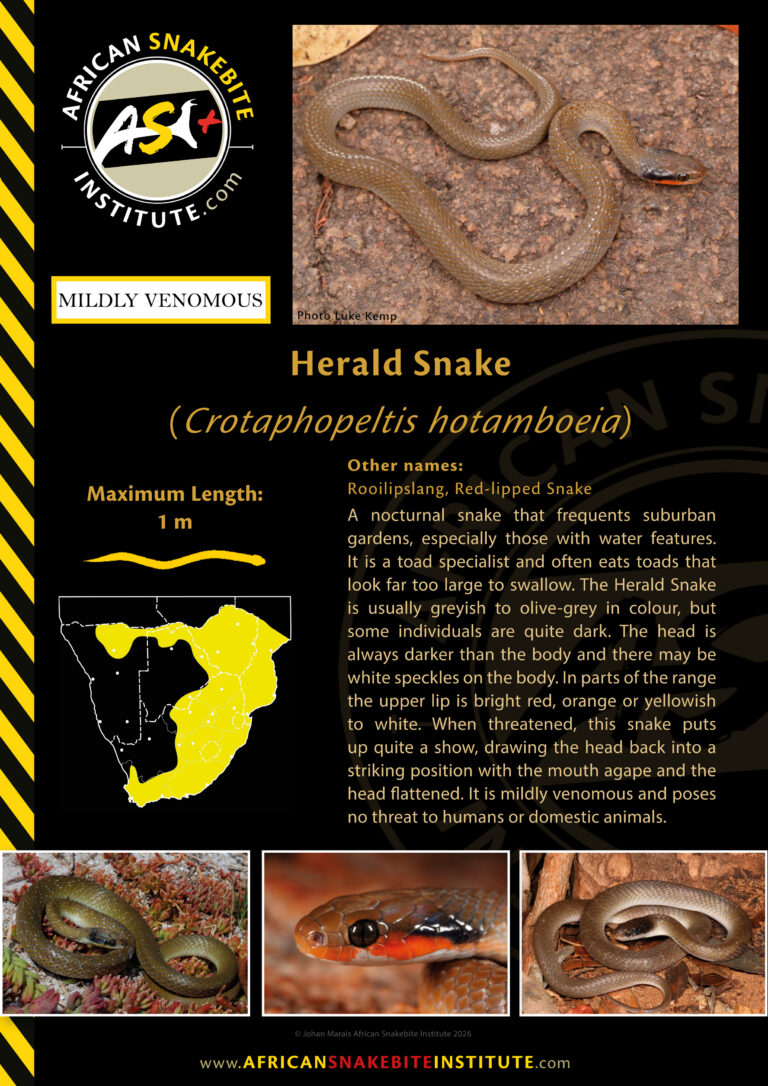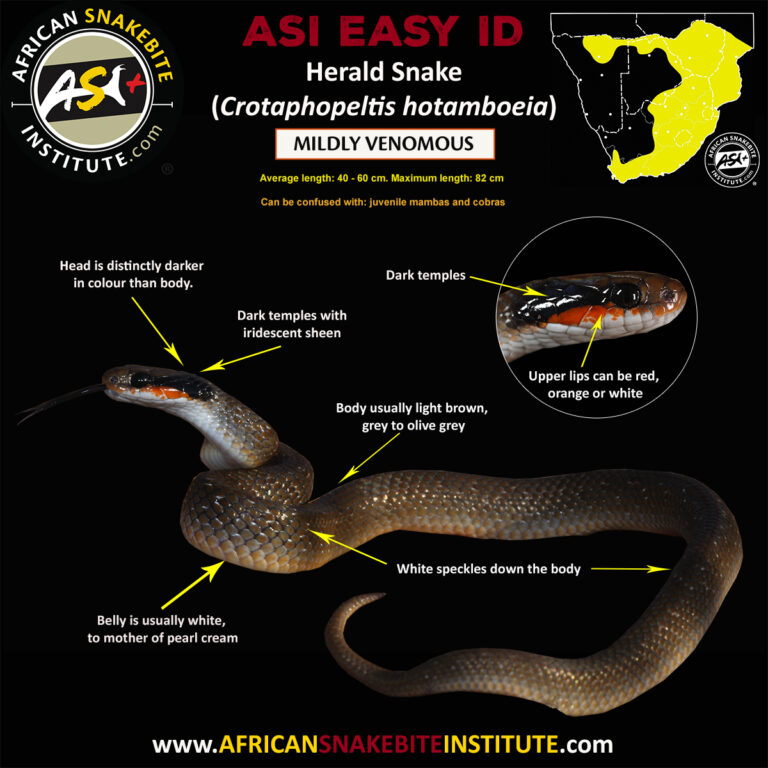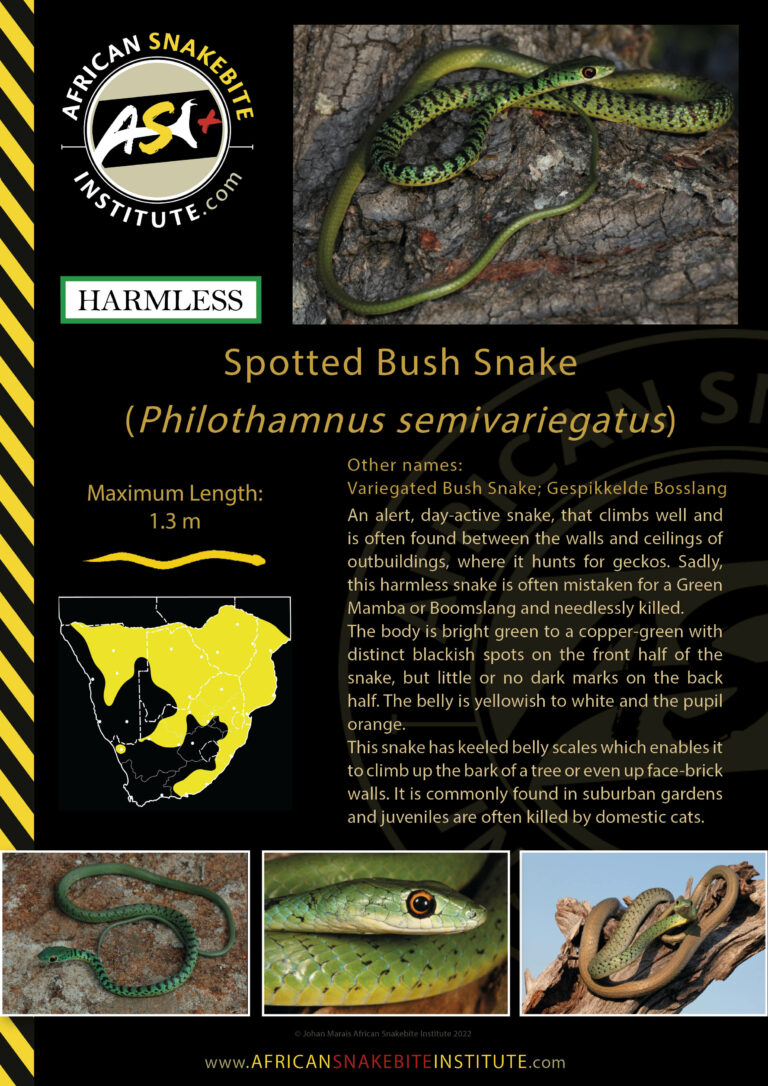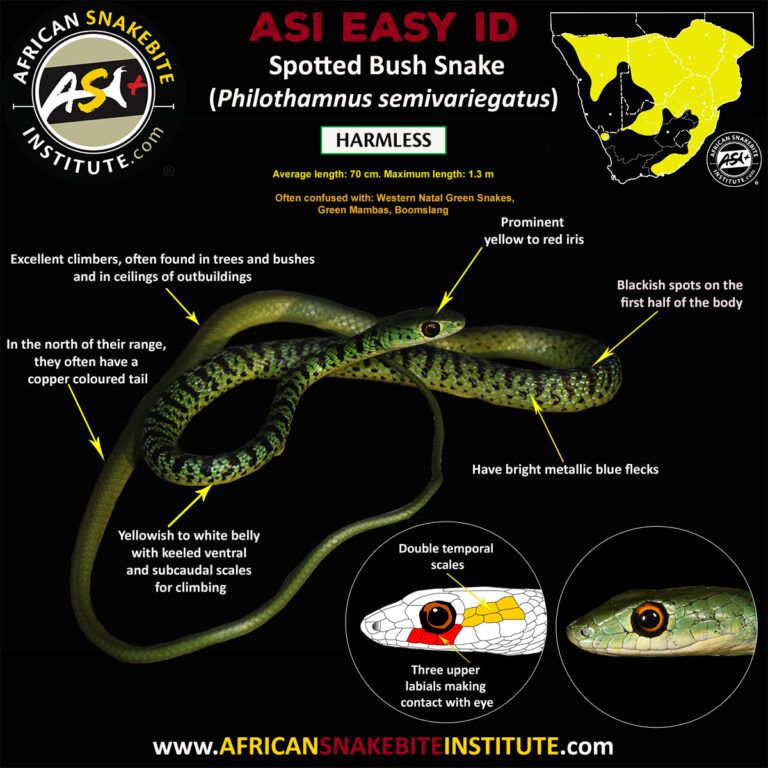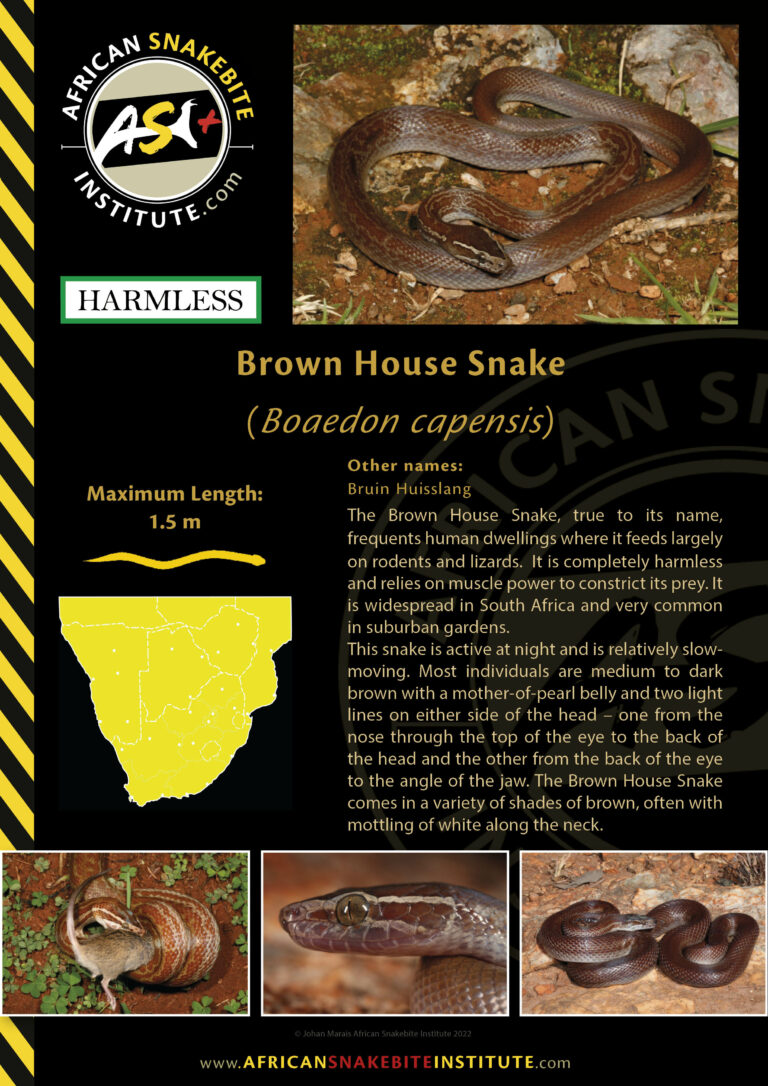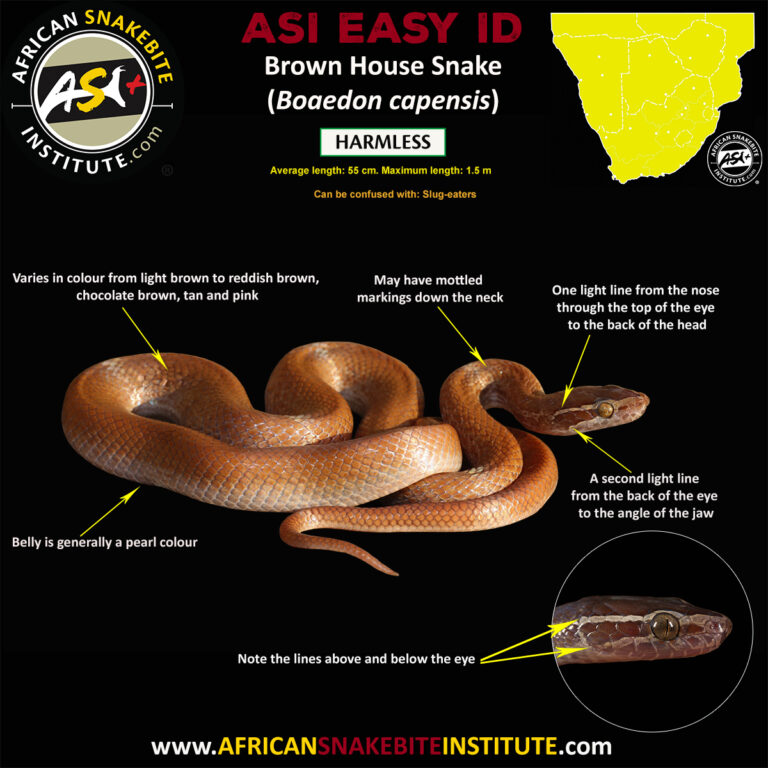
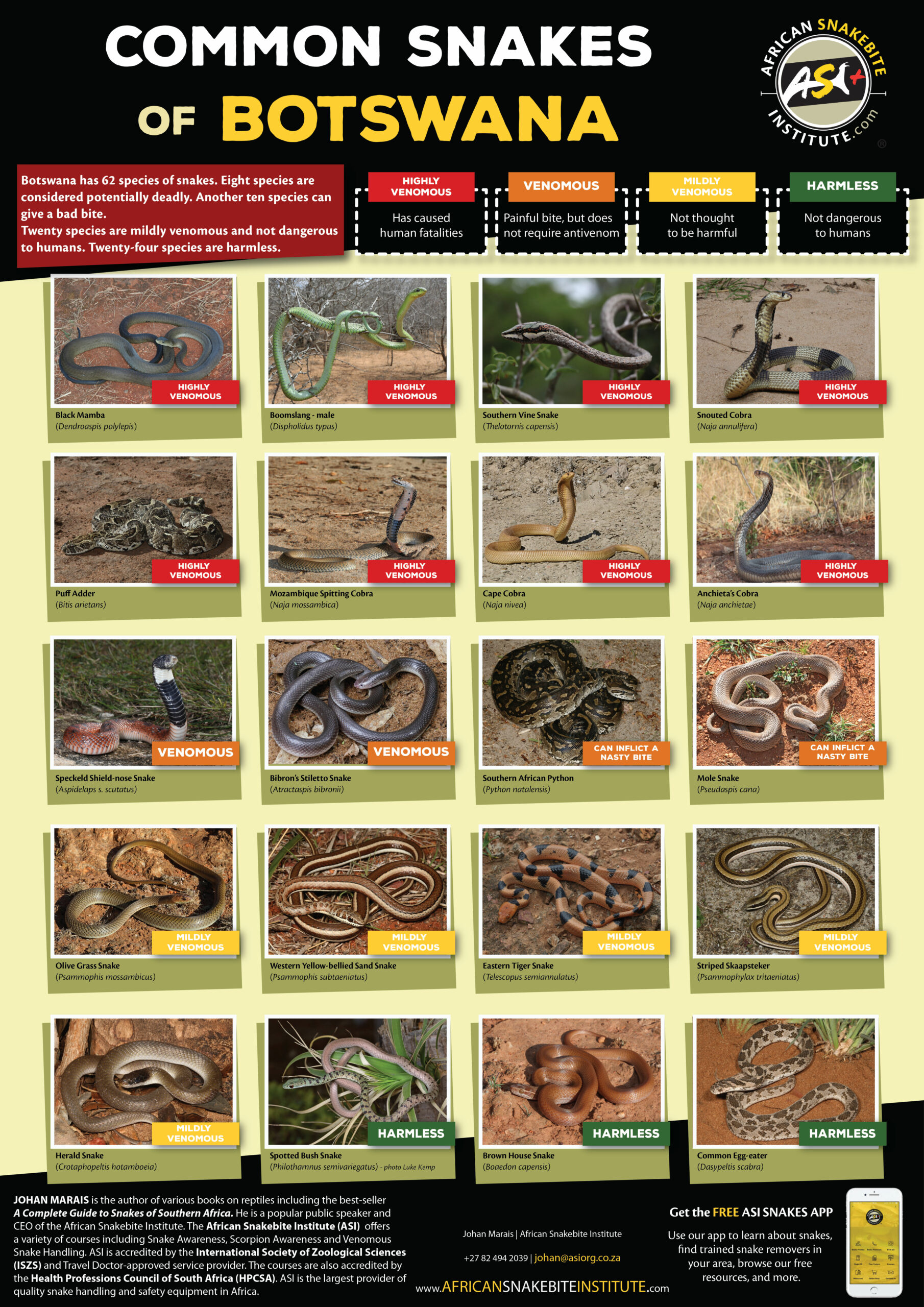
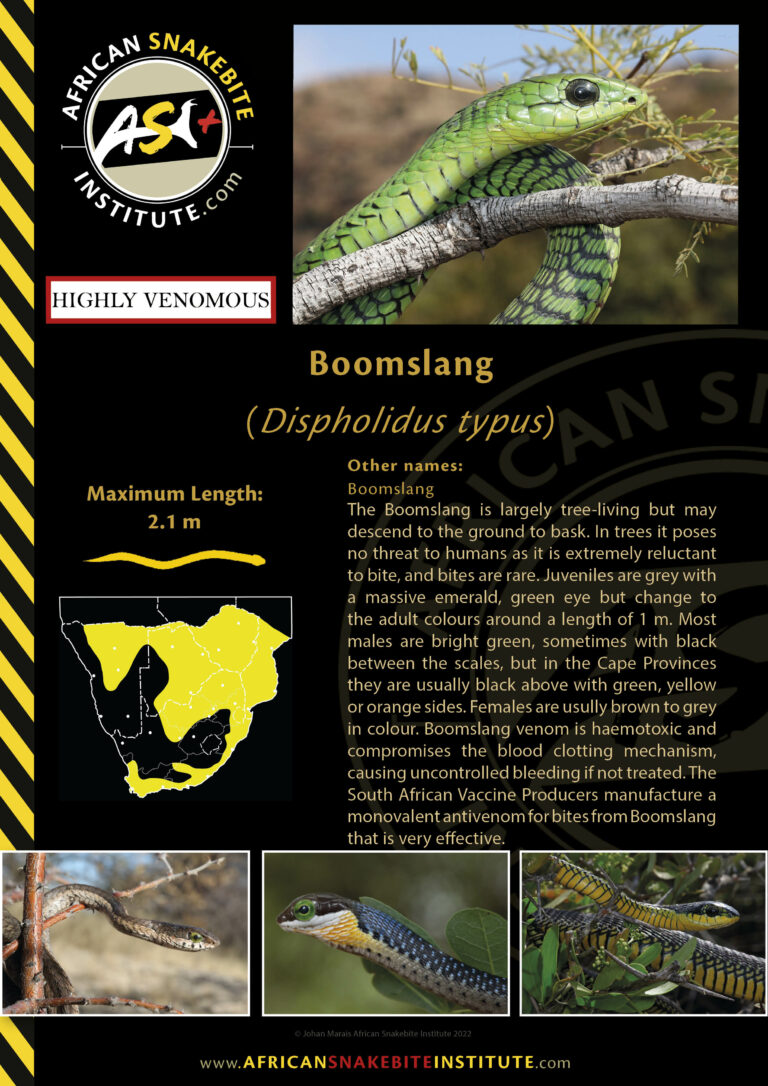
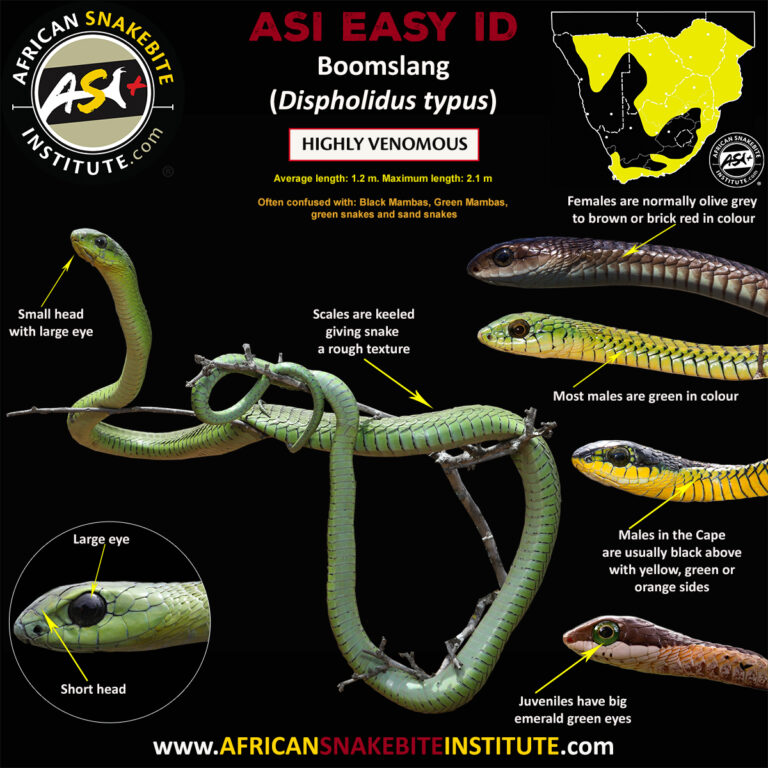
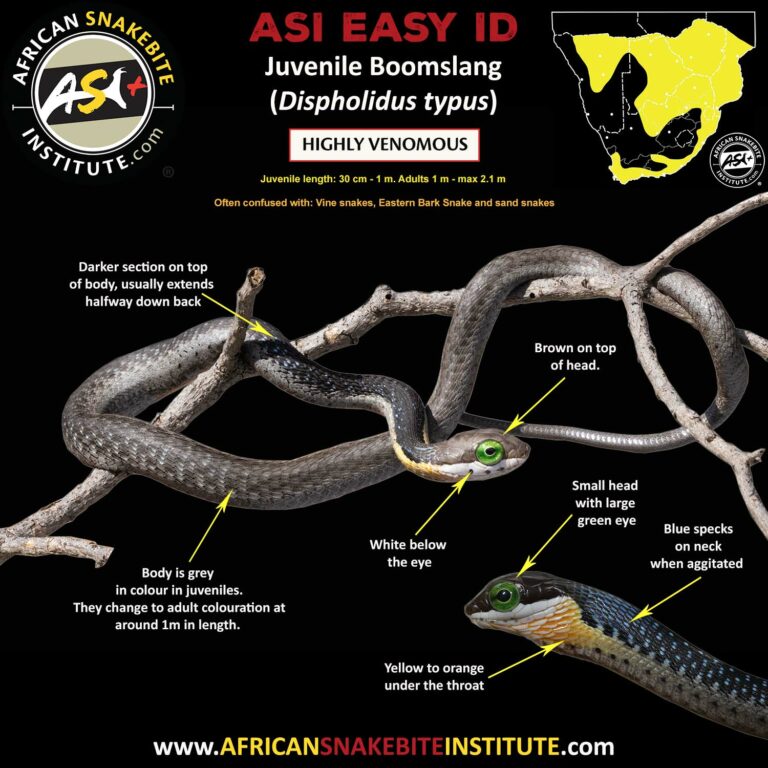
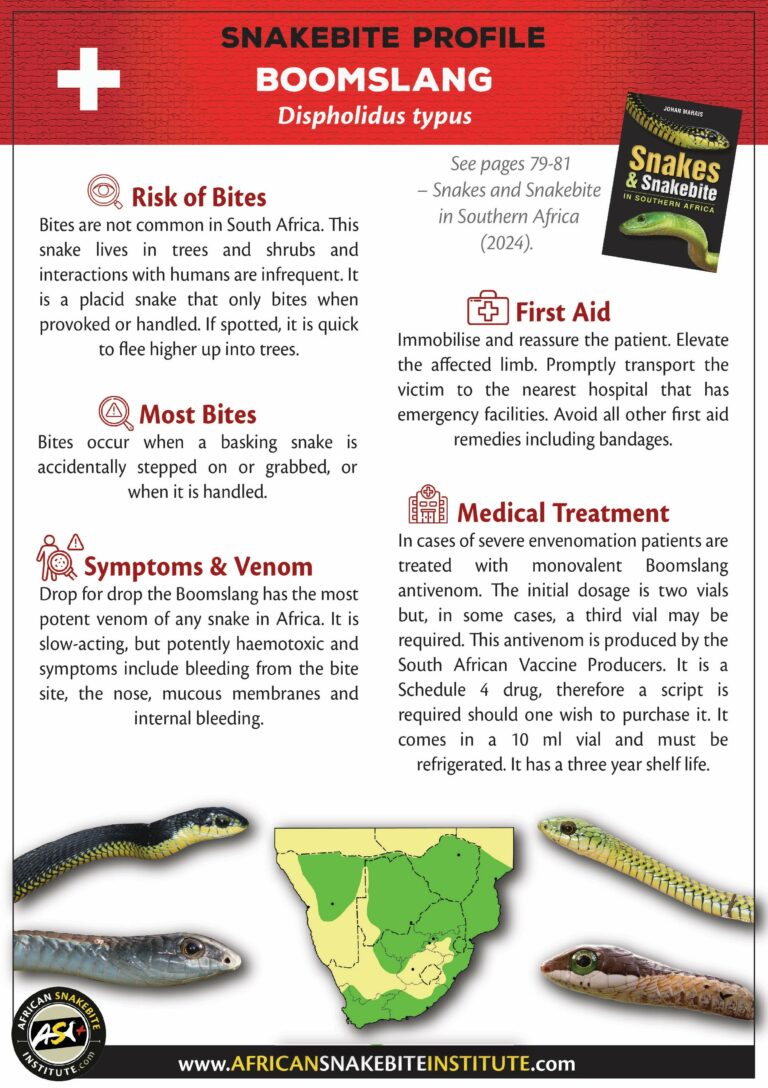
Botswana is home to sixty-six snake species. Of these, nine are considered highly venomous, twelve are capable of inflicting a serious bite, while the remainder are either mildly venomous or harmless. In this article, we cover the most commonly encountered species, including their venom, key identification features, full distribution, and snakebite information for the medically important species.

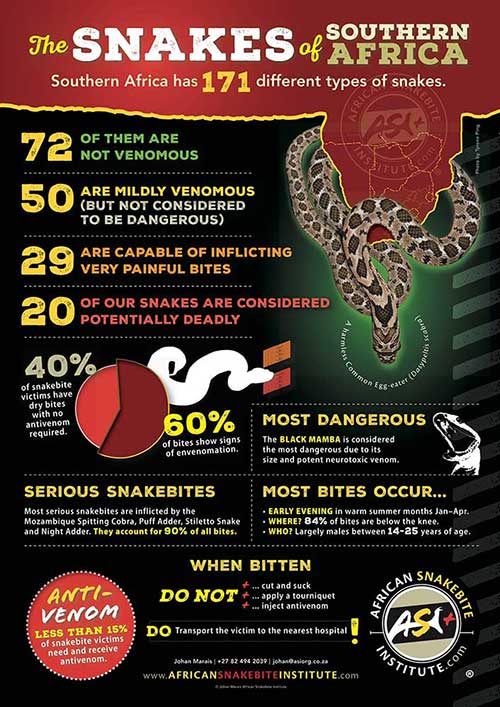
Snakebite is problematic, with most bites reported in the hot rainy season. Many bites occur at night or late evening when people are walking in sandals or barefoot and accidentally stand on a snake.

Around 60% of bites show signs of envenomation but about 40% present no symptoms and are either dry bites (no venom injected) or bites from mildly venomous or harmless snakes.

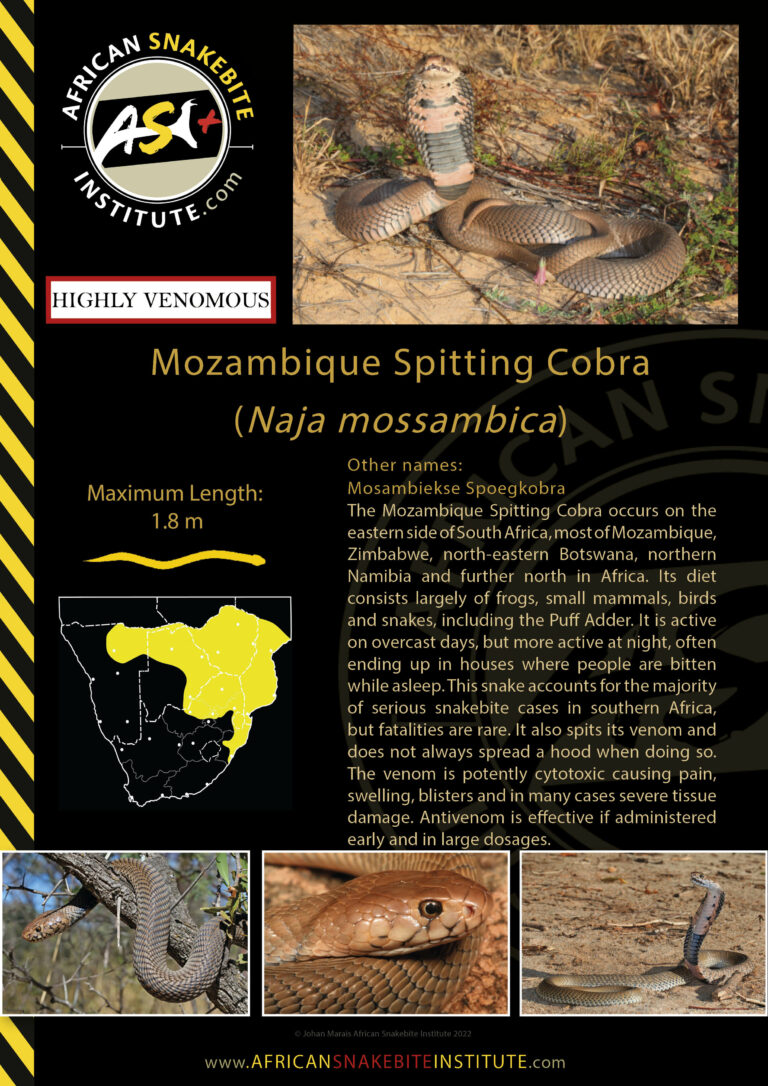
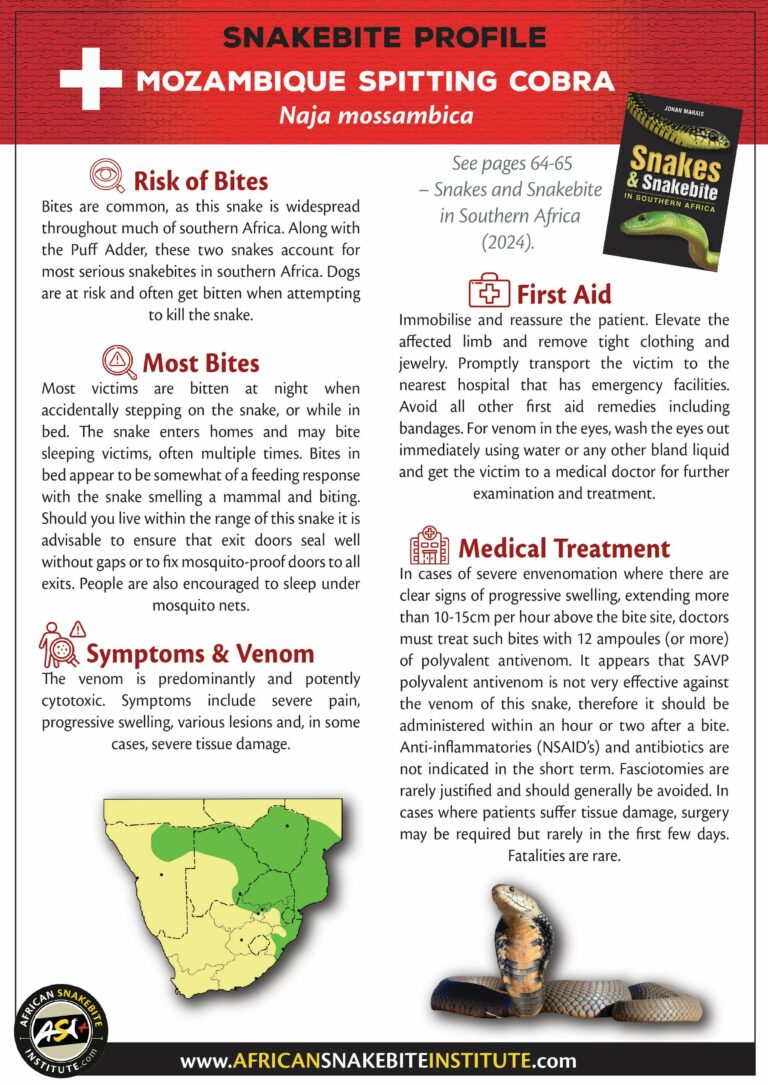
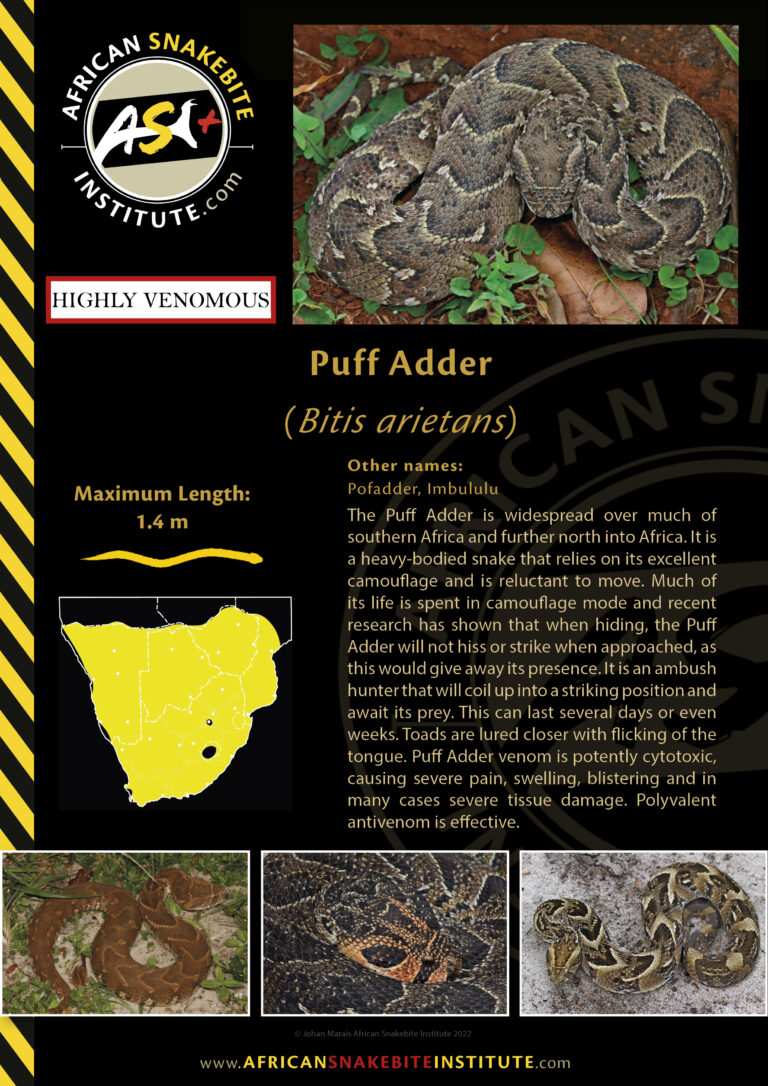
The majority of serious snakebites in Botswana are from the Puff Adder and Mozambique Spitting Cobra. These bites cause huge amounts of tissue damage and result in swelling, blistering and discolouration around the bite site. Many of these bites will require some form of surgery and may leave nasty scars or even require amputations. Most people who receive treatment for these bites survive the bite but may have some morbidity.

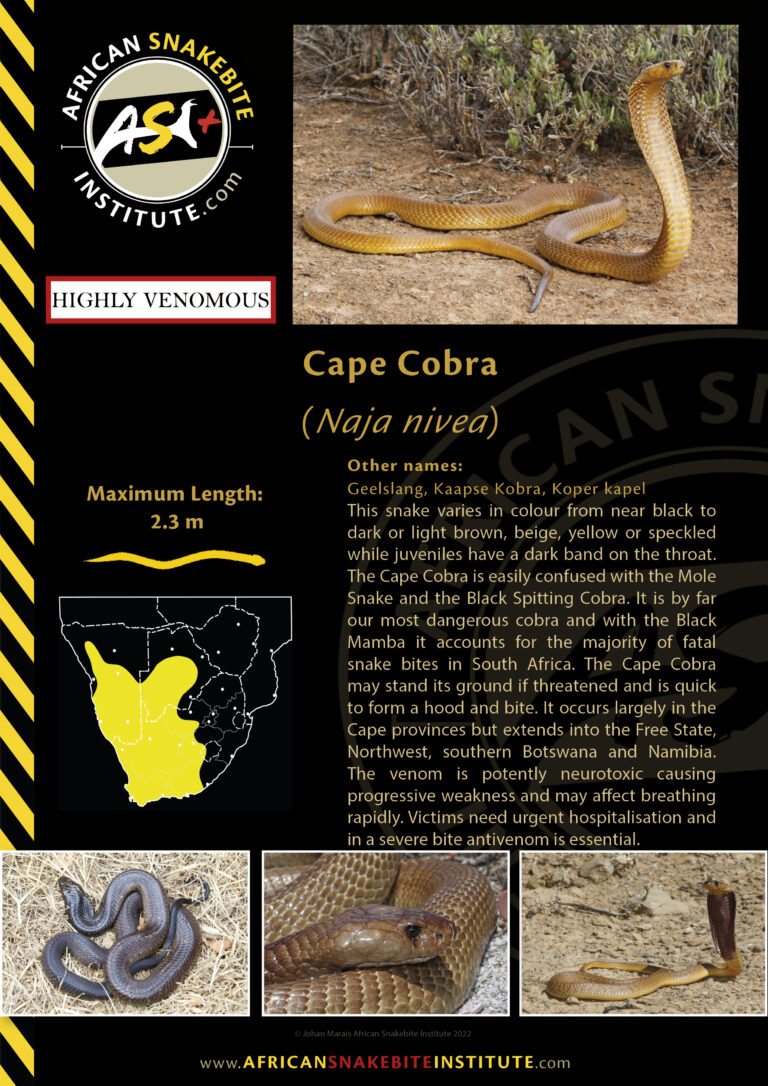
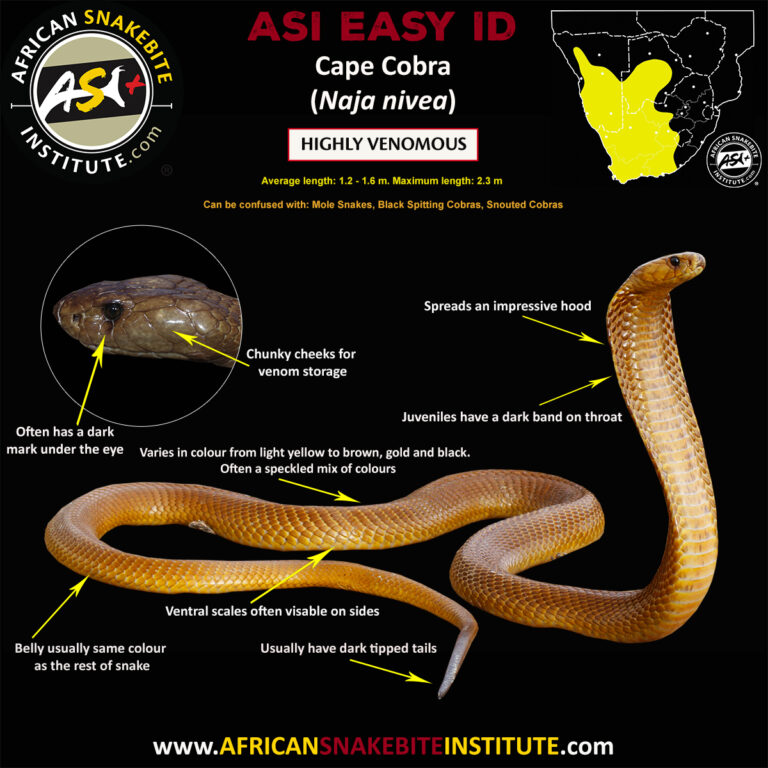
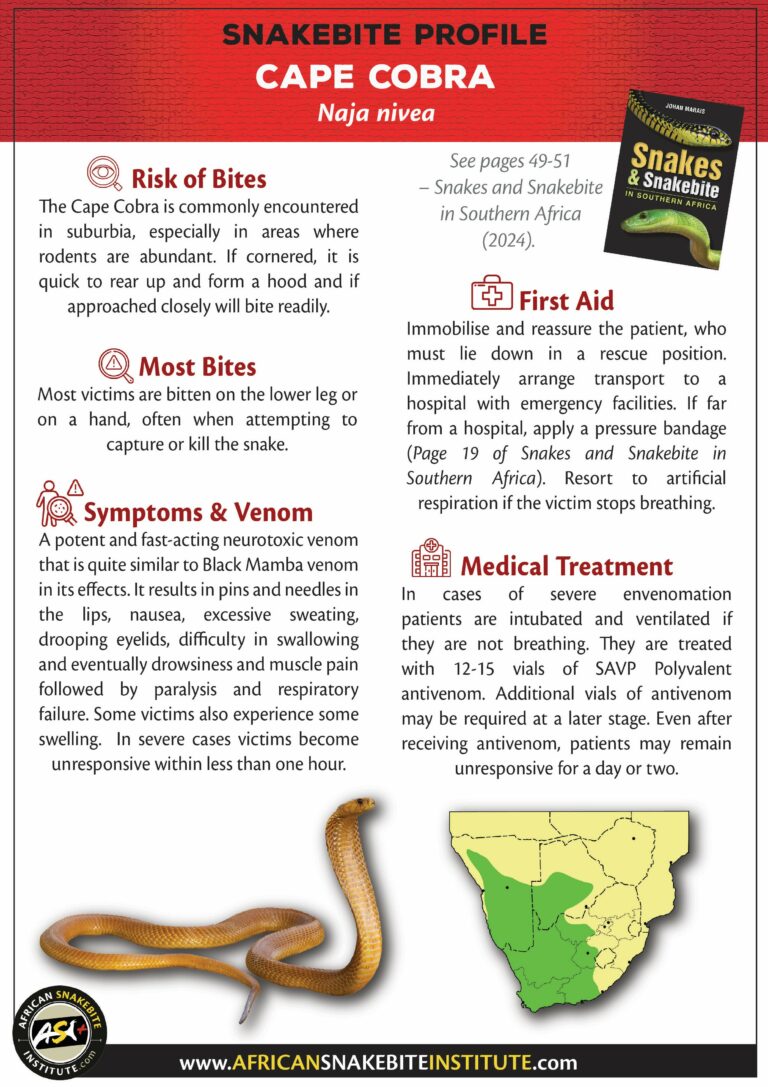
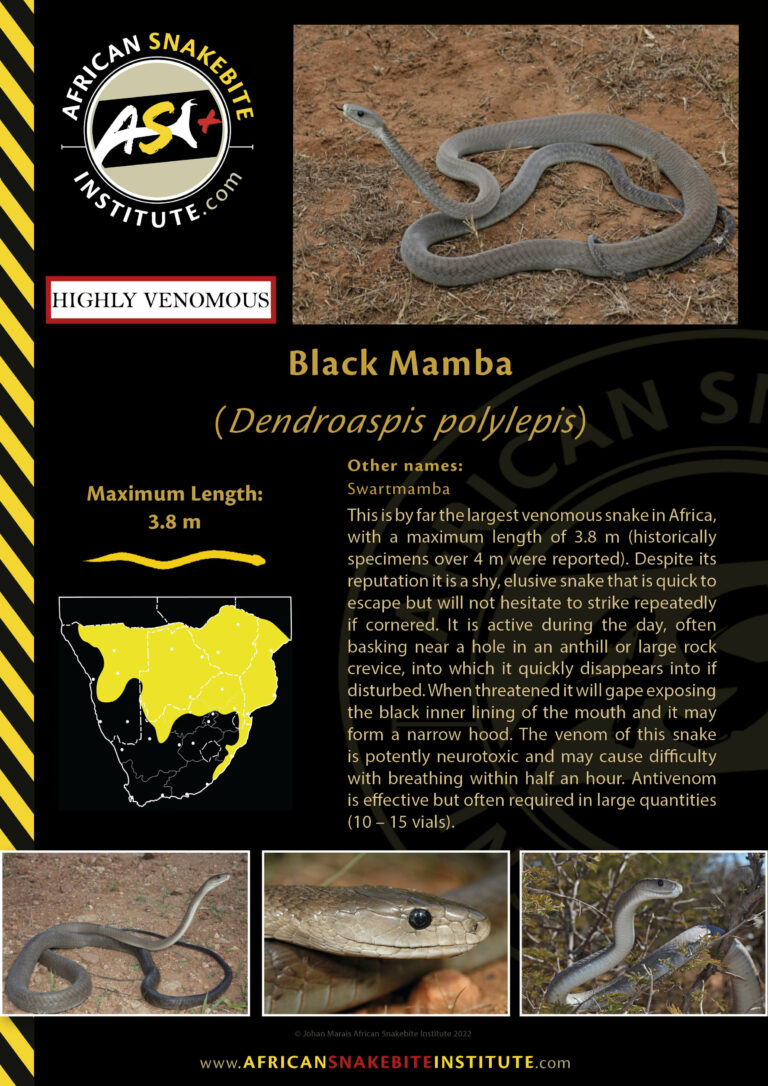
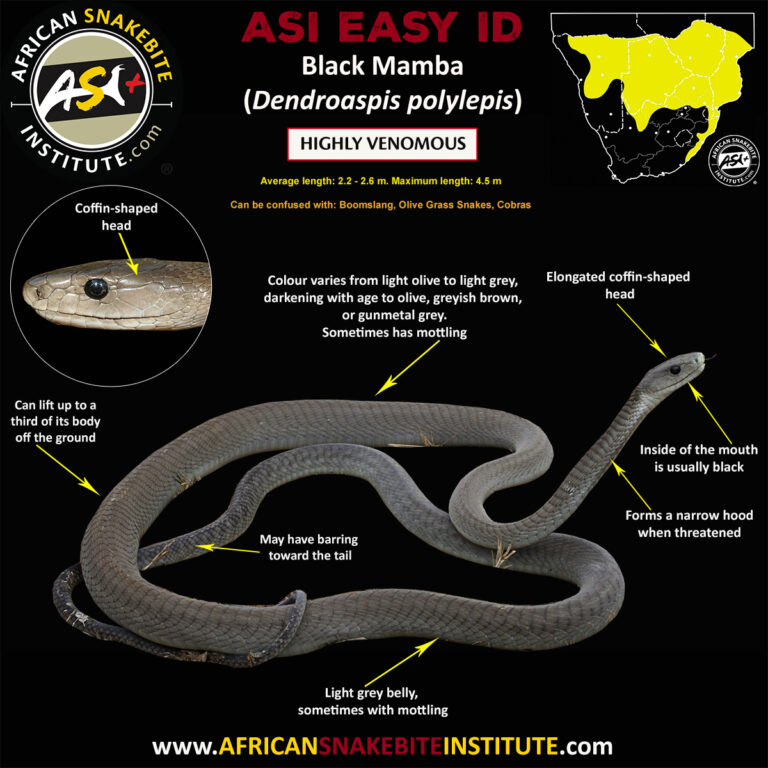
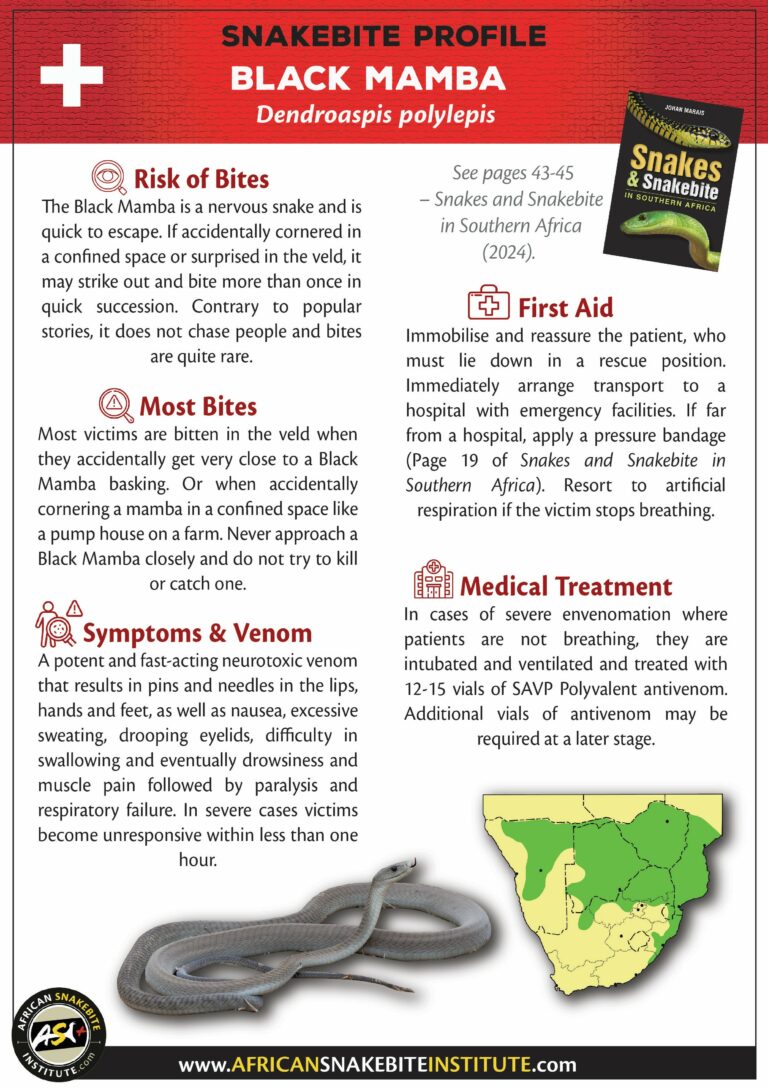
Deaths from snakebites in Botswana are not common, and usually occur from two snakes: The Black Mamba in the north and east of the country and the Cape Cobra in the south and western side of the country. These snakes have a powerful neurotoxic venom that shuts down the nervous system and can stop the person from breathing. The venom affects the body rapidly and symptoms may appear in the first few minutes. These bites may become critical within two to eight hours, and it is vitally important that the person should get to a medical centre as soon as possible. Occasionally in bad bites or where the victim receives multiple bites, the person may stop breathing within 30-45 minutes.



In the event of a snakebite, there are several important things that should not be done, as incorrect first aid can worsen the situation.

Do not attempt to cut the bite site or suck out the venom. Cutting the wound may cause far more harm than good, while sucking removes little to no venom. Do not use electric shock therapy — despite widespread myths, extensive testing has shown that electric shocks have no effect on snake venom and do not improve the outcome of a bite.

Do not apply an arterial tourniquet. Many people are bitten either by harmless snakes or by venomous snakes that inject little or no venom. Arterial and venous tourniquets are generally not recommended, as snake venom is transported mainly through the lymphatic system rather than the veins. There is also little evidence that an arterial tourniquet is lifesaving following a snakebite and may do far more damage than good, especially in cytotoxic bites.

Do not apply heat, ice, creams, lotions, or other substances to the bite site. Apart from gently cleaning the wound with water and covering it with a sterile gauze dressing, nothing else should be applied. Very hot water does not neutralise snake venom.

Do not inject antivenom as a first aid measure. Most snakebite victims do not require antivenom, and polyvalent antivenom is only effective against the venom of certain medically important snakes. If antivenom is needed, it must be administered intravenously by a medical doctor in a hospital environment, and often in large quantities. Because antivenom can trigger severe allergic reactions, including anaphylactic shock, emergency medication such as adrenaline may also be required. Anaphylactic shock is a serious medical emergency that can be fatal if not treated promptly.

Avoid traditional healers who may make incisions and rub various substances into the bite site. Such treatments do no good and waste time.

In the event of a snakebite, there are several important steps that should be followed.

Get the victim to a hospital as quickly and safely as possible. This is by far the most important first aid measure. For advice during a snakebite emergency, contact the African Snakebite Institute on +27 (0)82 494 2039.

Keep the victim calm. While this is often easier said than done, panic can worsen the situation. Many snakebite victims experience shock, lowered blood pressure, nausea, and even fainting. If possible, prevent the victim from walking, running, or exerting themselves unnecessarily. It is important to remember that more than 99% of snakebite victims who receive hospital treatment within a few hours survive.

Remove jewellery and tight clothing. If the bite is on the hand, arm, foot, or lower leg, remove rings, bracelets, watches, anklets, and any restrictive clothing before swelling develops.

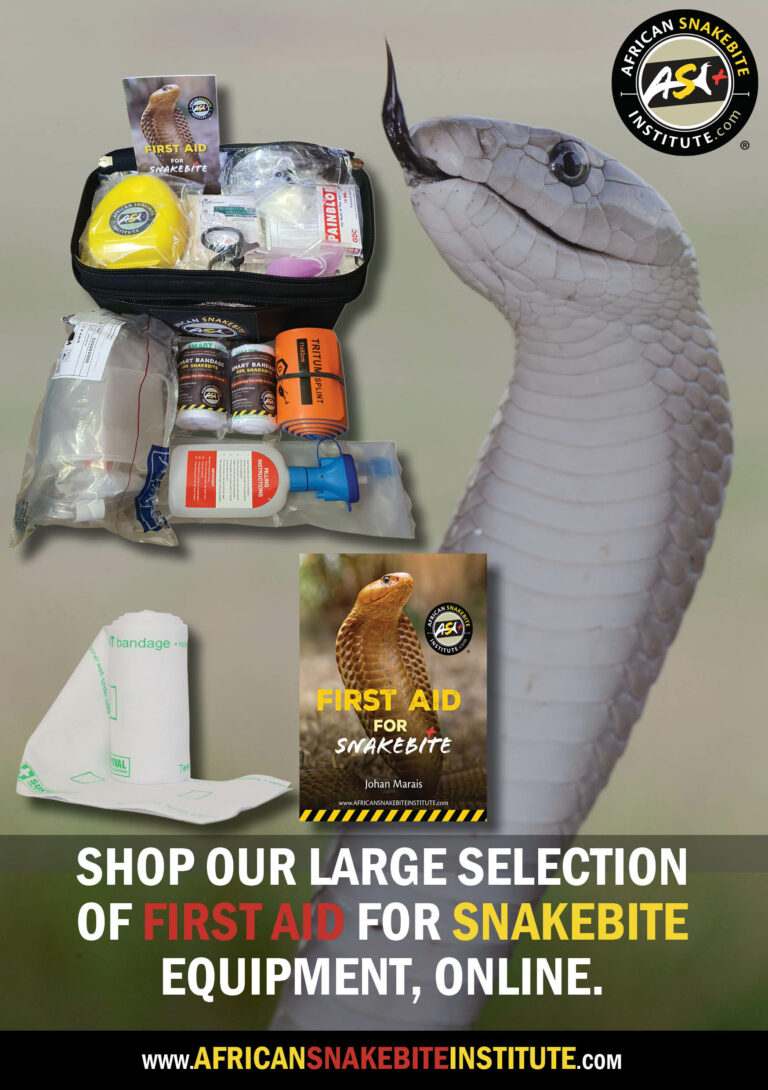
In known mamba and non-spitting cobra bites apply a Smart Pressure Bandage immediately, from the site of the bite towards the heart. Leave the Smart Pressure Bandage in place, until the victim is hospitalised.

Administer rescue breaths if the victim stops breathing. In severe bites involving snakes with predominantly neurotoxic venom, such as the Black Mamba or Cape Cobra, breathing difficulties may develop rapidly — sometimes within 20 minutes. Assisted breathing can be lifesaving in these situations. While mouth-to-mouth resuscitation, ideally while using a pocket mask, is ideal, the use of a Bag Valve Mask Reserve (BVM) is far more effective but requires training.
Spitting Snakes

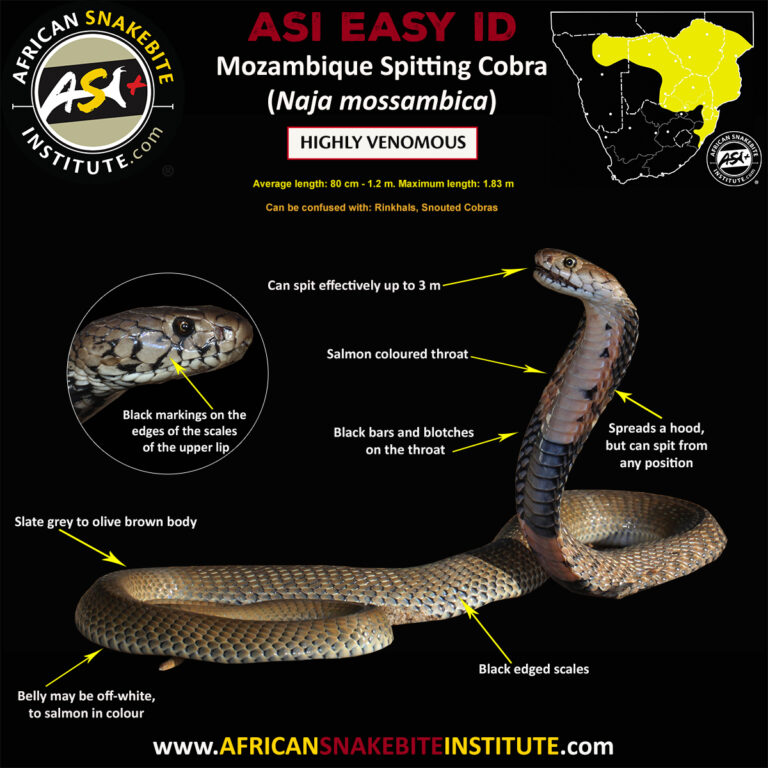
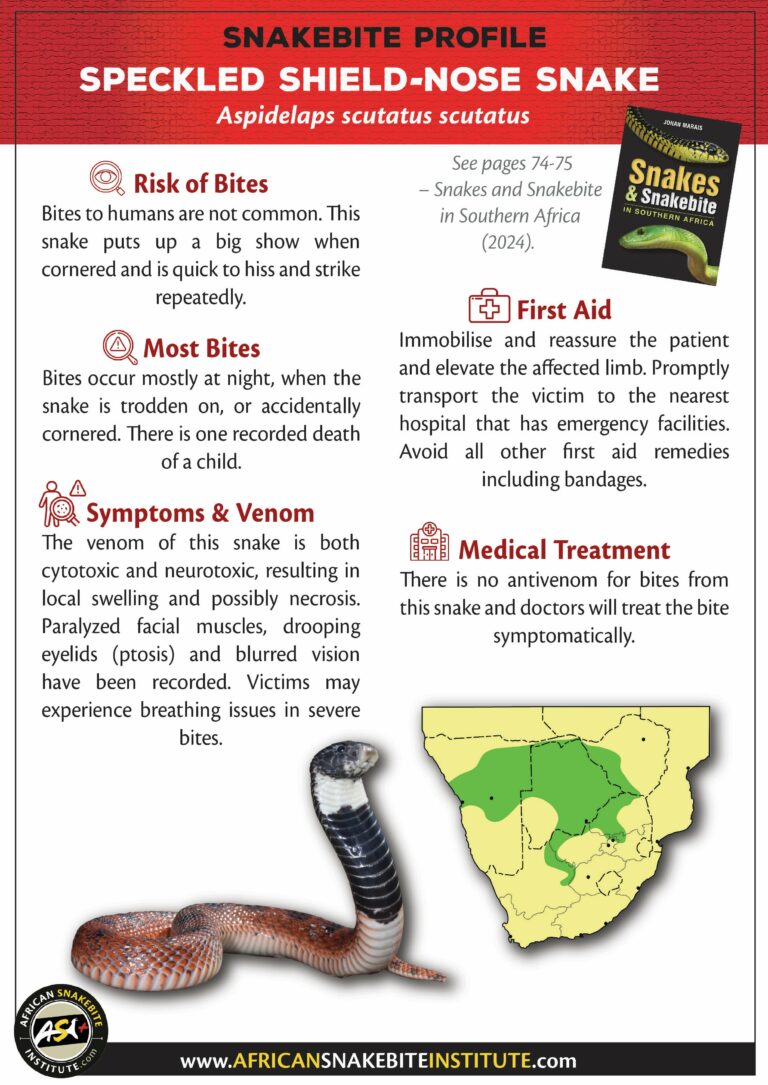
The most common spitting snakes in Southern Africa are the Mozambique Spitting Cobra and Rinkhals. In the western parts of the region, the Mozambique Spitting Cobra is replaced by the Black Spitting Cobra in Namaqualand and southern Namibia and the Zebra Cobra in northern Namibia and Angola. These snakes can spray venom effectively over distances of up to three metres as a defensive mechanism, aiming for the eyes to temporarily blind a perceived threat and then escape.

Although these snakes target the eyes, the venom spreads in a fine spray and may also land on the face, hair, chest, and arms. Venom in the eyes is extremely painful and should be flushed out immediately. Tears naturally help dilute the venom, but the eyes should also be rinsed thoroughly with clean water for 15-20 minutes or a weak saline solution to wash away any remaining venom.

The victim should then be taken to a medical doctor, who will examine the eyes for corneal damage and prescribe antibiotic eye drops if necessary to prevent secondary infection. There is no benefit in using diluted antivenom in the eyes, and doing so may cause an allergic reaction. When treated promptly, the risk of permanent eye damage is extremely low.

Ambulance: 977
Medical Rescue: 911
MRI Botswana Limited: 992
Medical Air Rescue: 390-1601
African Snakebite Institute: +27 82 494 2039

Click on the hospital name below, to see the location on Google Maps.

Princess Marina Hospital
Tel: +267 362 1400
Plot 1836, North Ring Road, Gaborone, Botswana
Coordinates: –24.656944, 25.923889

Sir Ketumile Masire Teaching Hospital
Tel: +267 355 2048
UB Corner, Notwane Rd, Gaborone, Botswana
Coordinates: -24.651134,25.9449274

Orapa Hospital
Tel: +267 290 2557
Sable Avenue in Orapa, Central District, Botswana
Coordinates: -21.332057, 25.3656103

Sekgoma Memorial Hospital
Tel: 0800 600 890
Main Road (A14) in Serowe, Central District, Botswana
Coordinates: -24.0936374,26.5189914

Scottish Livingstone Hospital
Tel: +267 590 8000
Molepolole Road, Molepolole, Botswana
Coordinates: –24.41208, 25.48680

Maun General Hospital
Tel: +267 71 871 668
Bringle Avenue, Maun, Botswana
Coordinates: -19.9872298,23.4143739

Maun Private Hospital
Tel: +267 686 0245
Plot 16807, Wenela Ward, Maun, Botswana
Coordinates: -19.9872298,23.4143739

Francistown Academic Hospital 
Tel: +267 240 9076
Portion 3, Farm 85 NQ Along A1 Road Near Francistown
Coordinates:  -21.2345529,27.493474

Nyangabgwe Referral Hospital
Plot 2523, Marang Road, Area A, Francistown, Botswana
Tel: +267 241 3416 / +267 241 1000
Coordinates:  -21.1747003,27.5194688

Click HERE to find local snake removers.

Download the FREE ASI Snakes app.
If you’re interested in learning more about snakes, snakebite and finding the contact details of the local snake remover in your area, we’ve got the perfect app.
The app includes Snake Profiles, Snake Posters, quizzes, a section to submit a photo for identification, First Aid for Snakebite as well as medical info for Snakebite. And a list of over 600+ snake removers – country wide.
If you don’t have it yet, get the app here 👇 it’s FREE!http://bit.ly/snakebiteapp

Snake Courses: +27 64 704 7229 or courses@asiorg.co.za

Snake Handling Equipment: +27 60 957 2713 or info@asiorg.co.za

Snake Identification: +27 72 979 1249 or support@asiorg.co.za

Snakebite Emergencies: +27 82 494 2039

Travelling and without signal? No worries, we’ve got you covered – simply download the PDF version of this article here.

The African Snakebite Institute is the leading training provider of Snake Awareness, First Aid for Snakebite and Venomous Snake Handling courses in Africa, as well as the largest distributor of quality snake handling equipment, snake PPE and snakebite first aid kits. We aim to spread snake awareness as far and wide as possible, which is why we have launched our new free E-Book series.
Our CEO, Johan Marais, is a well-known herpetologist with over 45 years of experience with snakes. He has worked at various reptile facilities and has collaborated on a variety of scientific studies with some of the world’s leading herpetologists. He is also one of Africa’s most prominent authors of snake books and has written the best-sellers A Complete Guide to Snakes of Southern Africa, Snakes and Snakebite in Southern Africa and First Aid for Snakebite, to mention just a few.
African Snakebite Institute