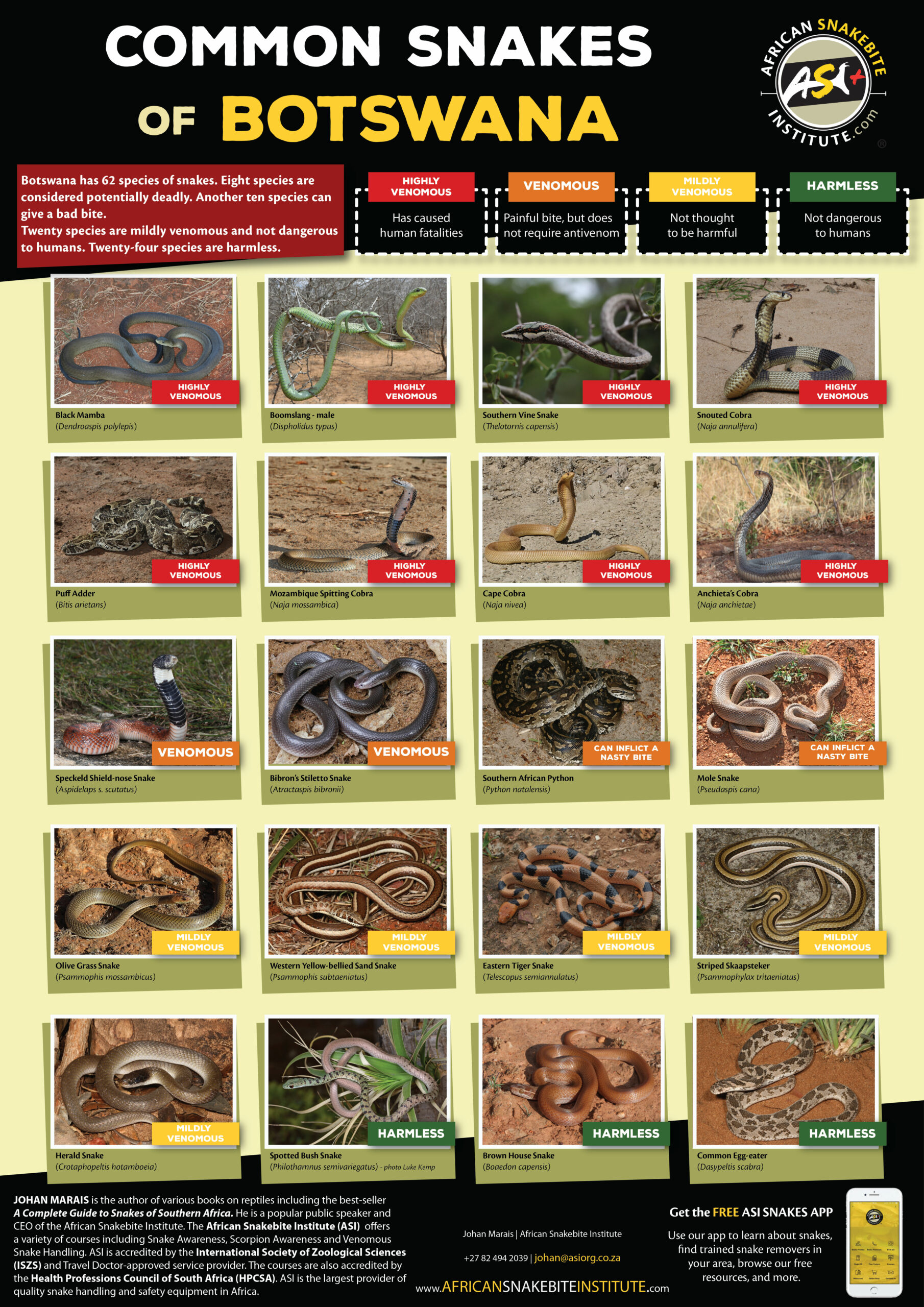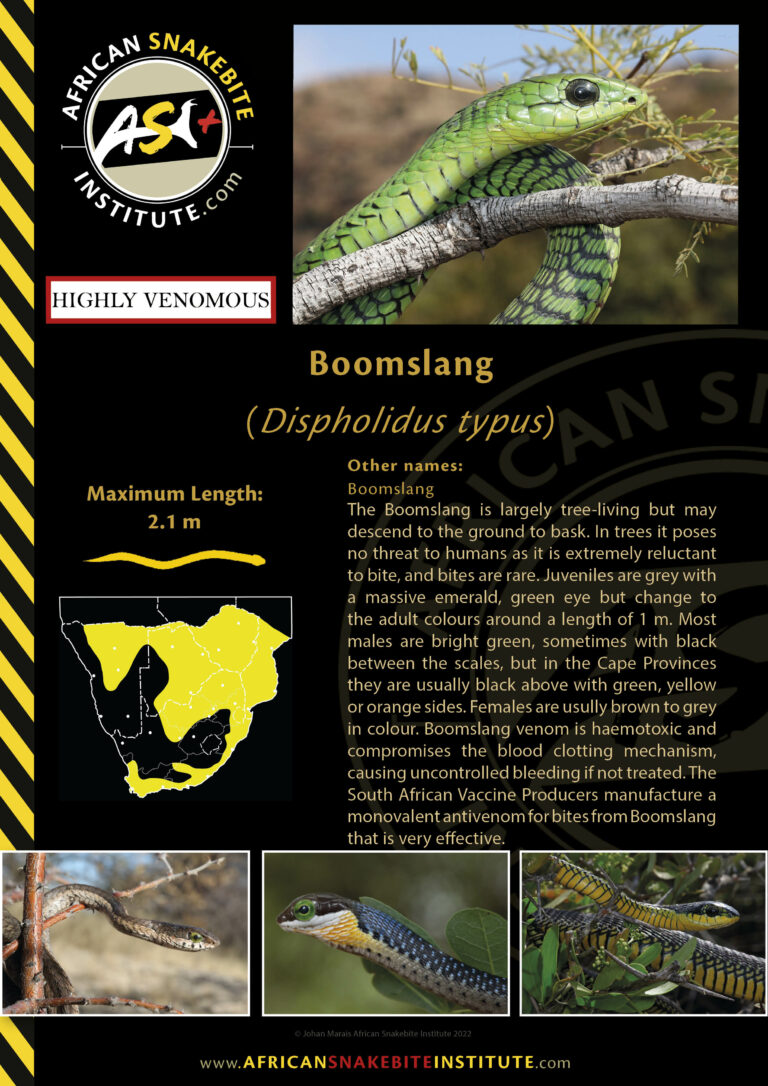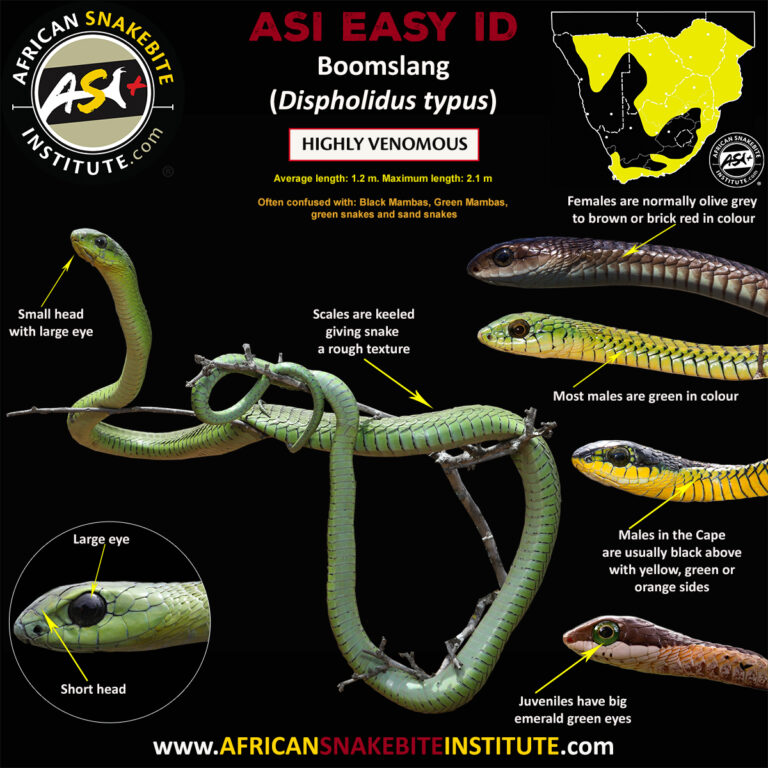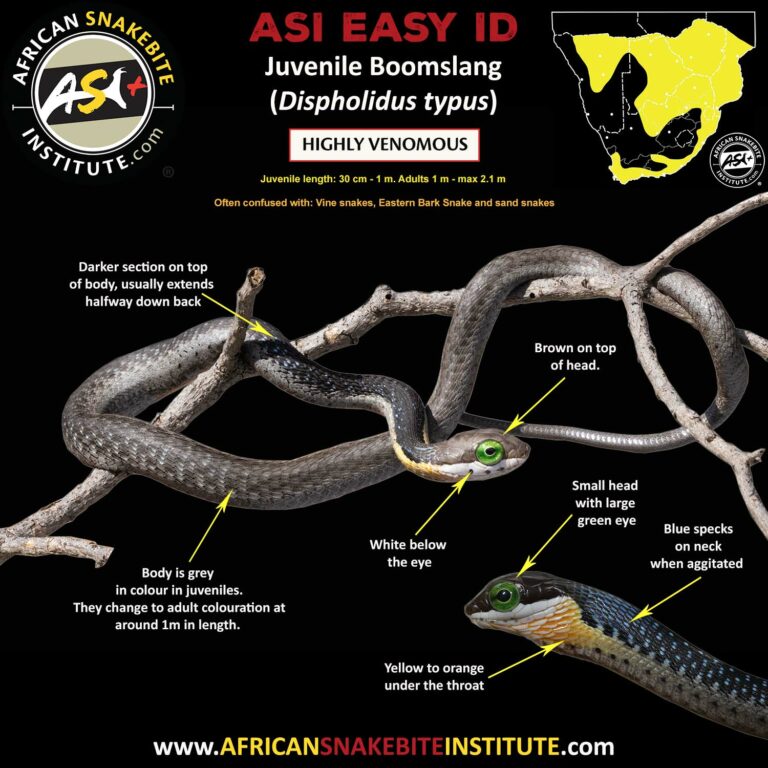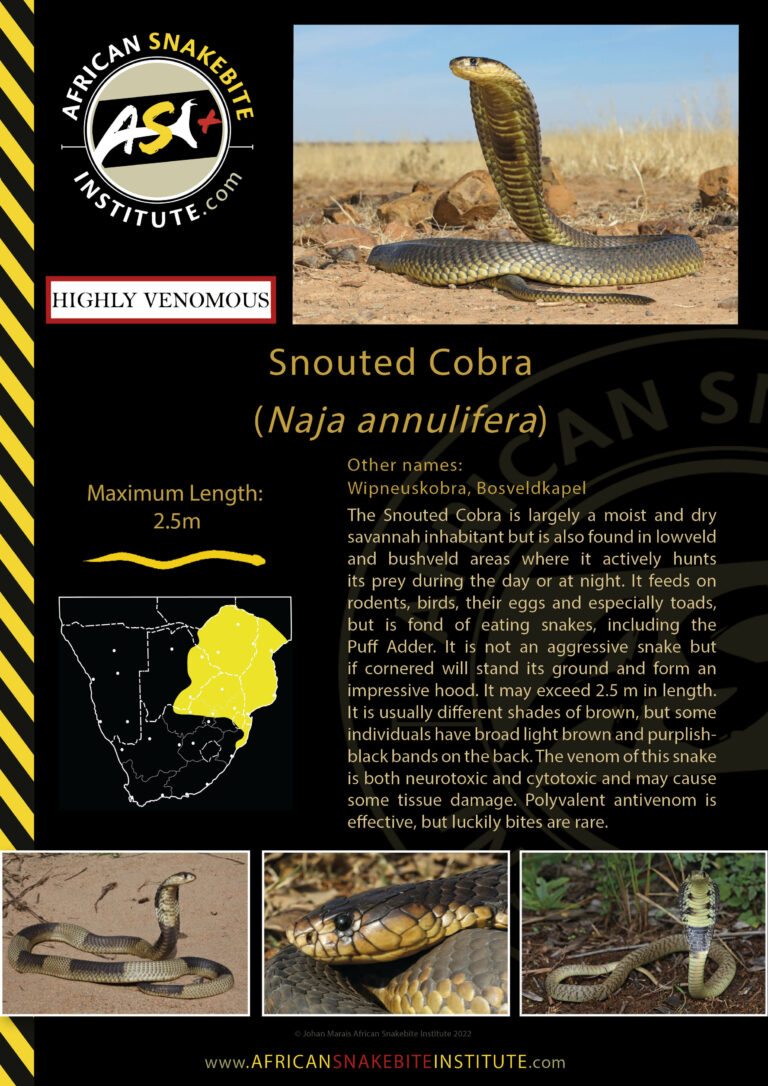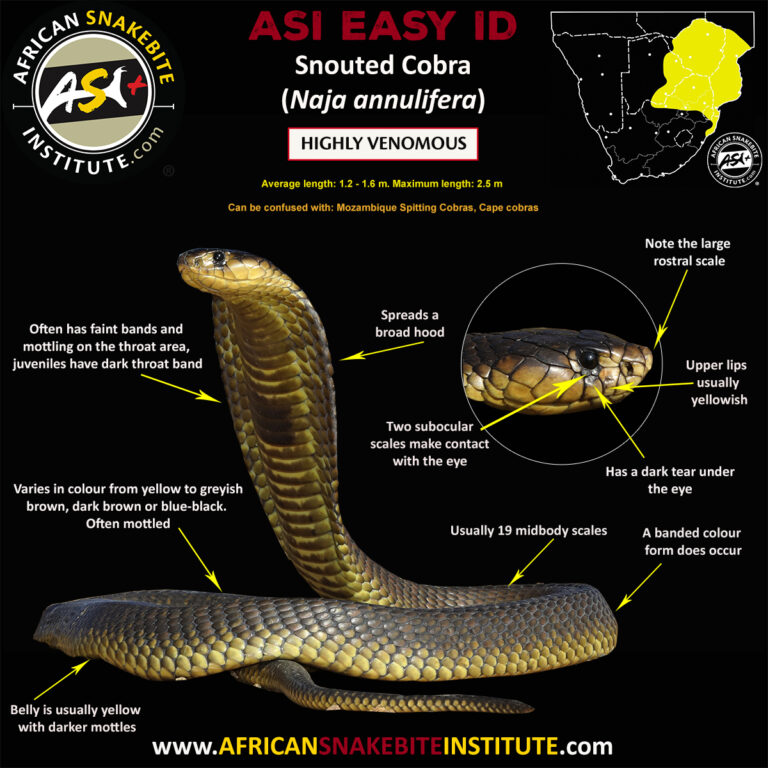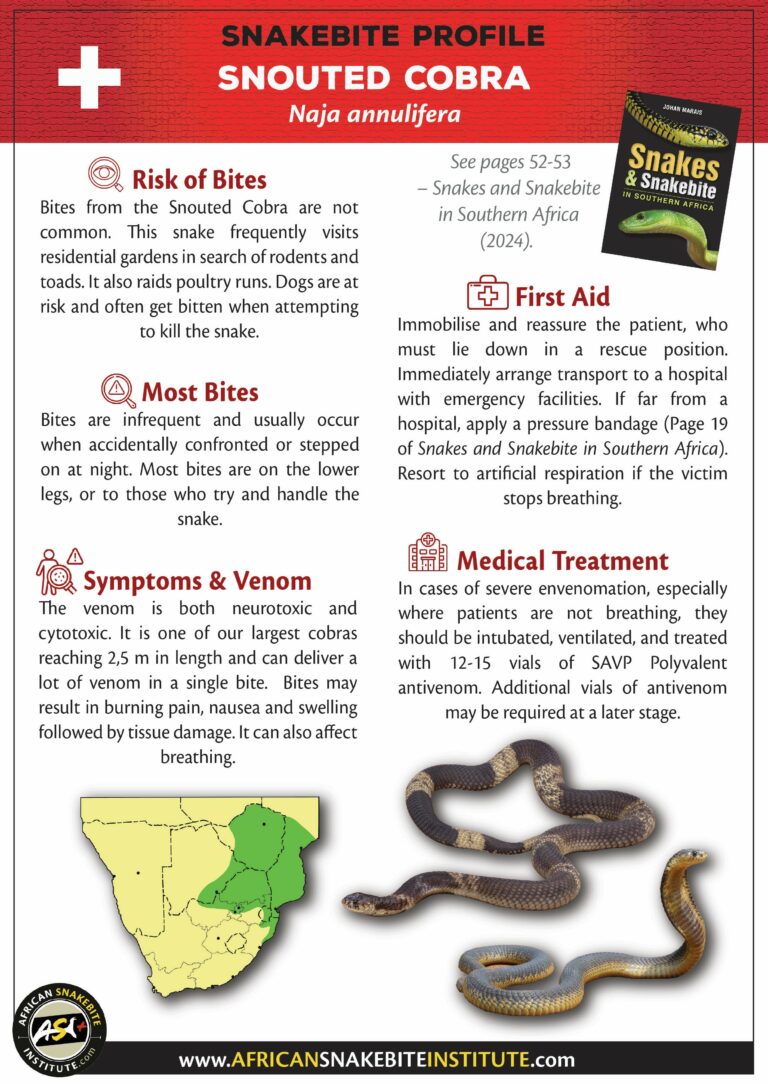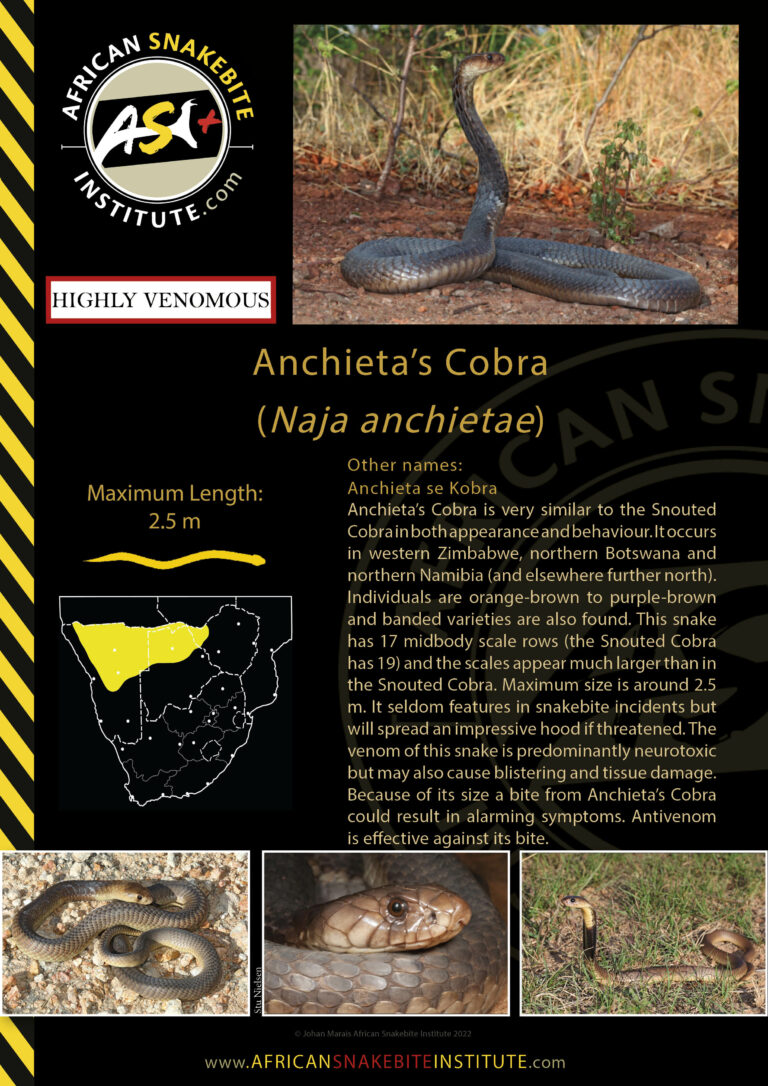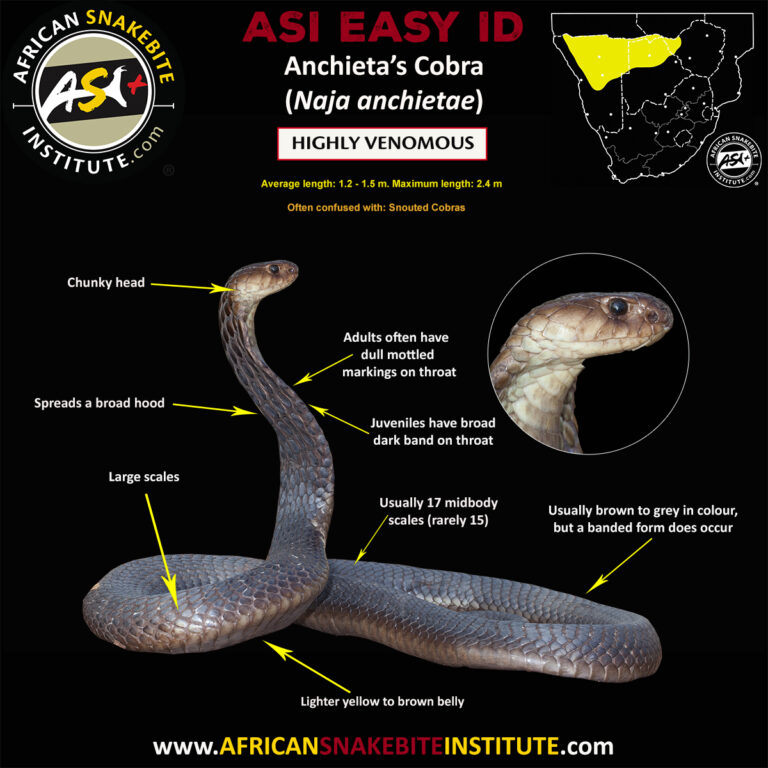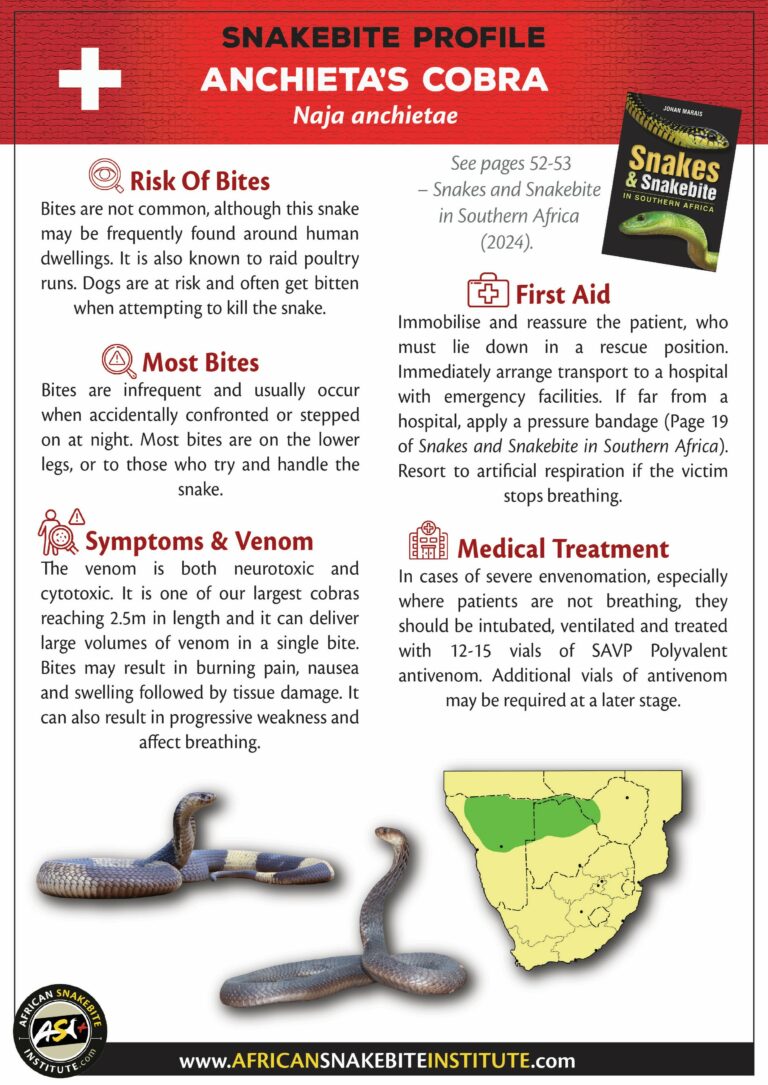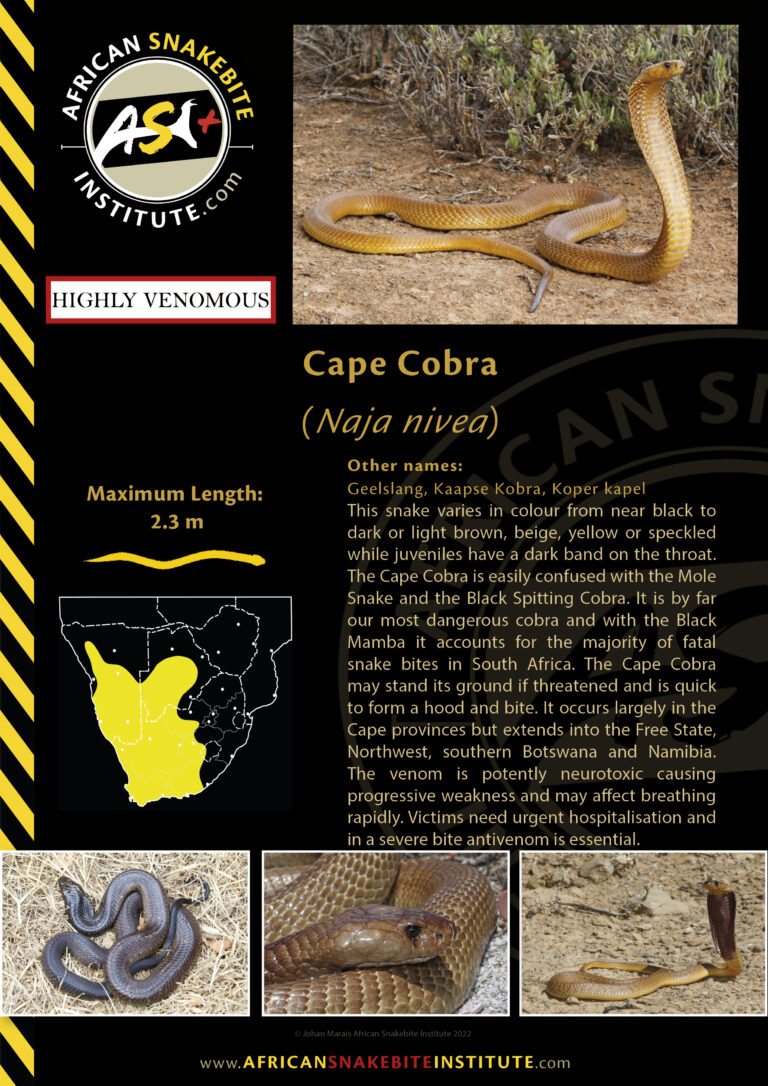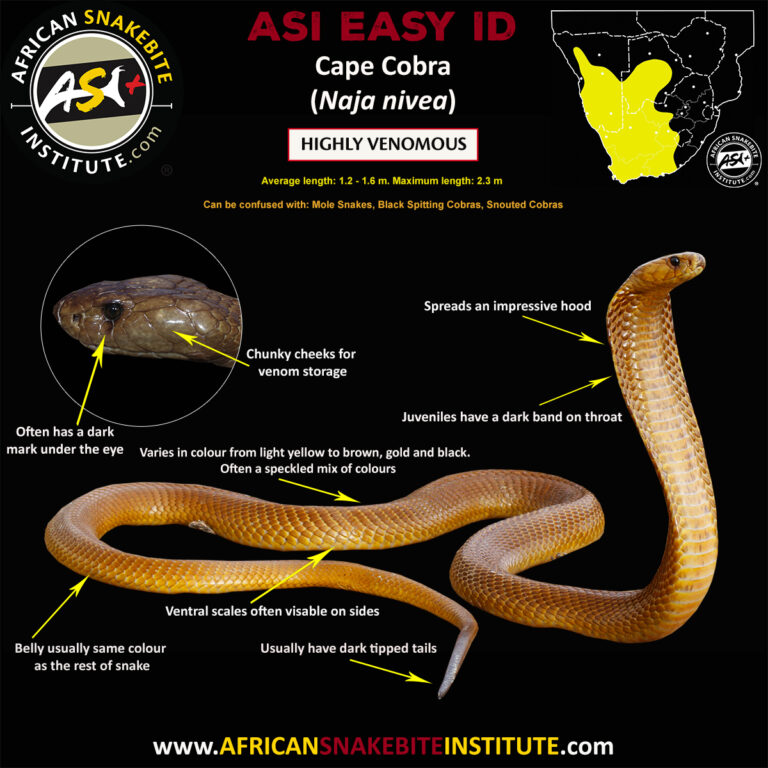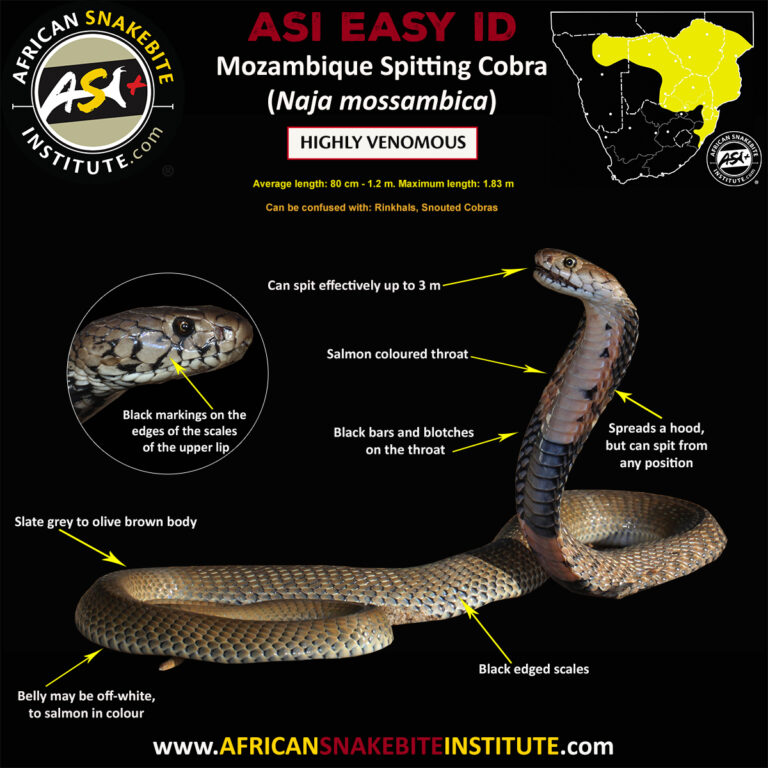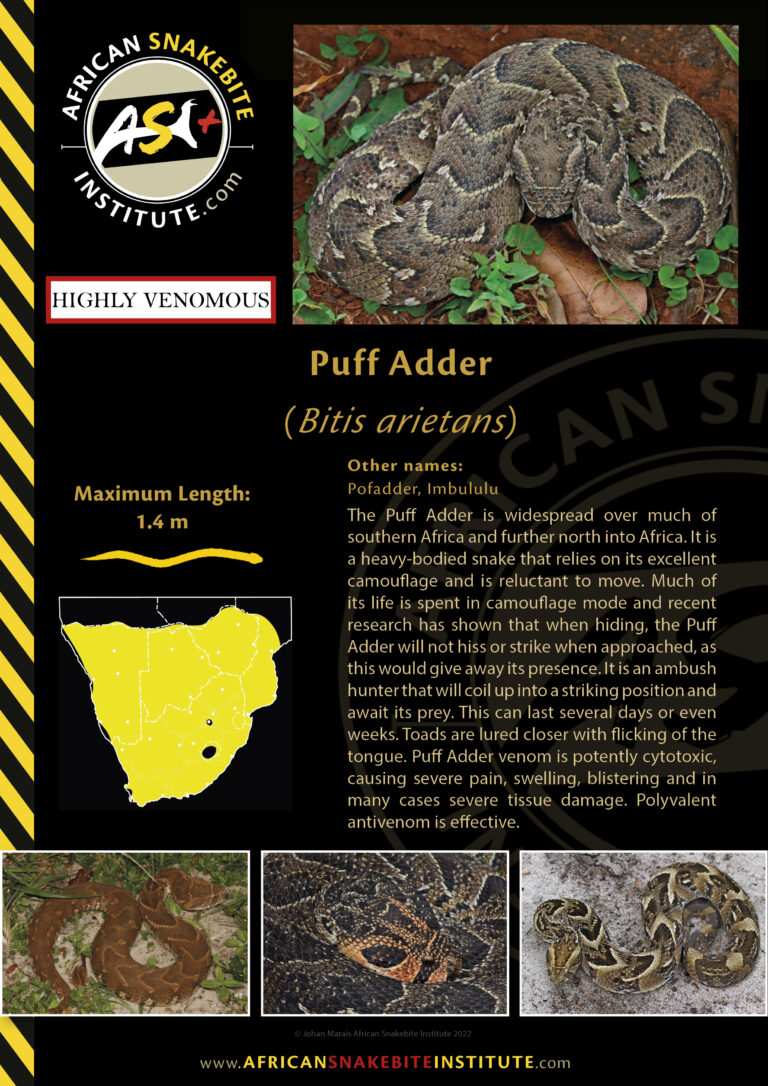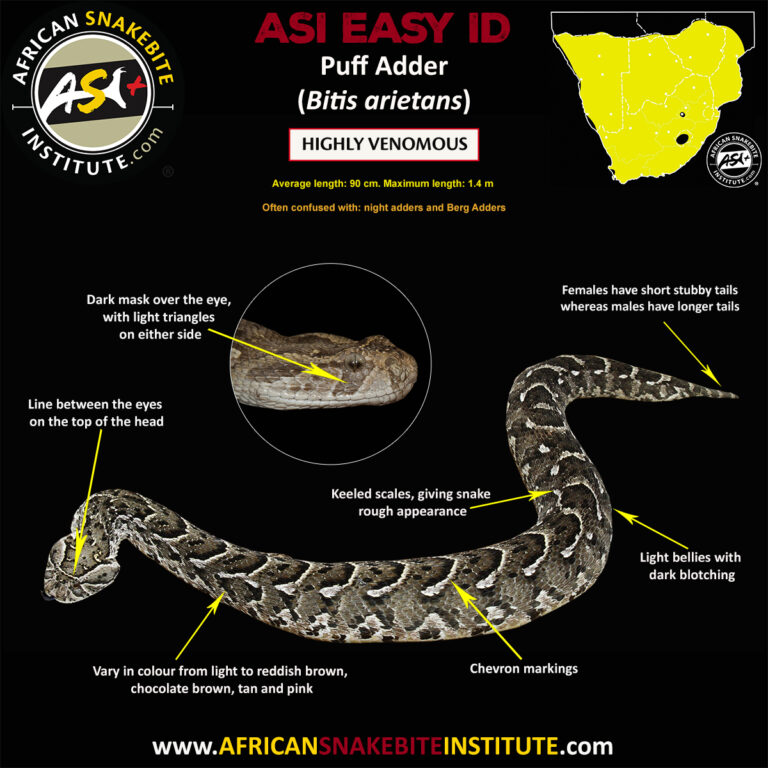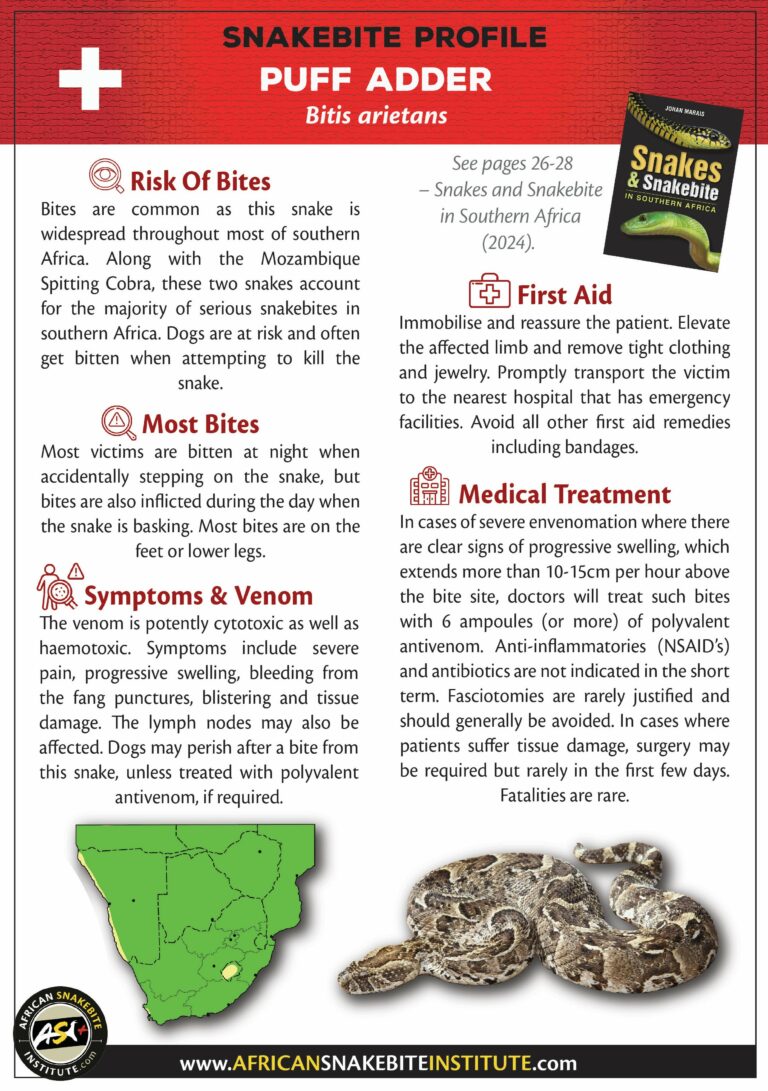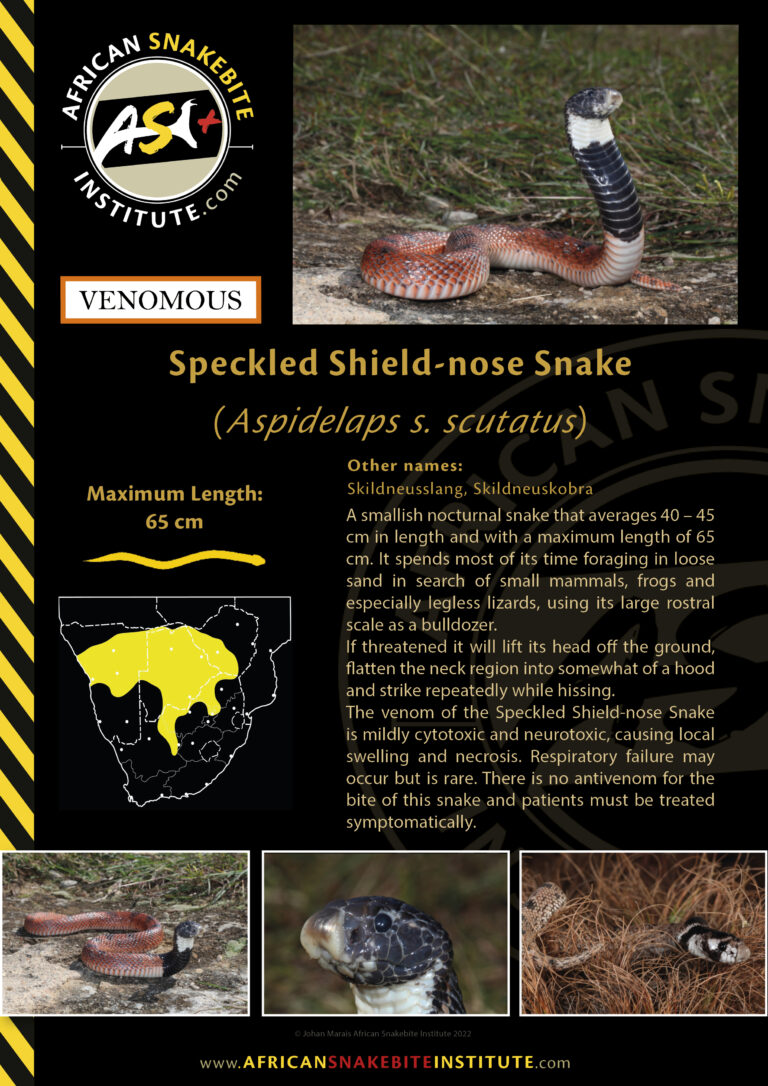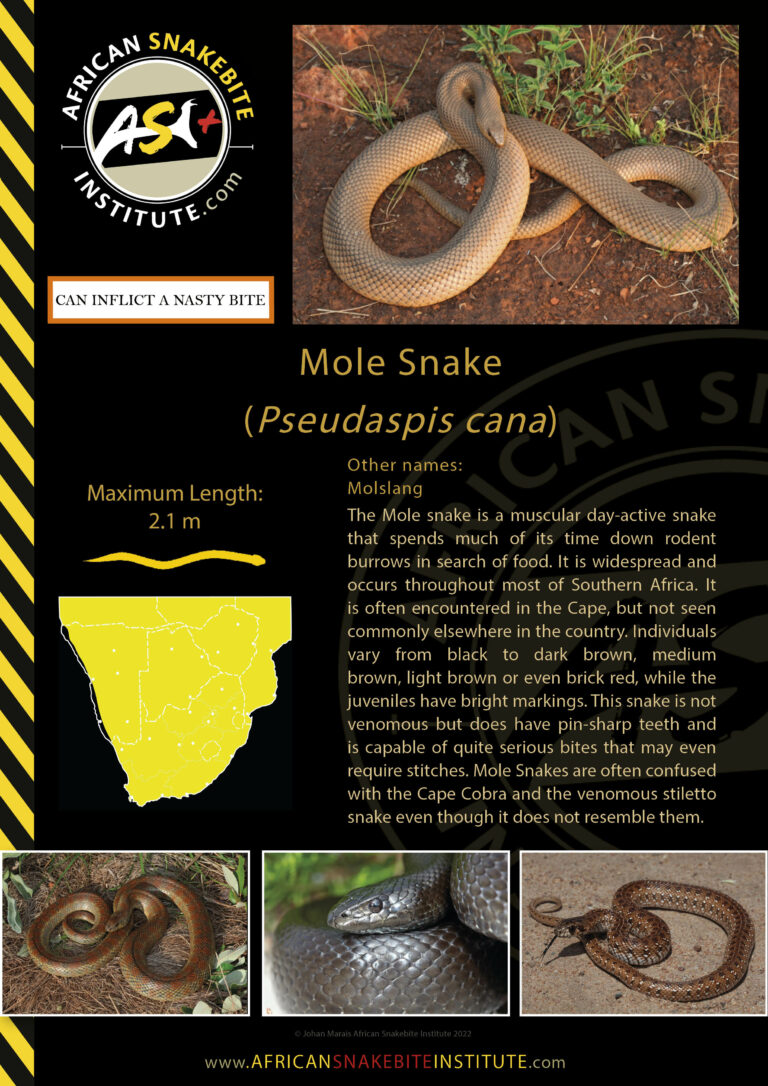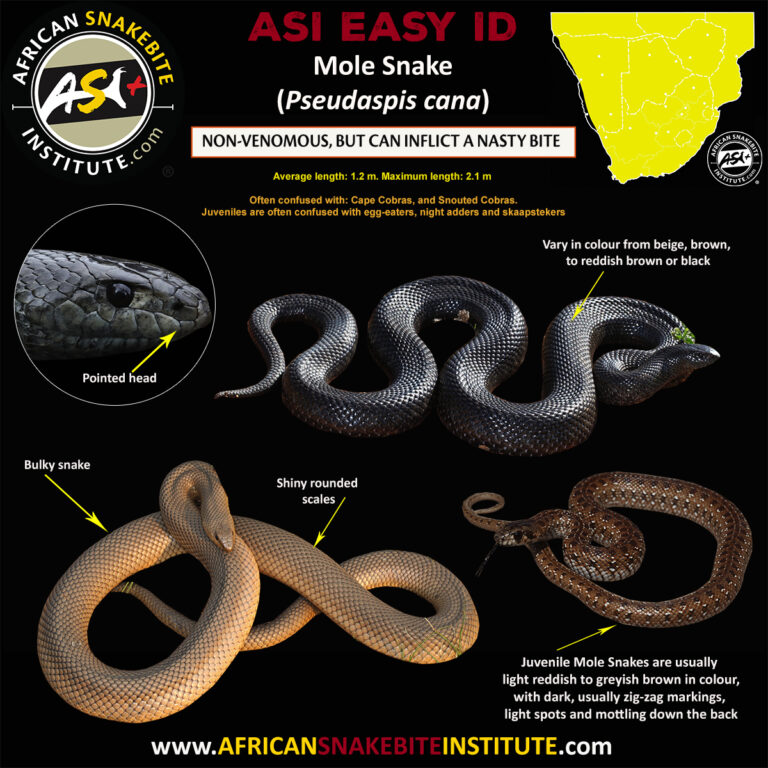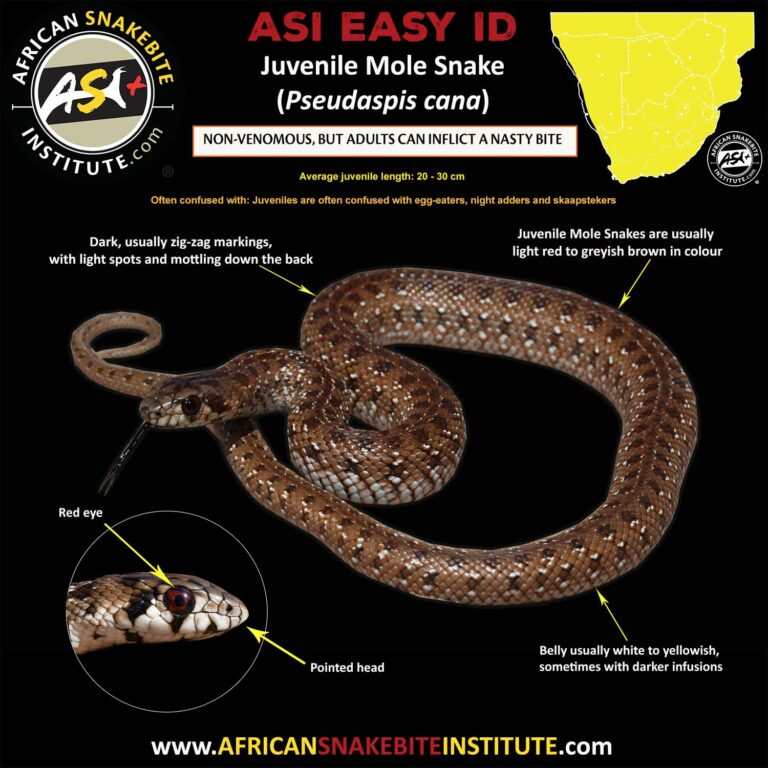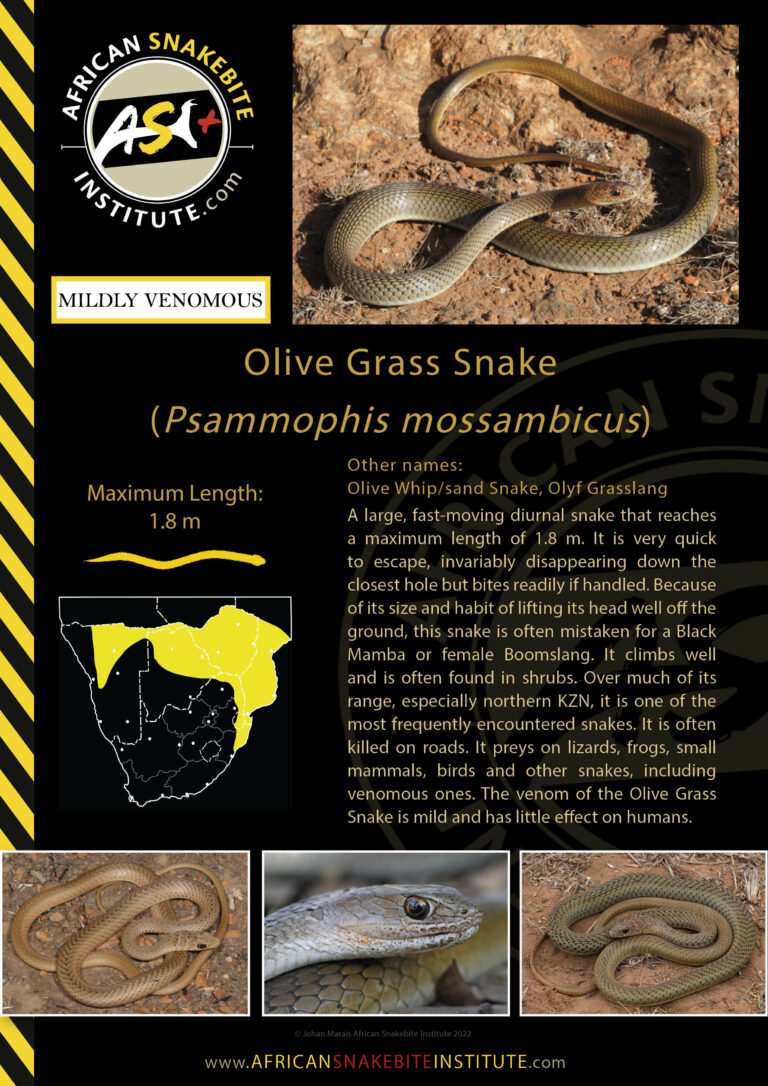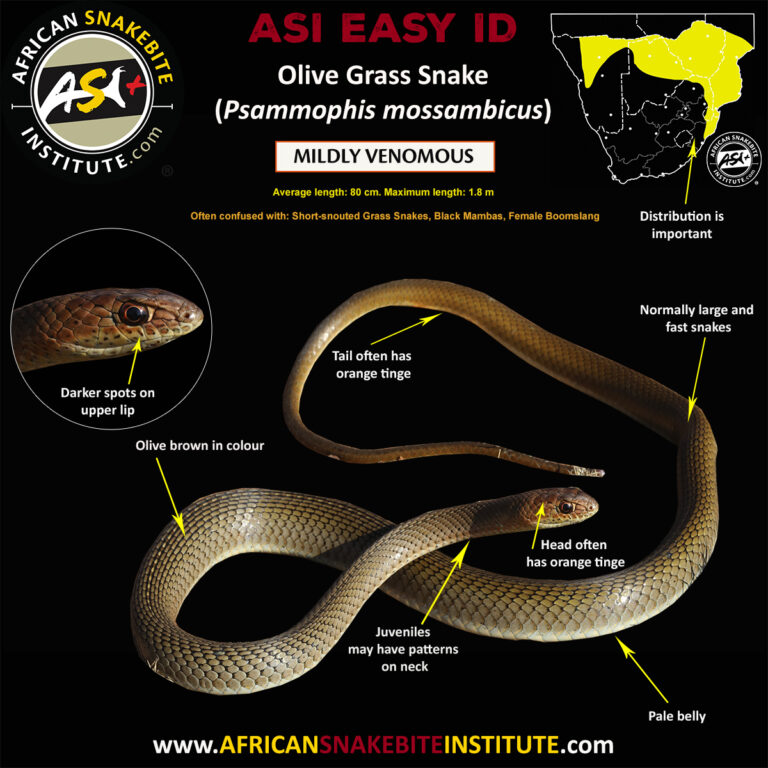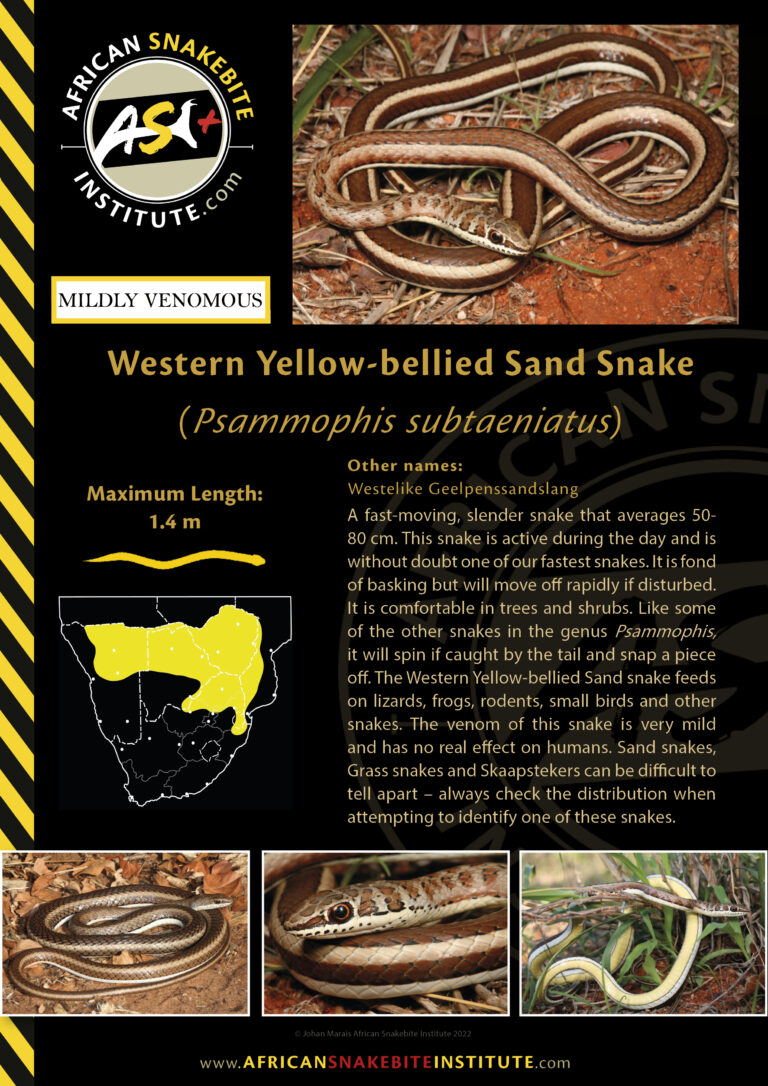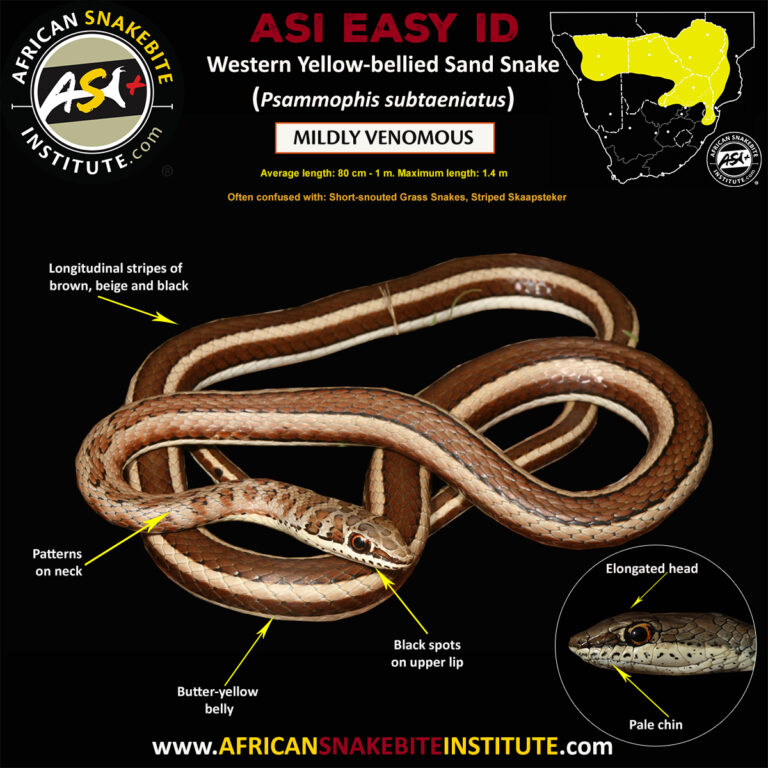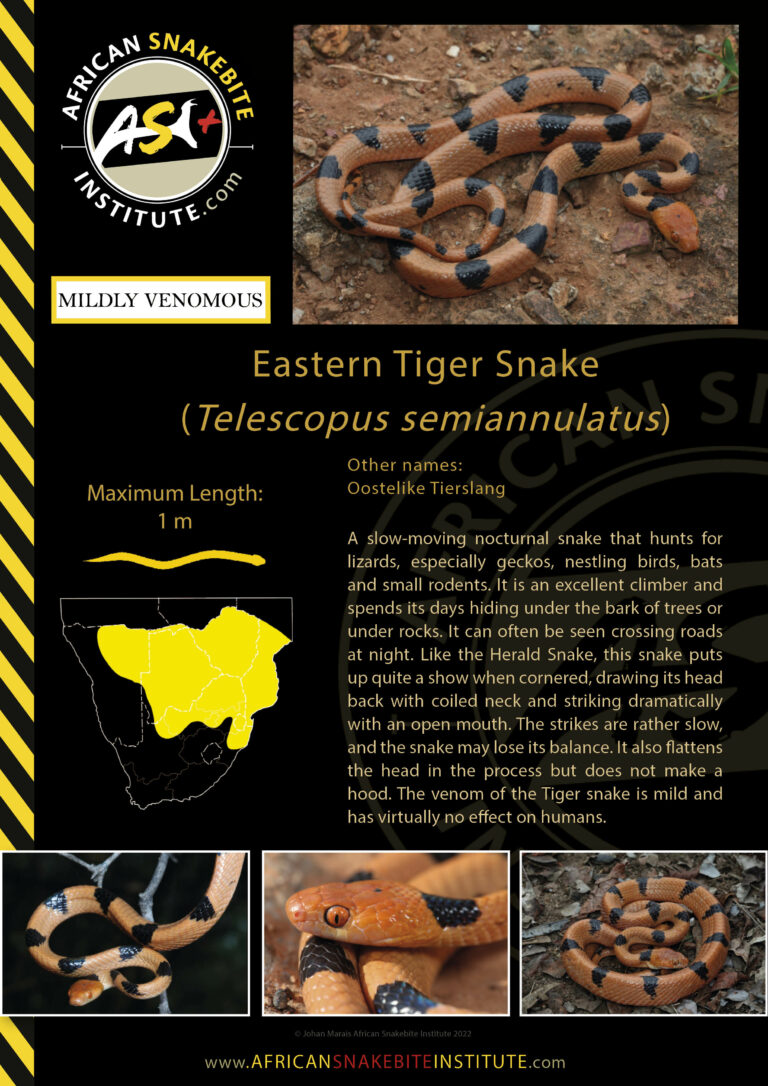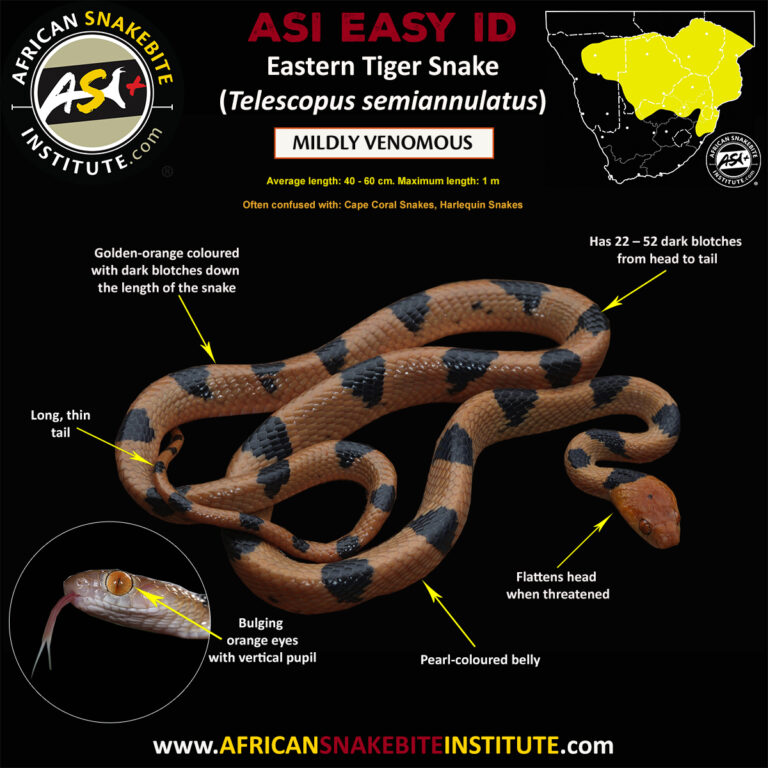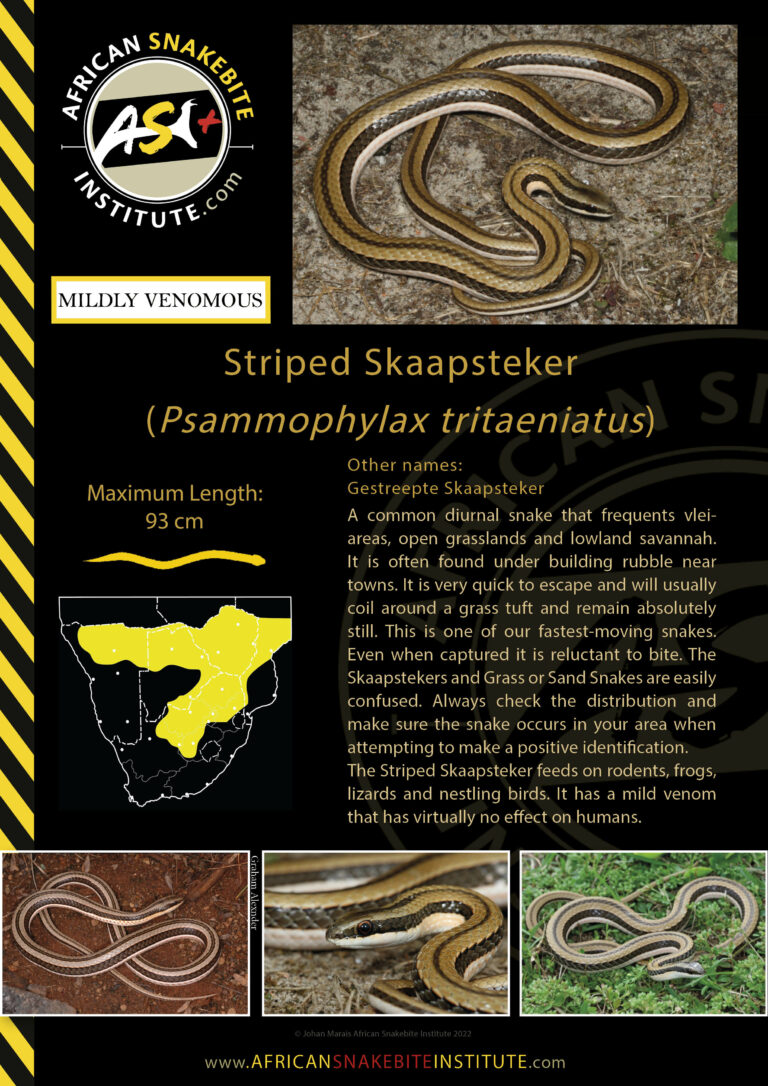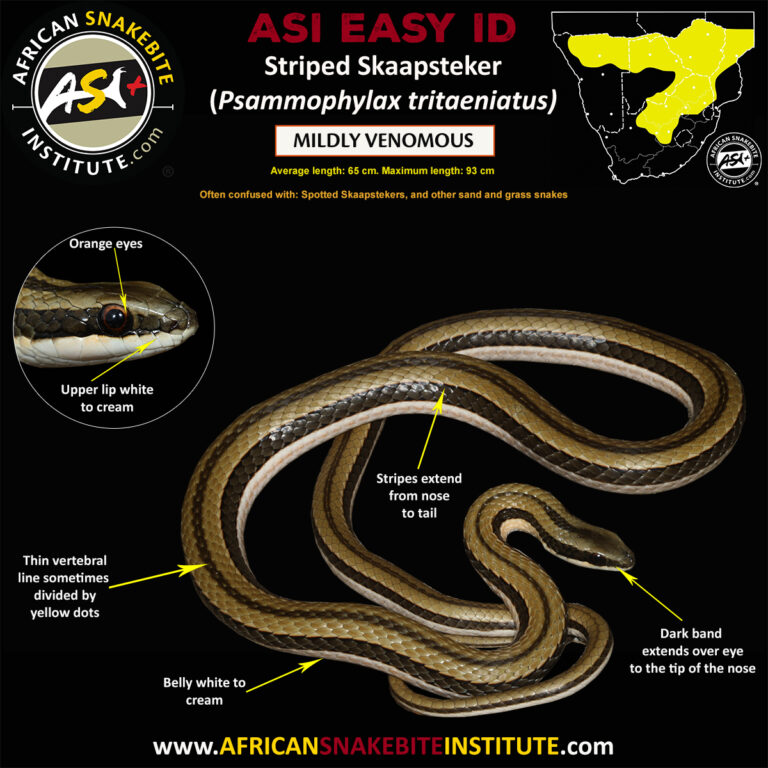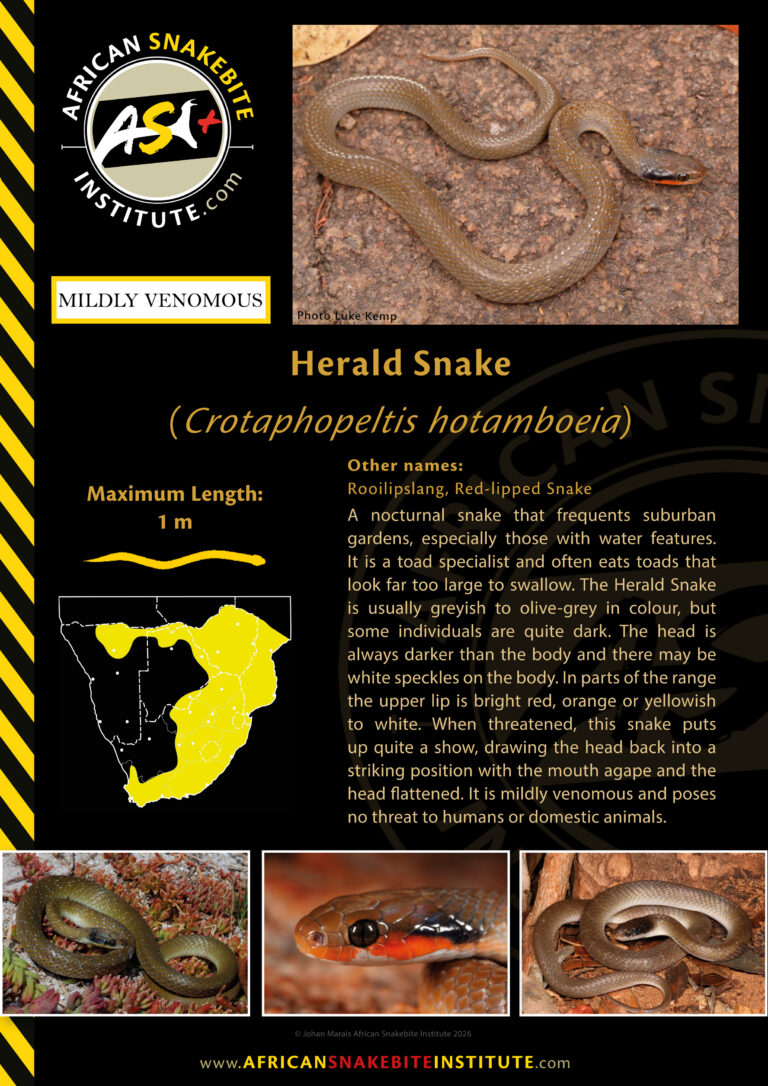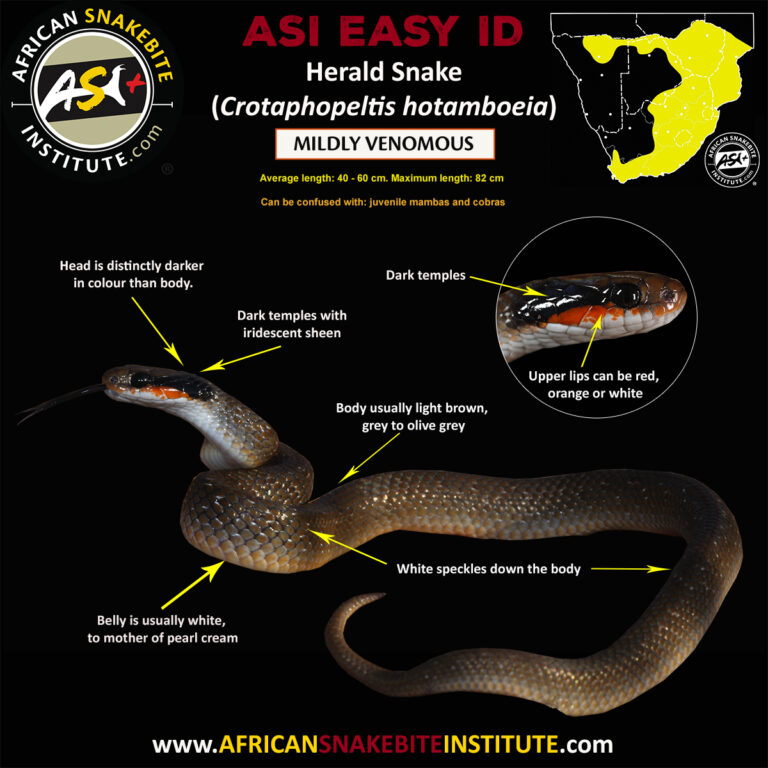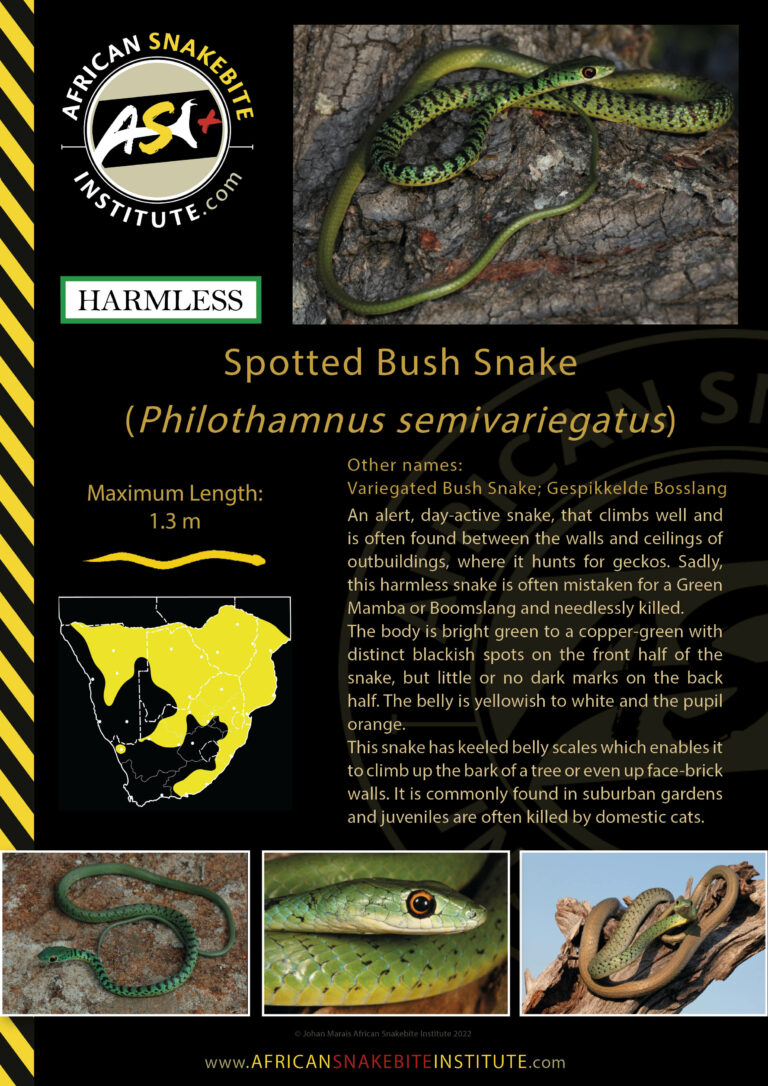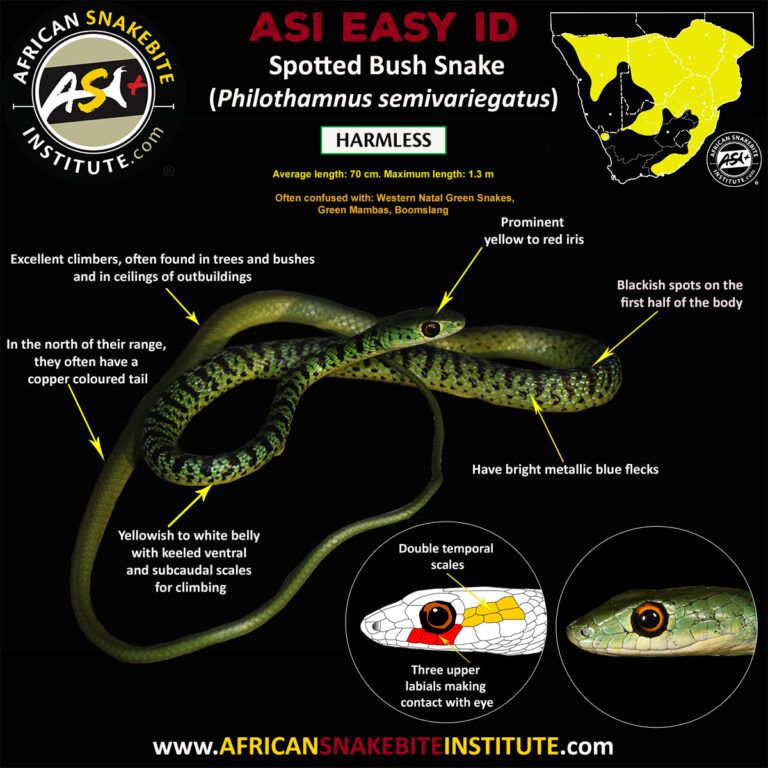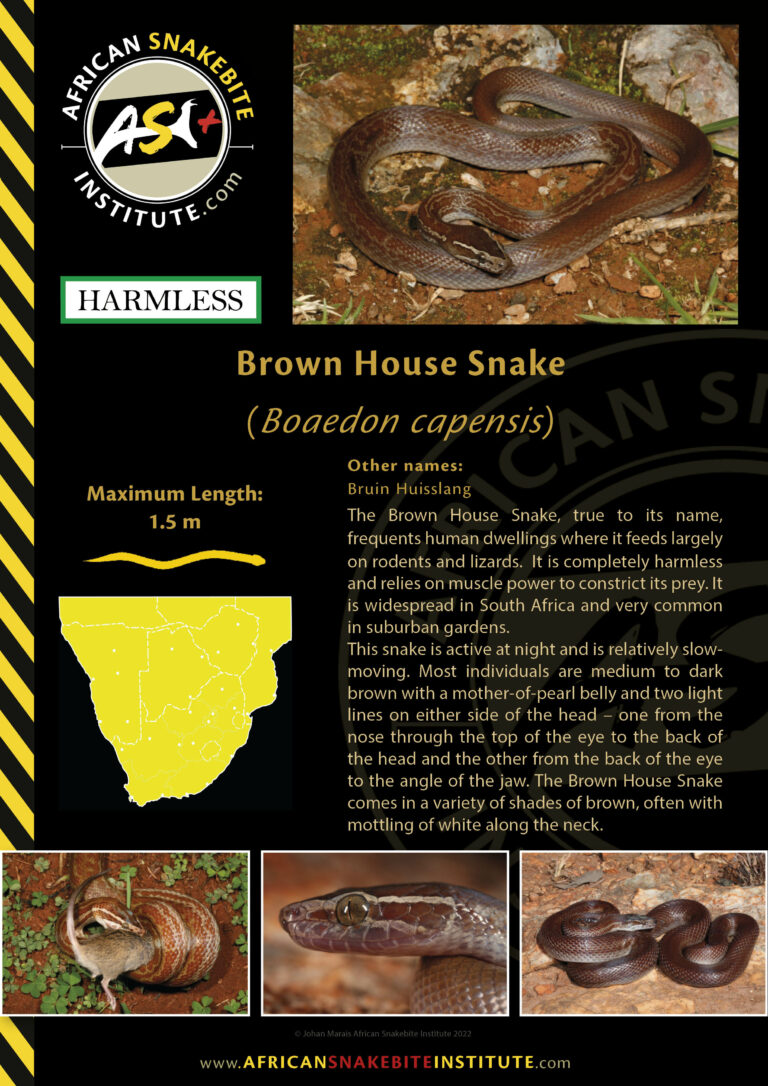
Botswana is home to sixty-six snake species. Of these, nine are considered highly venomous, twelve are capable of inflicting a serious bite, while the remainder are either mildly venomous or harmless. In this article, we cover the most commonly encountered species, including their venom, key identification features, full distribution, and snakebite information for the medically important species.
Snakebite is problematic, with most bites reported in the hot rainy season. Many bites occur at night or late evening when people are walking in sandals or barefoot and accidentally stand on a snake.
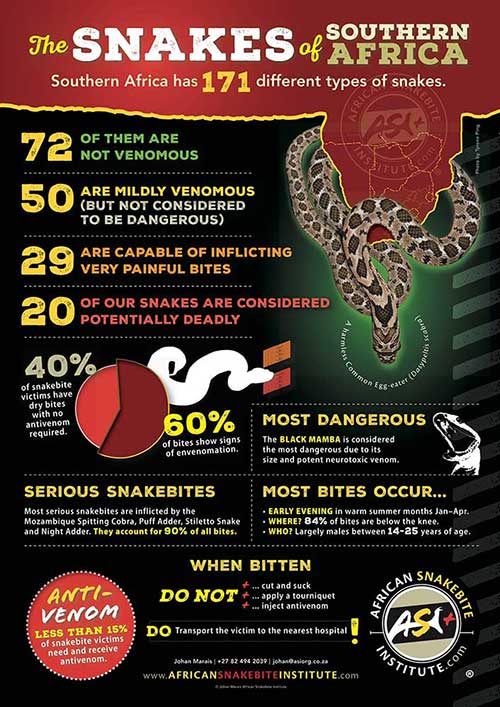
Around 60% of bites show signs of envenomation but about 40% present no symptoms and are either dry bites (no venom injected) or bites from mildly venomous or harmless snakes.
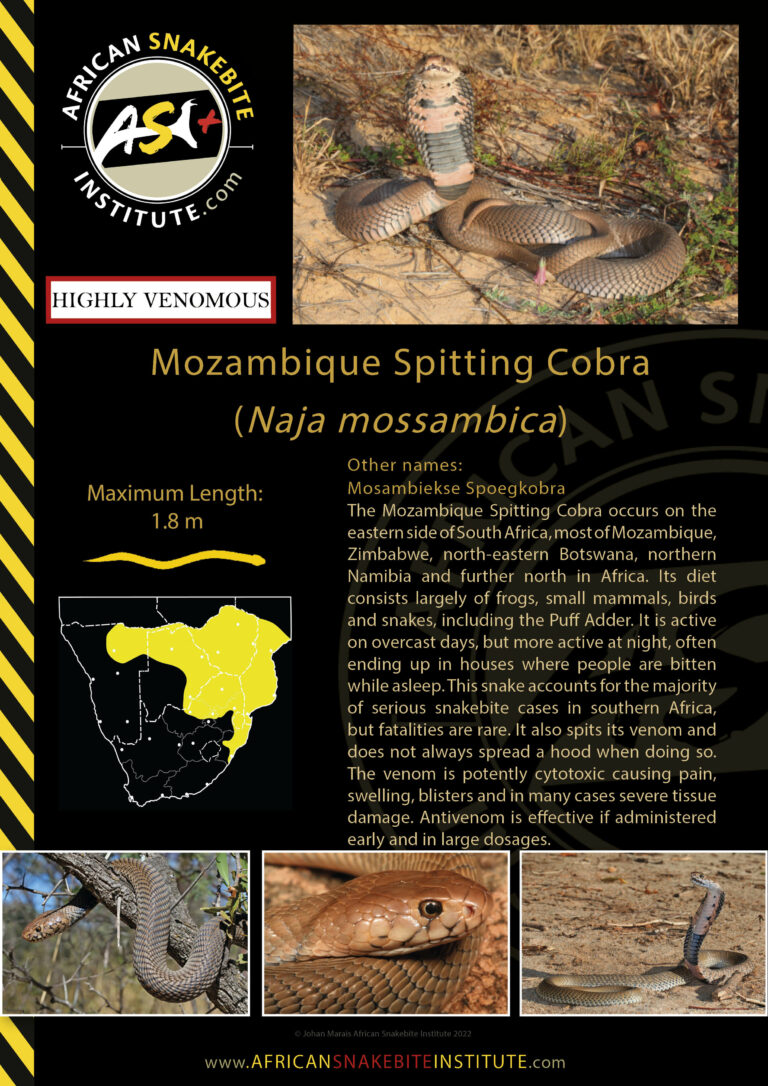
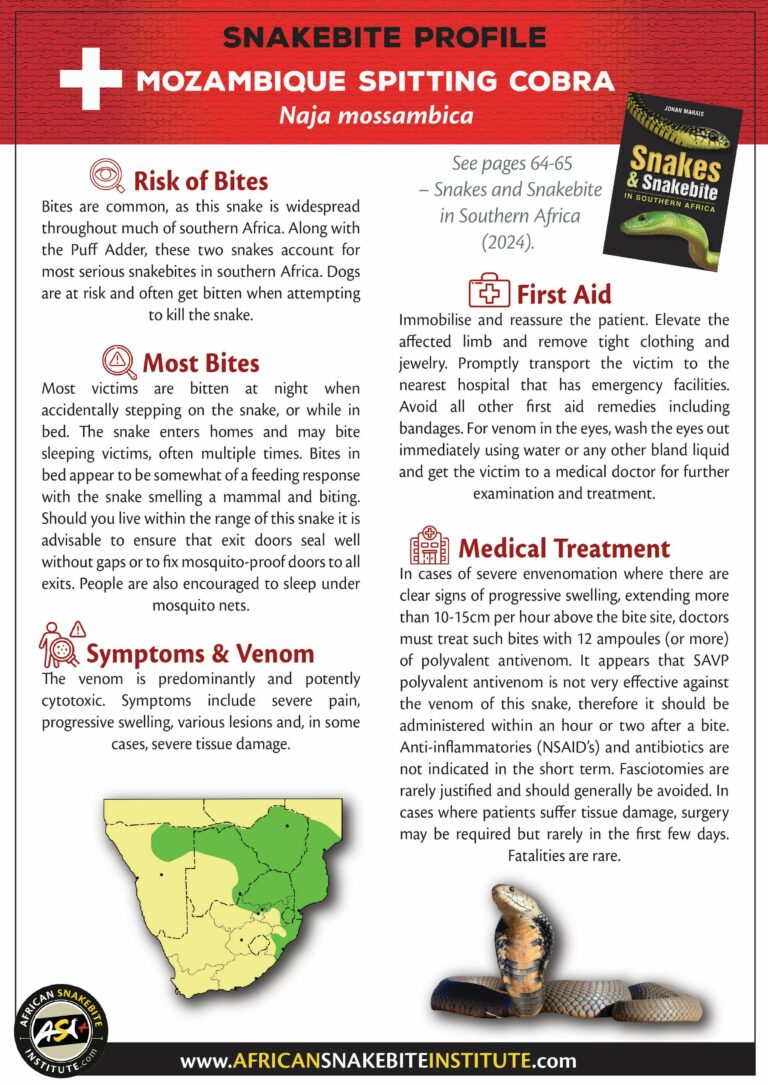
The majority of serious snakebites in Botswana are from the Puff Adder and Mozambique Spitting Cobra. These bites cause huge amounts of tissue damage and result in swelling, blistering and discolouration around the bite site. Many of these bites will require some form of surgery and may leave nasty scars or even require amputations. Most people who receive treatment for these bites survive the bite but may have some morbidity.
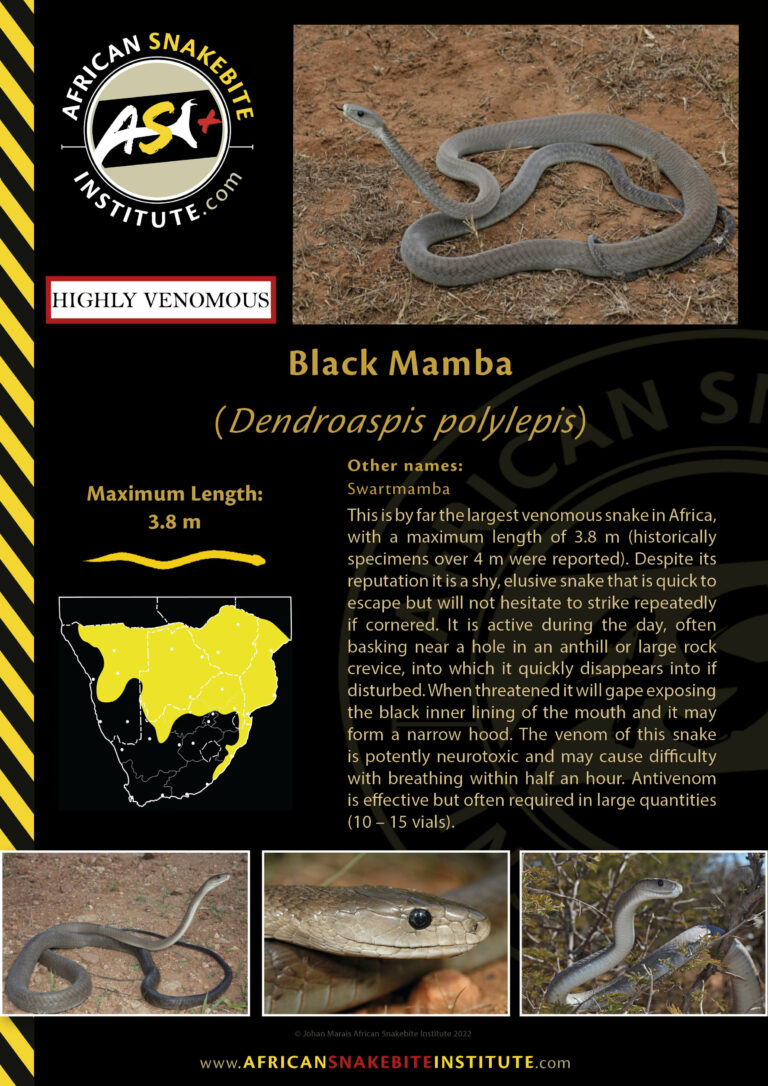
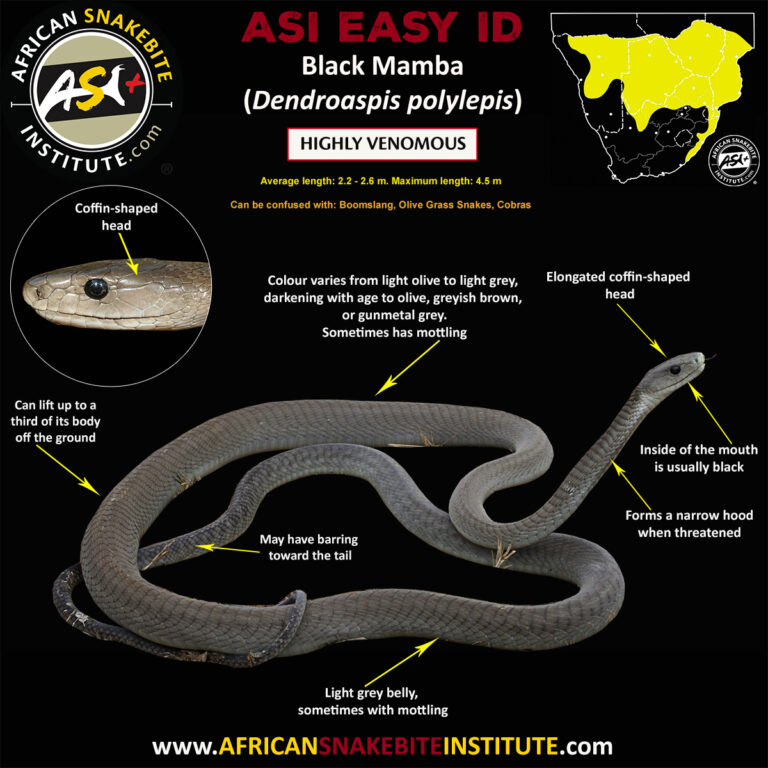
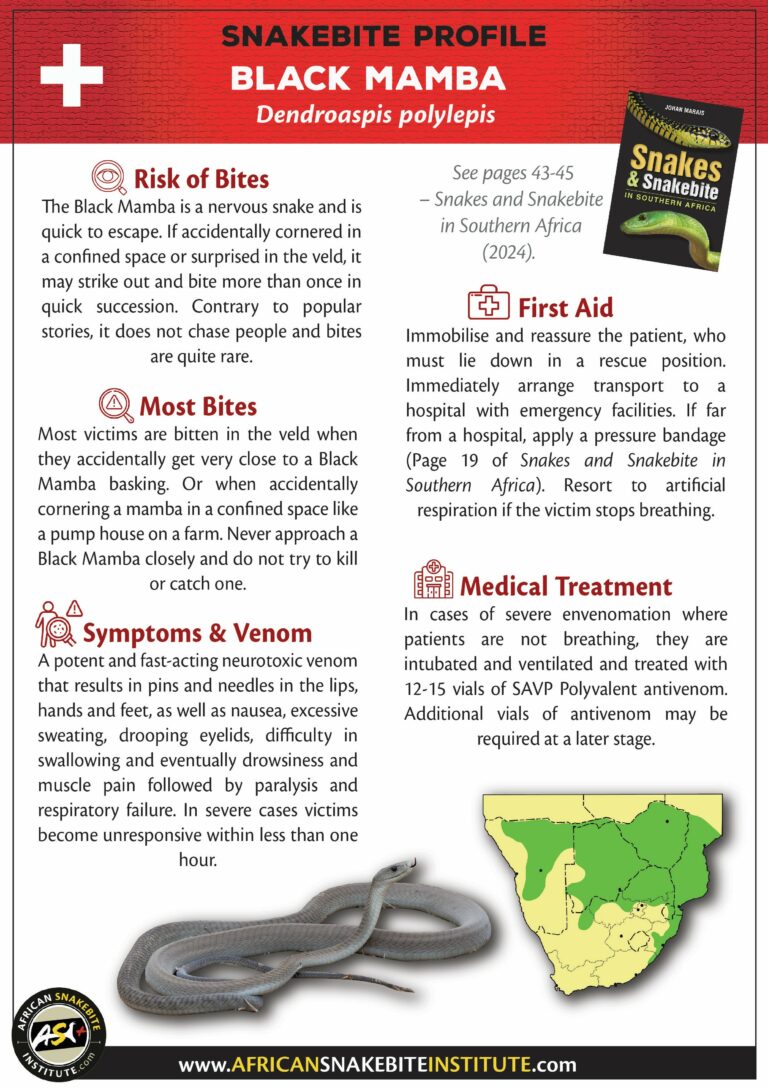
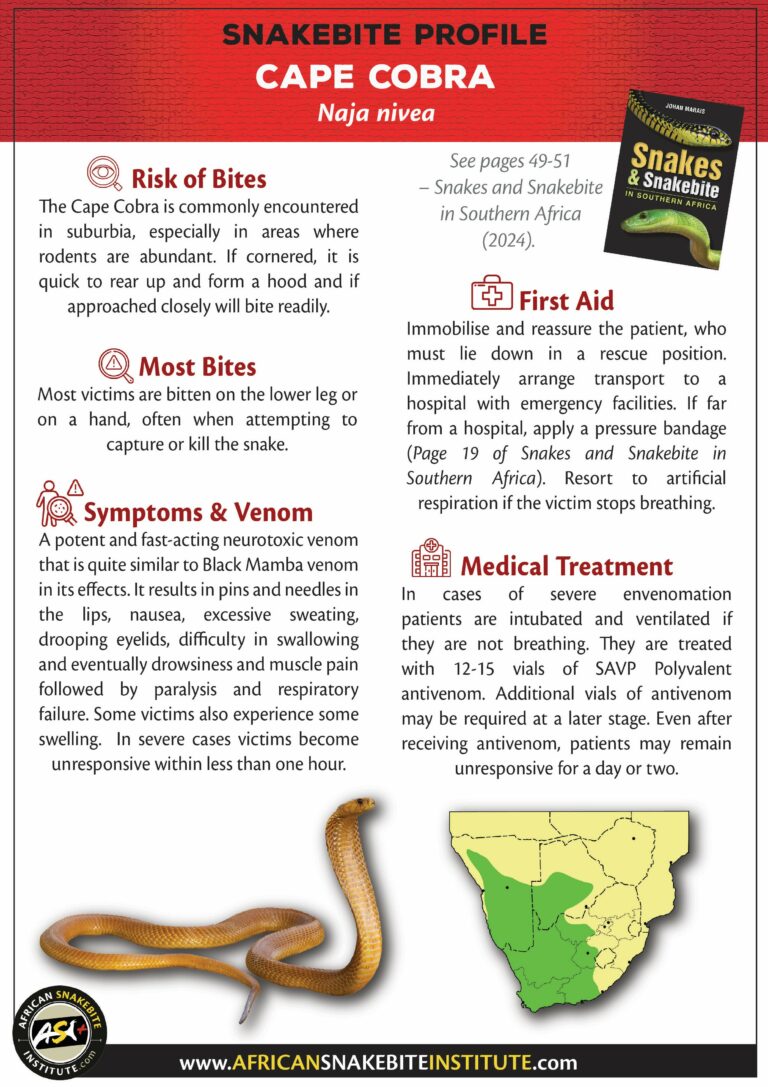
Deaths from snakebites in Botswana are not common, and usually occur from two snakes: The Black Mamba in the north and east of the country and the Cape Cobra in the south and western side of the country. These snakes have a powerful neurotoxic venom that shuts down the nervous system and can stop the person from breathing. The venom affects the body rapidly and symptoms may appear in the first few minutes. These bites may become critical within two to eight hours, and it is vitally important that the person should get to a medical centre as soon as possible. Occasionally in bad bites or where the victim receives multiple bites, the person may stop breathing within 30-45 minutes.