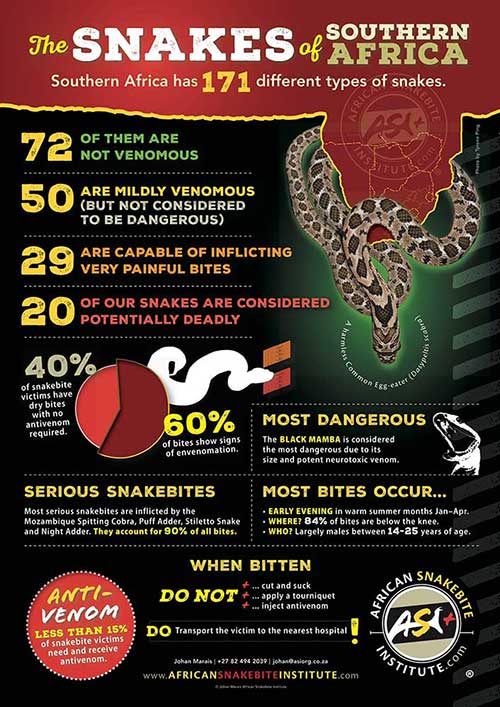
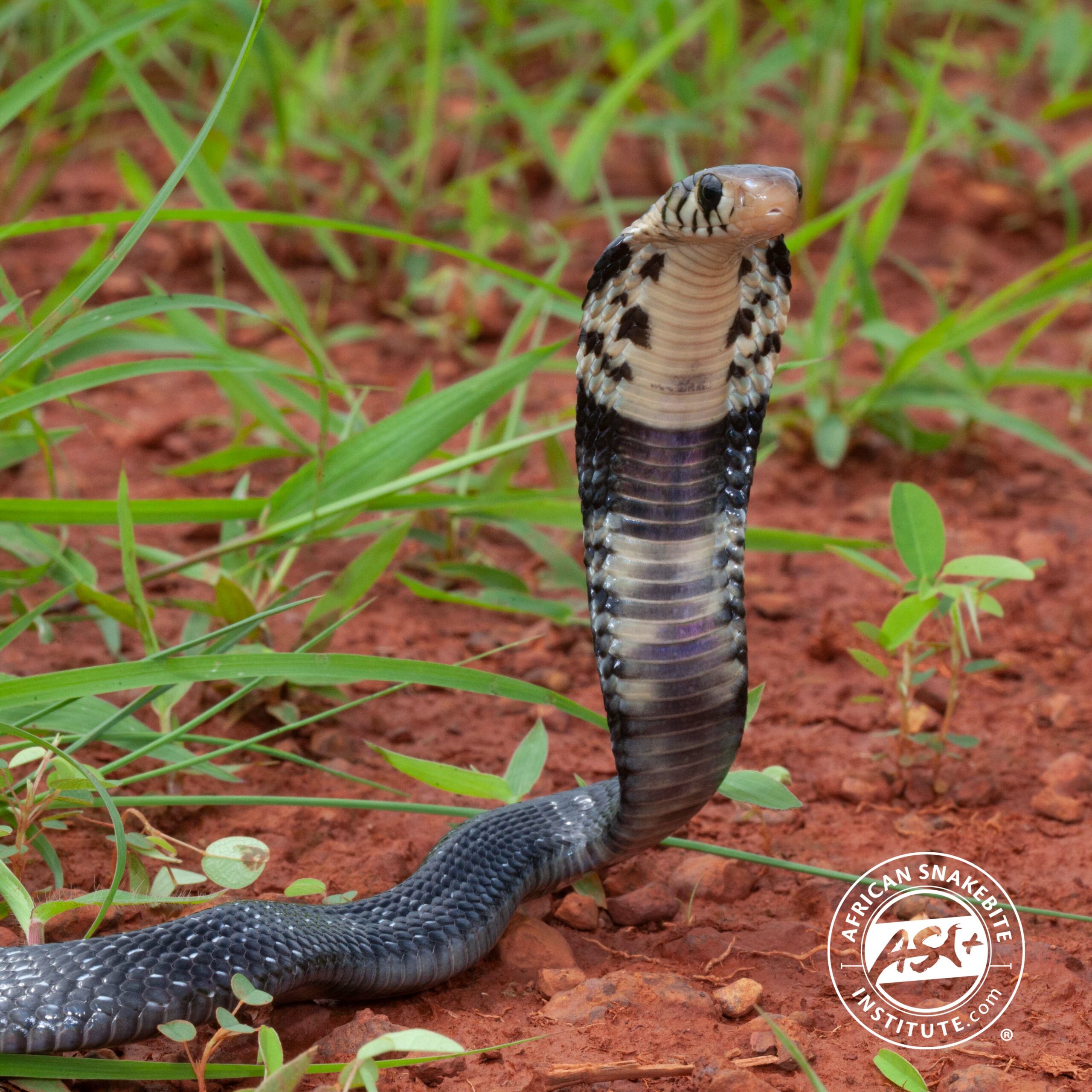
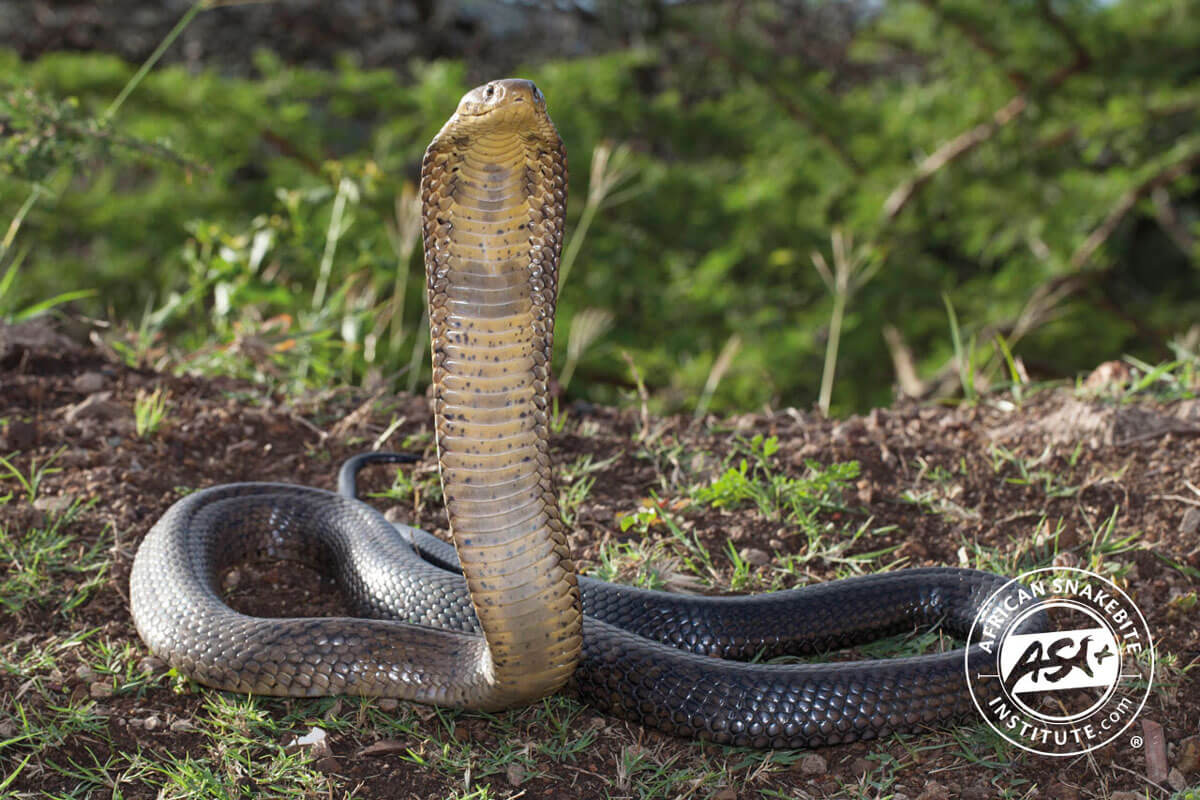
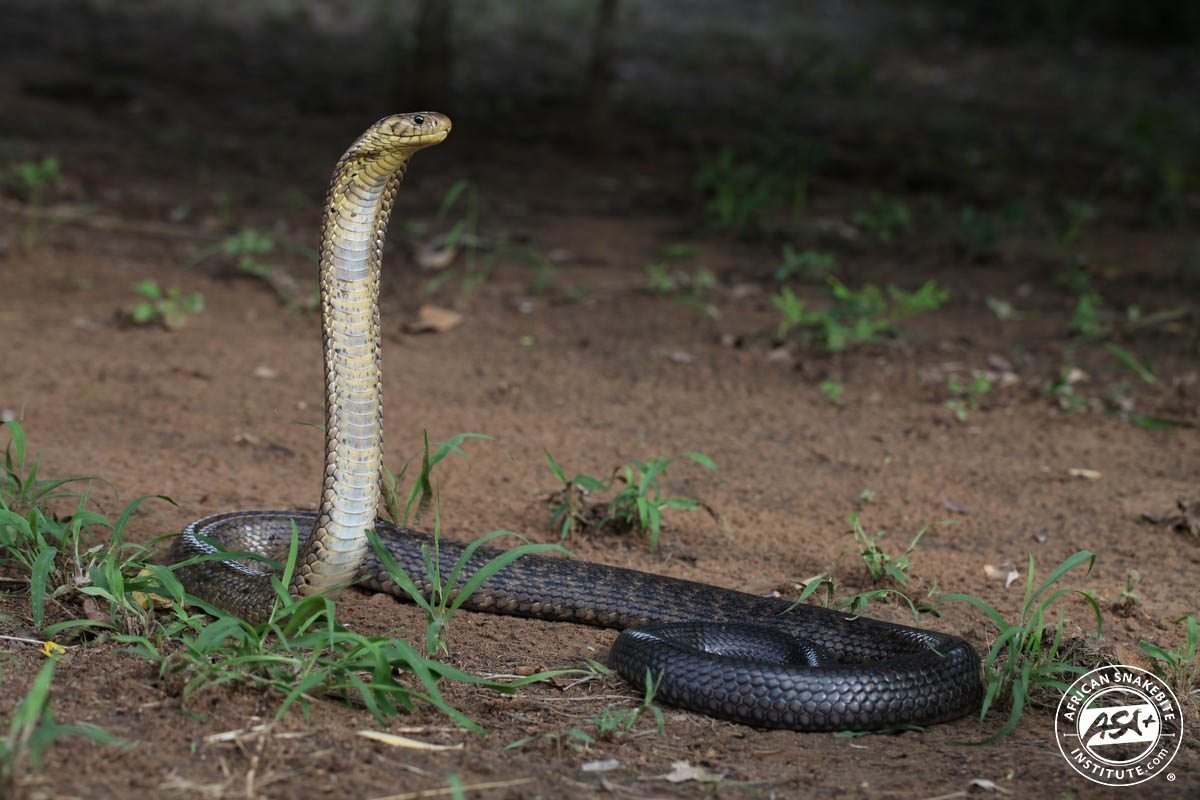
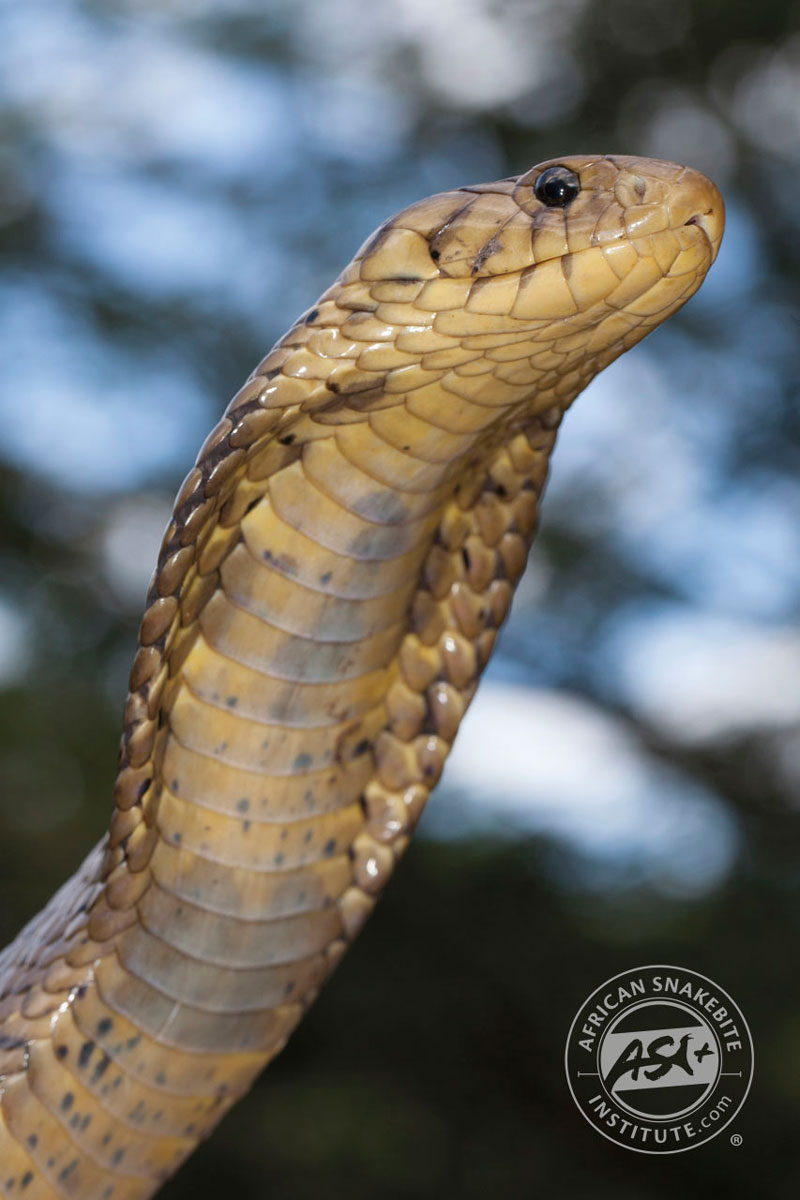
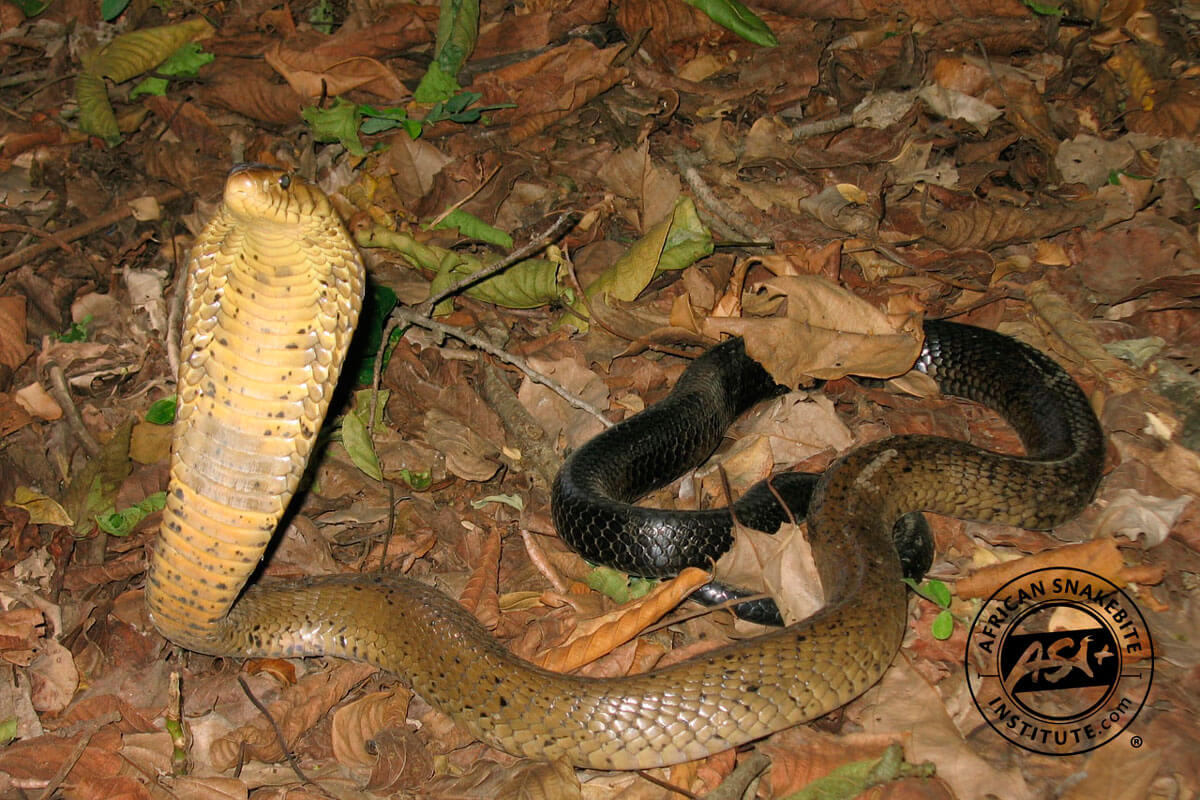
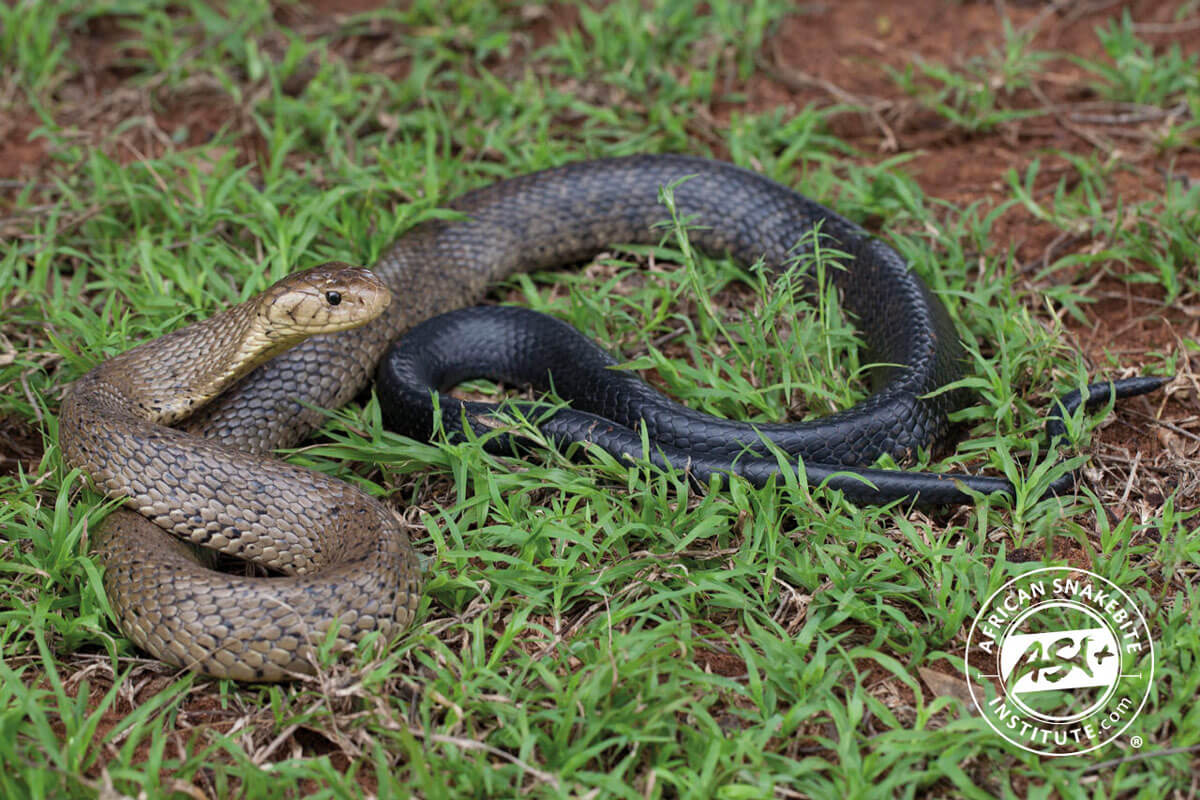
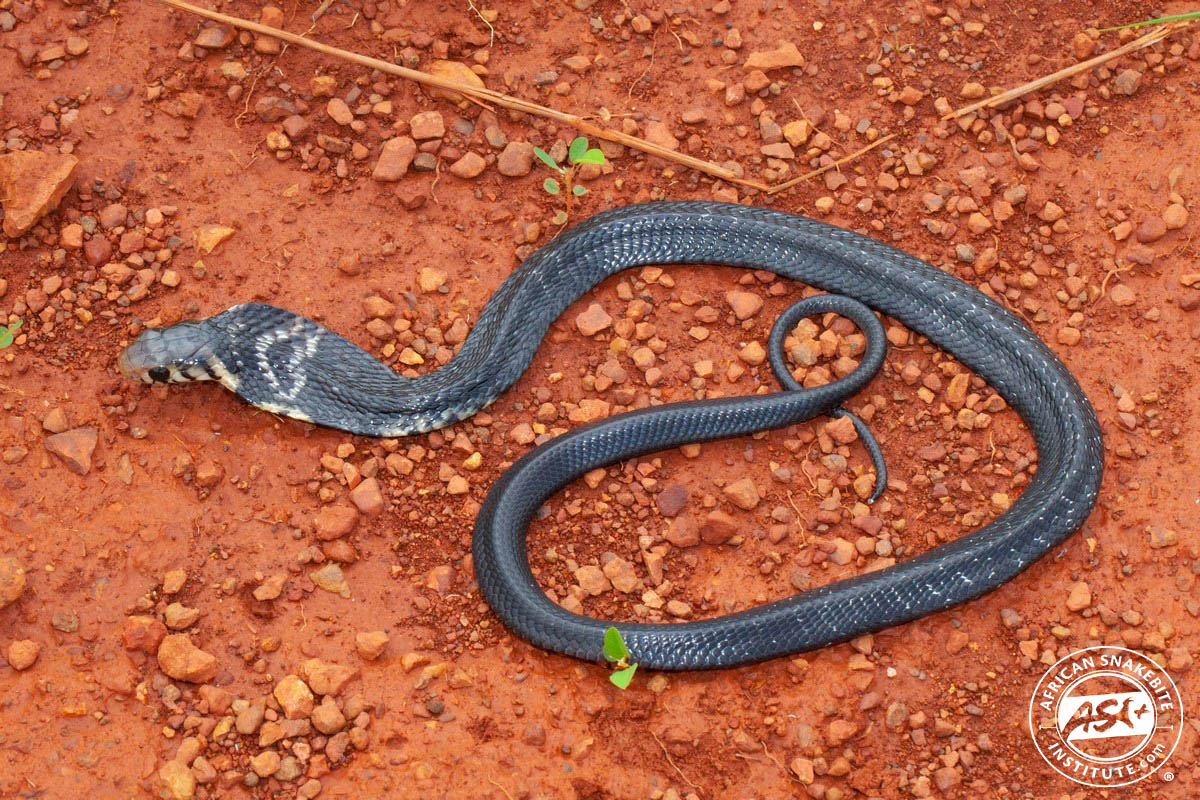
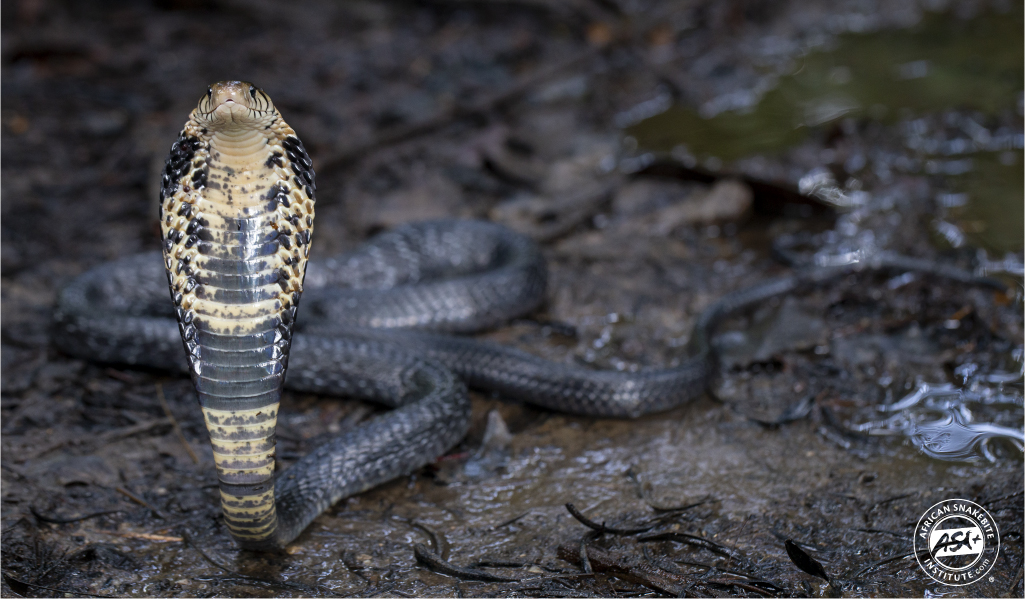
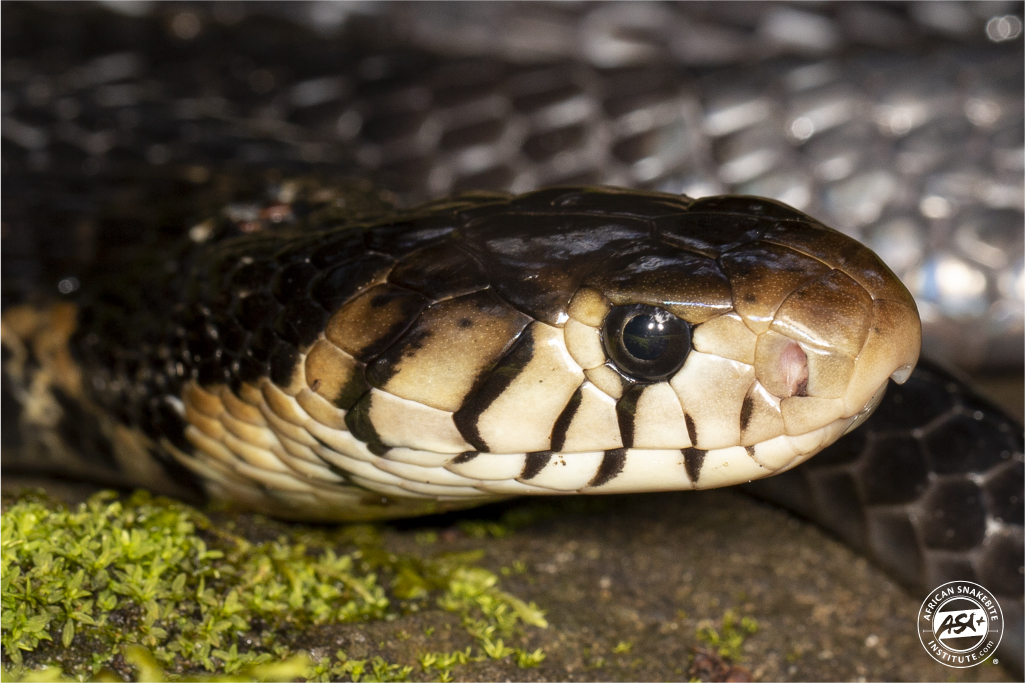
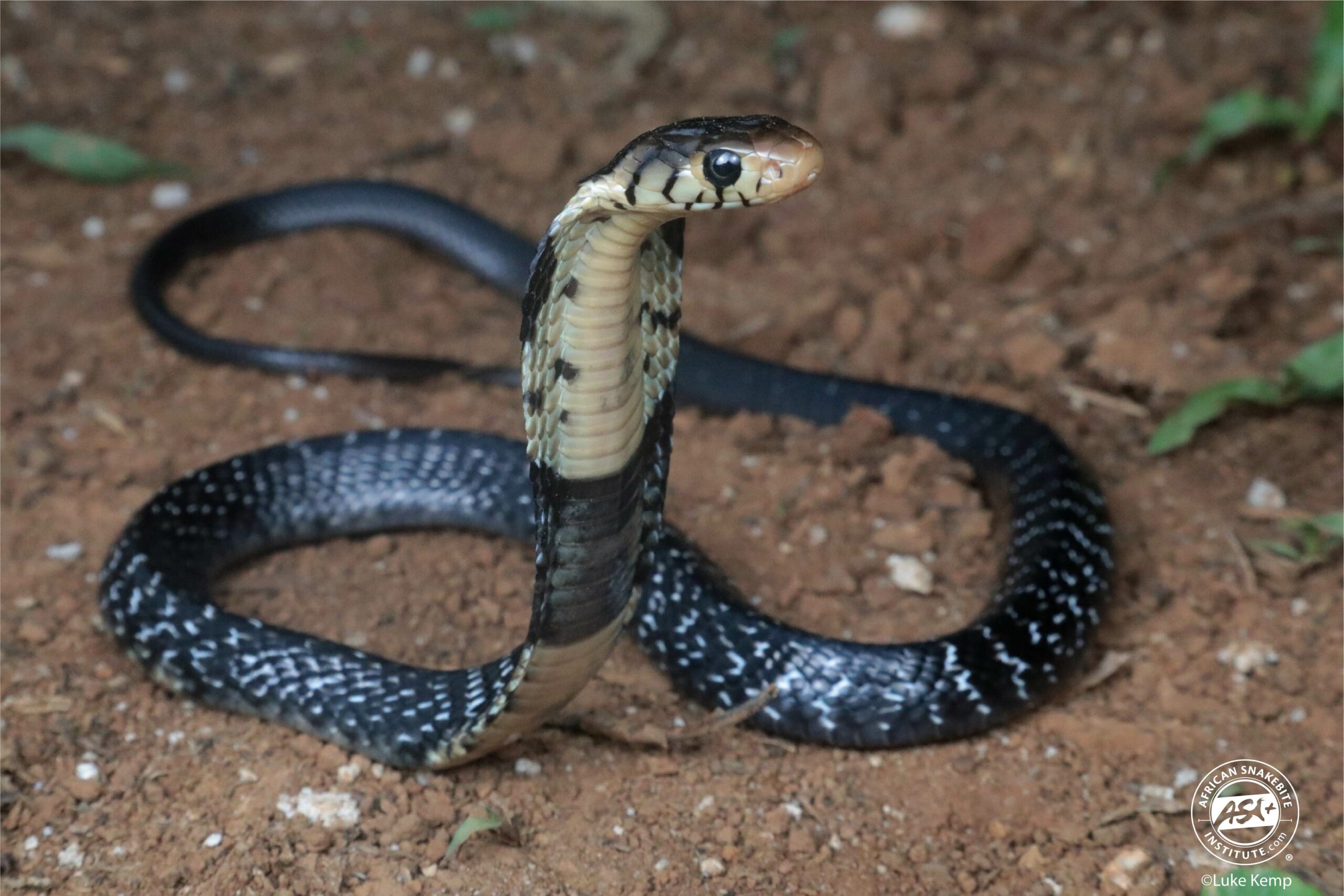
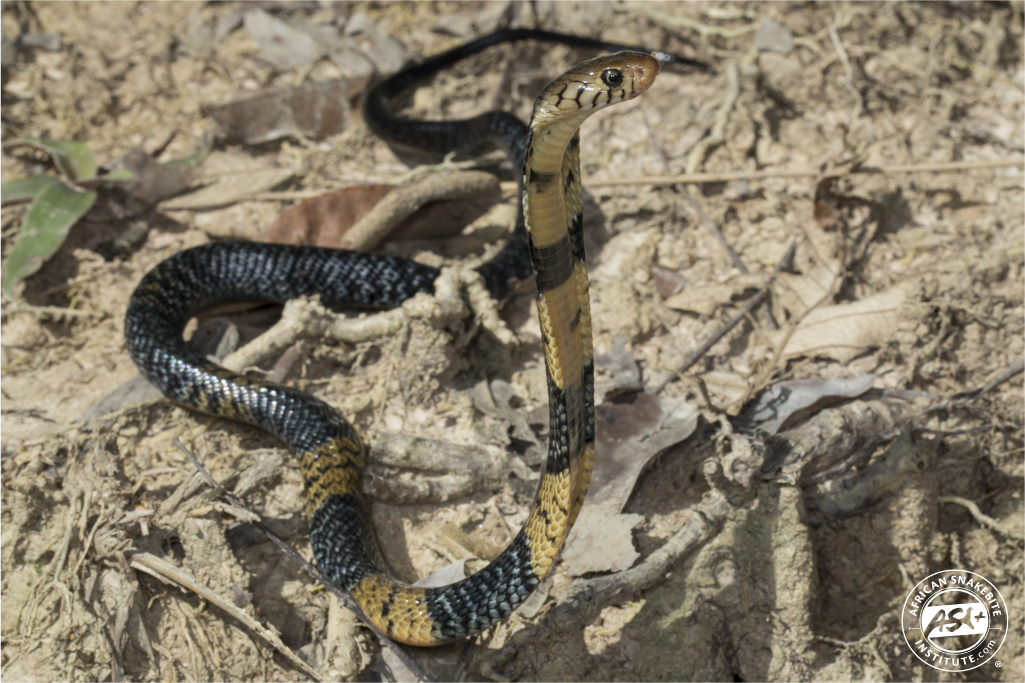
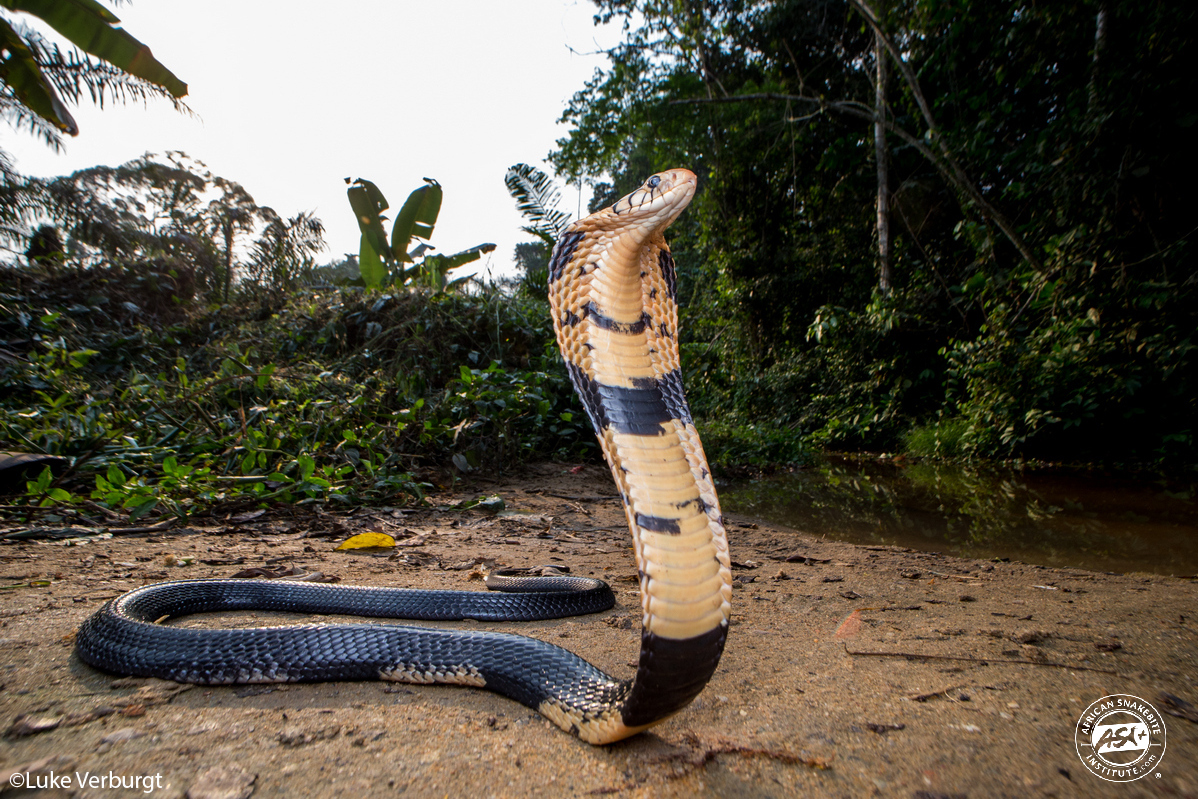
This is one of Africa’s largest cobras and may exceed 2.7 m in length. Adults are light to medium shiny brown becoming black near the tail. They may also be pitch black or black with light bands. There are now five species in this group throughout Africa.
Forest Cobras – Africa
Full Name: Forest Cobras (Naja melanuleuca / subfulva ….)
Classification: HIGHLY VENOMOUS
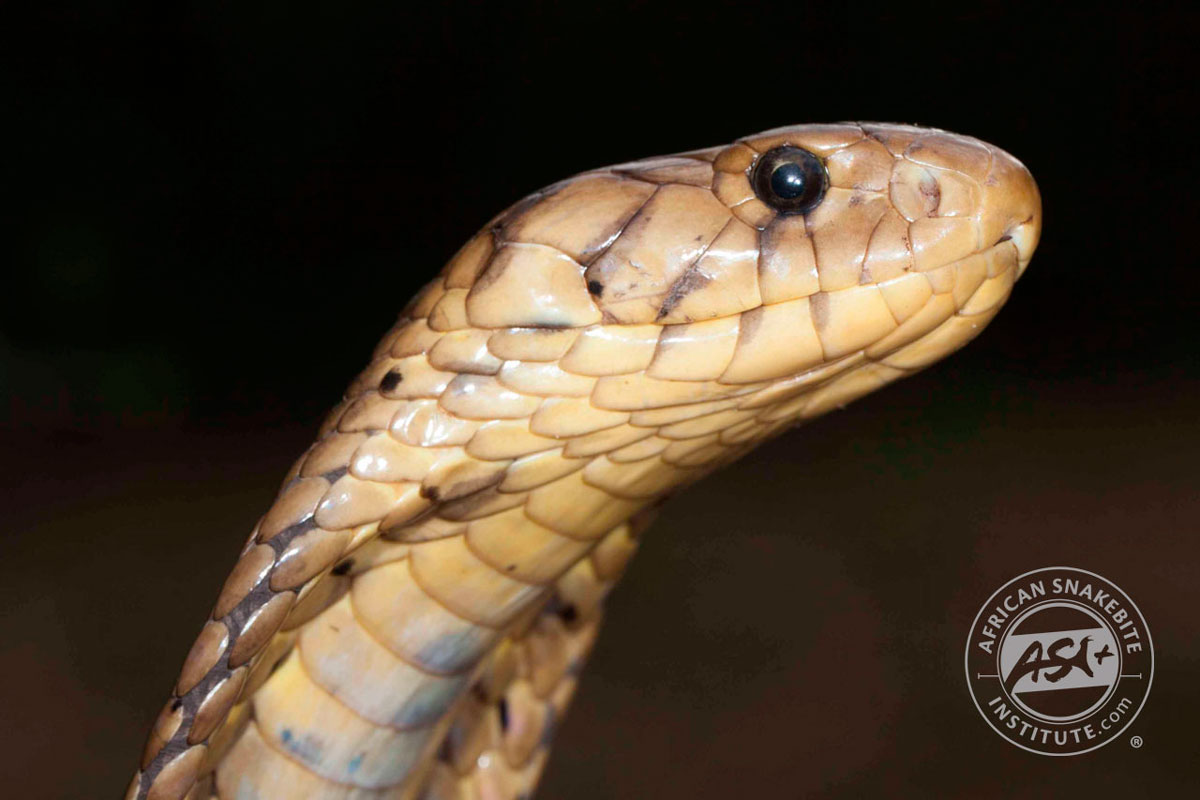
These are Africa’s largest cobras and may exceed 2.7 m in length. Adults are light to medium shiny brown becoming black near the tail. They may also be pitch black or black with light bands. There are now five species in this group throughout Africa.
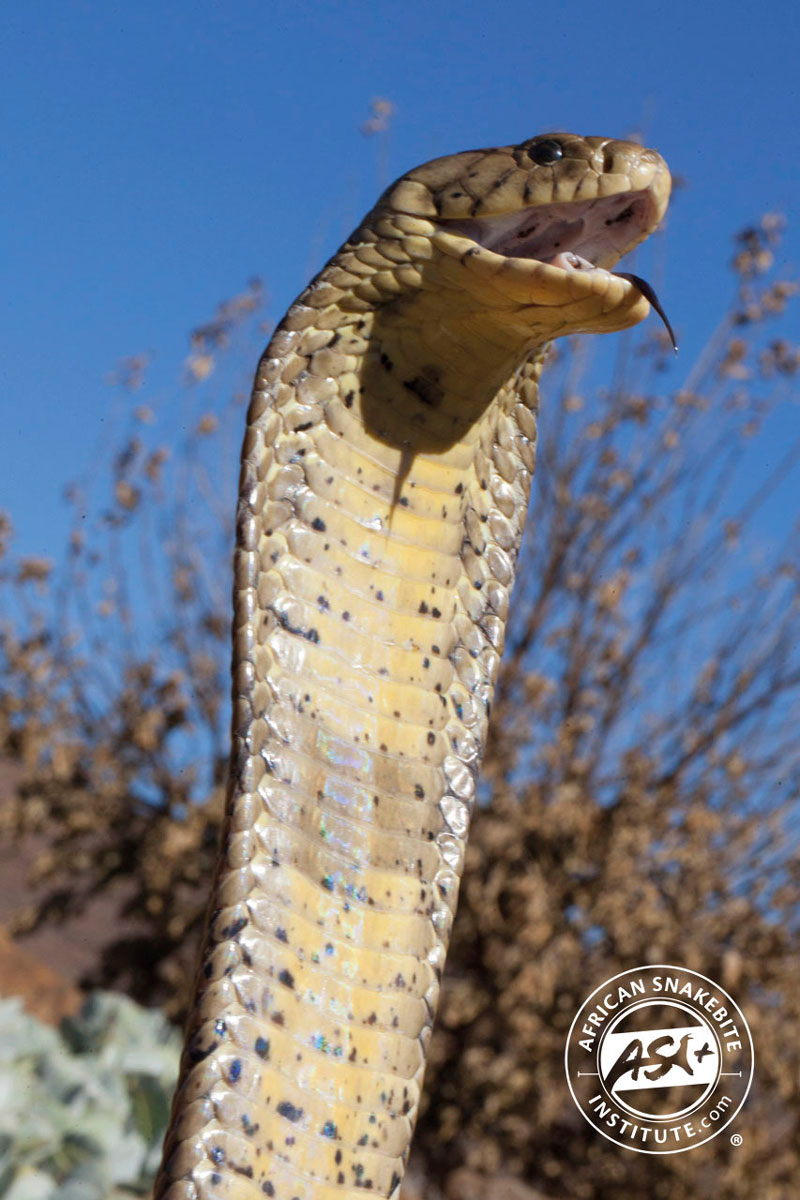
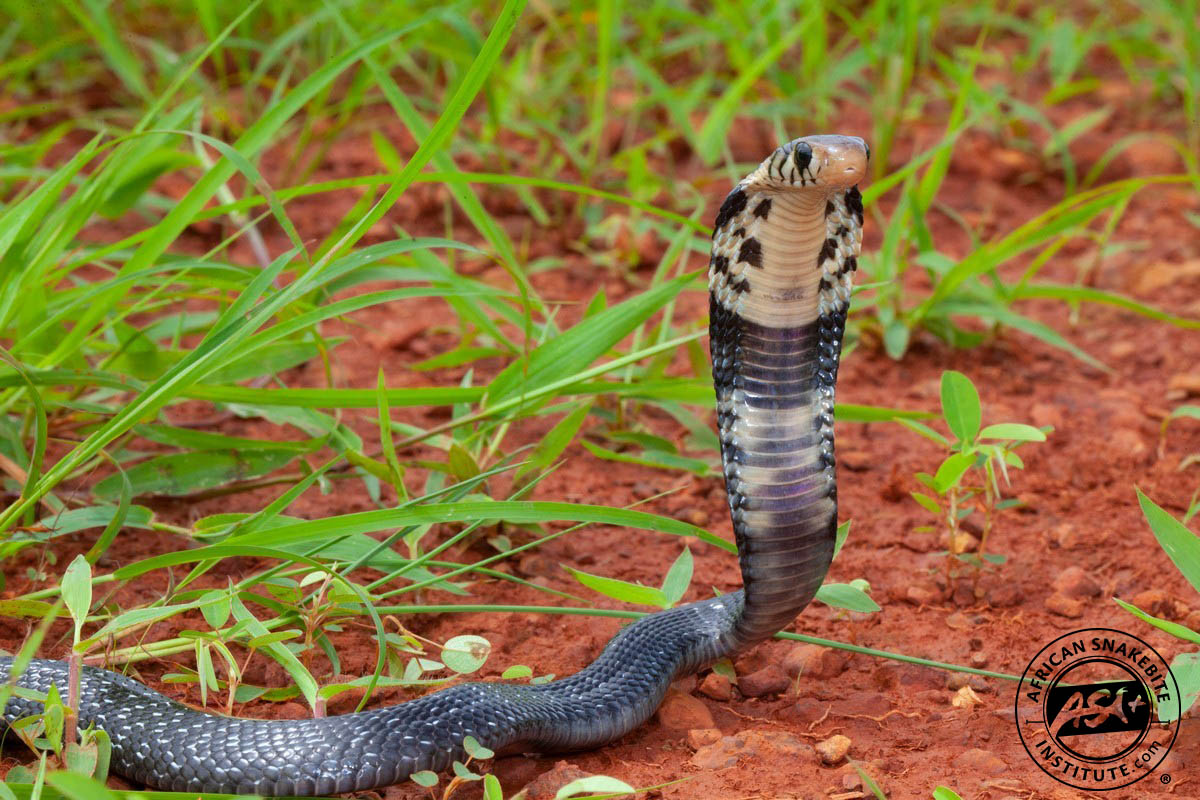
The Forest Cobras are active both during the day and night and favour dense bush where they hunts for small mammals, birds, frogs and other snakes. They are extremely shy and quick to escape – bites are rare. When cornered Forest Cobras will lift the head well off the ground and spread a narrow hood.
Forest Cobra venom is potently neurotoxic and cytotoxic. Polyvalent antivenom is effective. As these are large snakes, the venom yield may be massive.
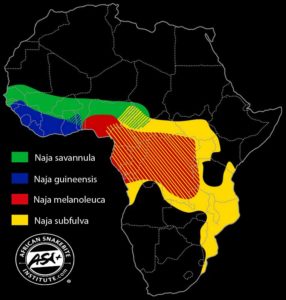
The Forest Cobras across Africa have recently been split into five species. The map indicates the four widespread African species. The additional species is the São Tomé Forest Cobra (Naja peroescobari) found only on the São Tomé island off the coast of Gabon.
Current species:
Black Forest Cobra (Naja guineensis)
Central Forest Cobra (Naja melanoleuca)
São Tomé Forest Cobra (Naja peroescobari)
Savanna Forest Cobra (Naja savannula)
Other Cobra species:
Anchieta’s Cobra (Naja anchietae)
Snouted Cobra (Naja annulifera)
Egyptian Cobra (Naja haje)
Mozambique Spitting Cobra (Naja mossambica)
Zebra Cobra (Naja nigricincta nigricincta)
Black Spitting Cobra (Naja nigricincta woodi)
Black-necked Spitting (Naja nigricollis)
Cape Cobra (Naja nivea)
Red Spitting Cobra (Naja pallida)
Brown Forest Cobra (Naja subfulva)
Featured Products
-
 Rangers Book Combo 2
Original price was: R2,080.00.R1,870.00Current price is: R1,870.00.
Rangers Book Combo 2
Original price was: R2,080.00.R1,870.00Current price is: R1,870.00.
-
 ASI ELITE Combo C
R1,580.00
ASI ELITE Combo C
R1,580.00
-
 ASI First Aid for Snakebite Booklet
R40.00
ASI First Aid for Snakebite Booklet
R40.00
Find a Snake Remover
Free Posters